Monrovia-LEADERSHIP, AS IS KNOWN, does not enjoy overwhelming immaculacy. By extension, therefore, no leader, be it president, prime minister, or whatever the role, wields such glory. This goes to say that every leader has flaws, blind spots, and critics. Take or leave it, that is the nature of power. On the contrary, there are good leaders, leaders who endeavor, against all odds, to put national interest above parochial desires, or try to bend the wheels of history at all cost. There are leaders who understand that the presidency is not a prize, but a burden of service. These characteristics march the position of President Joseph Nyuma Boakai, Sr., someone whose leadership, though not hundred percent pure, has got Liberia up and running, nationally and internationally resonating.
BACK HOME, THE POLITICS is inexcusable, but it is also the reality that Liberia’s political space remains noisy, divisive, unforgiving, and often ungrateful. Yet, since assuming the mantle of leadership almost three years ago, President Boakai has demonstrated resolve, seriousness to duty and commitment to the national cause, embarking upon results-oriented initiatives aimed at resetting the national development paradigm and restoring international diplomacy. Consider the record that even his harshest critics cannot wish away. Domestically, the Boakai administration has crossed the historic one-billion-dollar mark in domestic revenue mobilization, a feat that no government before it achieved. It is not just a number, it is a signal that Liberia can begin to finance its own development.
UNDER THE ARREST AGENDA for Inclusive Development (AAID), the government is attempting to link that revenue to roads, schools, clinics, agriculture, rule of law, and an improved environment for business. The work is far from finished as Liberians still groan under high prices, bad roads and youth unemployment, but the direction is clear, and the discipline is new.The rule of law is being given a second chance. The war and economic crimes court process, the audit and investigation of past public officials without witch-hunt, the tolerance for press freedom even when the press is abrasive, these are marks of a leader who prefers institutions to impulses.
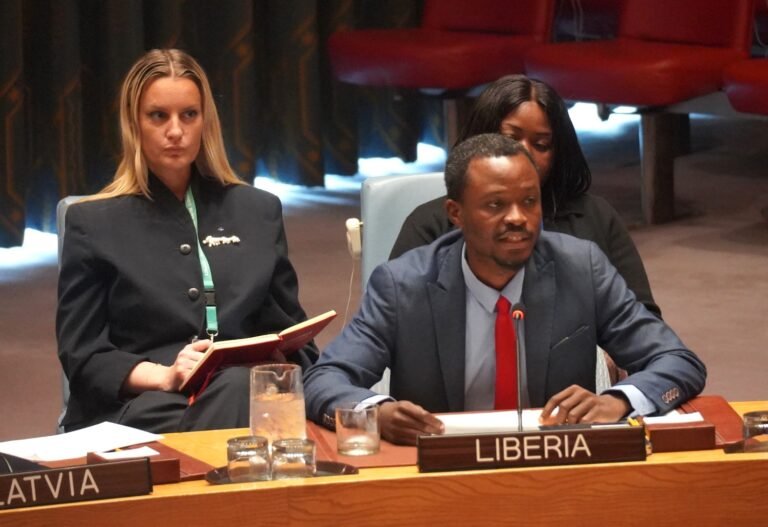
BUT IT IS IN international diplomacy that President Boakai has made even the skeptics proud. The President’s recent participation in the 81st Session of the United Nations General Assembly (UNGA 81) in New York cannot be brushed aside as anything less than awesome in terms of performance and agenda-setting. President Boakai’s short but powerful address to the world body brought out his in-depth thoughts about the challenges facing the world vis-a-vis Liberia’s role in the comity of nations. By all accounts, he did not go to New York to beg, but went to define Liberia. He spoke as a President of a country that now sits on the United Nations Security Council for the 2026-2027 term, the highest global responsibility Liberia has held in decades. He spoke about peace, about climate justice for countries that contribute least to emissions but suffer most, about fair financing for development, about reforming the United Nations Security Counsel, about terrorism in West Africa, and about the need for a more equitable world order where Africa is not an afterthought but a partner.That is leadership that resonates.
DAYS LATER, IN ALEXANDRIA, Virginia, at the 2nd Annual Diaspora Conference, the President again showed why statecraft matters. Speaking to Liberians who left out of war and hardship, he did not flatter them with empty patriotism, but told them the truth on a topic titled “From Dialogue to Delivery.” He admitted government must create conditions for return and investment to be practical, predictable and worthwhile. He asked for accountability, not just from citizens, but from government itself.That is what good leaders do. They do not promise heaven, but build a credible path toward it.
THE QUESTION IS NOT about whether President Boakai solved all of Liberia’s problems. Of course, no because no leader can in less than three years after inheriting a broken economy, a cynical polity and a bruised international image. Are there mistakes? Of course, yes. Are there appointments that have disappointed? Of course, yes. Is there still corruption to fight and trust to rebuild? Of course, absolutely. But when a leader performs well on the global stage, when he restores dignity to the presidency, when he reminds Liberians both at home and abroad that Liberia can once again be respected among nations, the nation is proud. This is why Liberia today has reason to be proud.
ROM MONROVIA TO NEW York, to Alexandria, the message is shifting from a country always associated with crisis, to a country associated with contribution. Criticisms is the work of the critics, and it is their democratic right, too. Beyond that, let the facts also speak. And the facts are that President Boakai, with all his human limitations, has steadied the ship, lifted the flag higher at the UN, and put Liberia back on the map for the right reasons.When that happens, as now, a nation is proud. And it should say so.
About The Author