
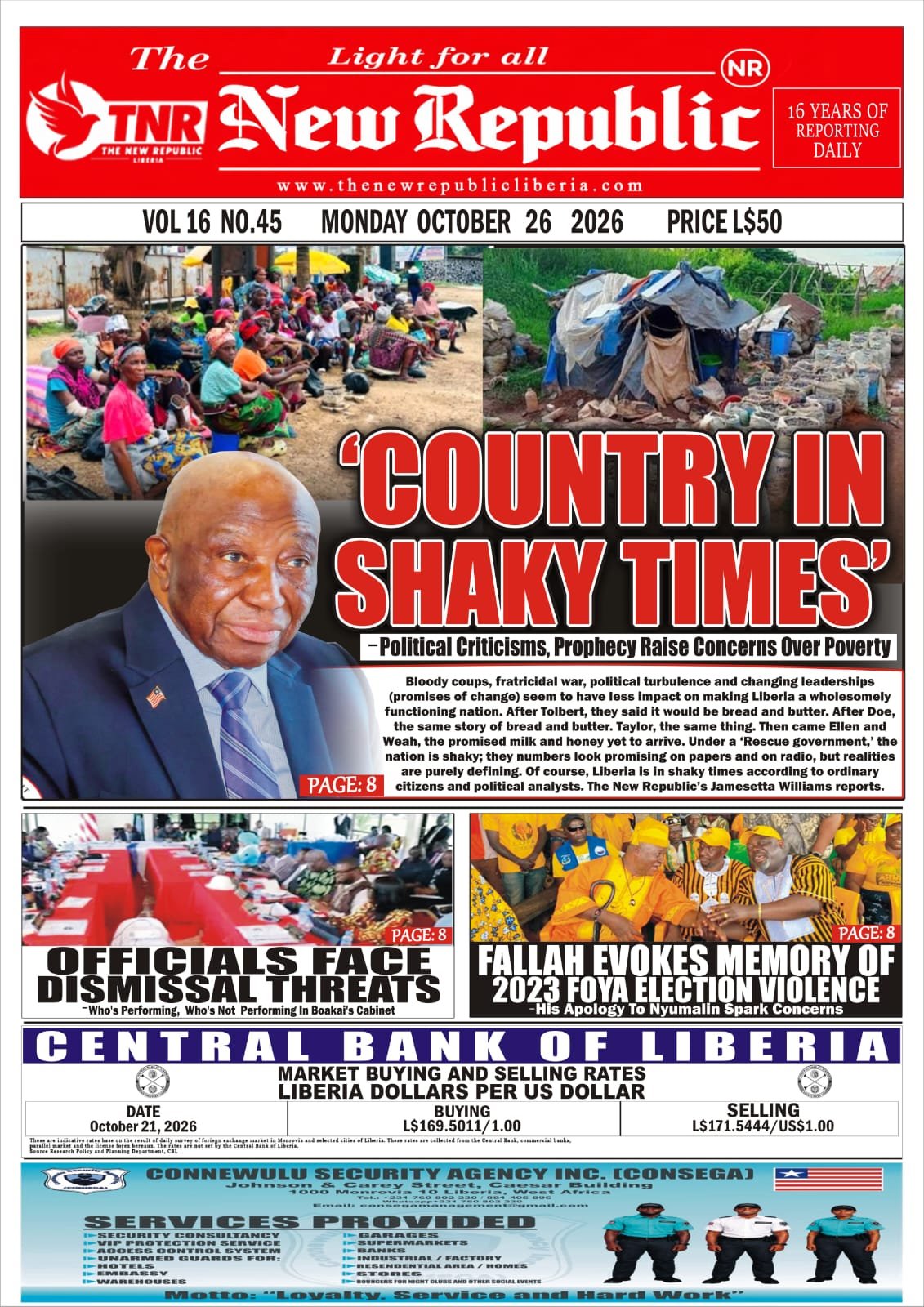
Bloody coups, fratricidal war, political turbulence and changing leaderships (promises of change) seem to have less impact on making Liberia a wholesomely functioning nation. After Tolbert, they said it would be bread and butter. After Doe, the same story of bread and butter. Taylor, the same thing. Then came Ellen and Weah, the promised milk and honey yet to arrive. Under a ‘Rescue government,’ the nation is shaky; they numbers look promising on papers and on radio, but realities are purely defining. Of course, Liberia is in shaky times according to ordinary citizens and political analysts. The New Republic’s Jamesetta Williams reports.

Monrovia-Liberia faces what political observers and religious leaders call ‘shaky times’ amid raising concerns about poverty, unemployment, and the cost of living, recent statements by political leaders and a Nigerian religious leader have raised questions about what the country’s economic future could look like in 2027.
The Boakai-led administration enduring a Herculean task of turning promises into impacts and realities, and is accordingly criticized. Both politicians and spiritualists are speaking with convictions about dooms-days ahead
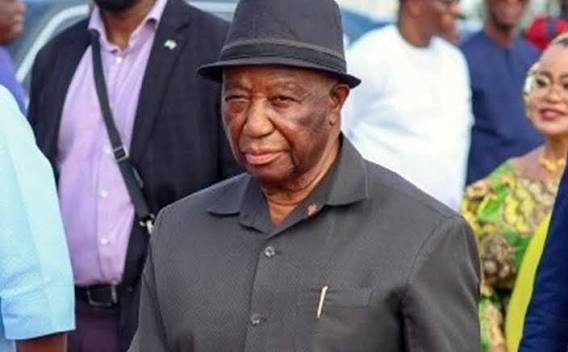
Former President George Manneh Weah was unequivocal in scolding the government for being lackadaisical in finding solutions to prevailing hardship across the country, criticizing the administration over economic conditions and what he describes as unfulfilled promises.
In the same token, Senator Crayton O. Duncan has raised questions about the government’s progress in addressing poverty, while Sinoe County District #3 Representative Alex Noah has criticized the administration’s response to the country’s drug problem.
Adding to the discussion, Nigerian religious leader Primate Elijah Ayodele has reportedly predicted severe economic hardship for Liberia in 2027, warning of a situation in which people could mistake pieces of paper for money.
Although the prediction is not evidence of what will happen, the combination of political criticism and concerns about living conditions has brought renewed attention to a question many citizens may be asking: Will 2027 bring economic improvement for Liberia, or will ordinary people face even greater hardship?
Weah has questioned the Boakai administration’s handling of the economy, unemployment, and its reported spending on international public relations, arguing that the government should give greater attention to the needs of ordinary Liberians.
His criticism reflects the continuing political debate over whether the government is doing enough to improve living conditions and fulfill its promises to citizens.
Senator Duncan has also expressed dissatisfaction with the country’s progress in tackling poverty.
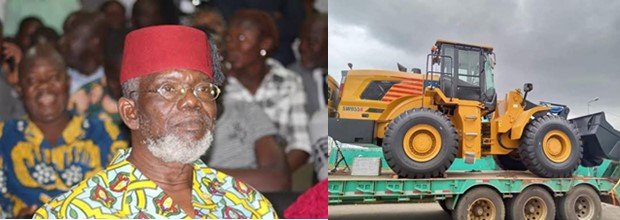
“They came to rescue us from poverty, but the only things we keep hearing about are yellow machines and roads,” Duncan said during an appearance on Voice of Liberia on Monday.
He added “We are suffering because of our leaders.”Duncan’s remarks question whether the government’s development priorities are translating into meaningful improvements in the lives of citizens.
While roads and heavy equipment can contribute to infrastructure development, the senator’s comments highlight broader public concerns about employment, household income, and access to economic opportunities.
Ayodele’s reported prediction has added another dimension to the discussion about Liberia’s future.
The Nigerian religious leader reportedly warned that the country could experience severe economic hardship in 2027.
However, a prophecy cannot establish that such conditions will occur. Liberia’s economic outlook will depend on several factors, including government policies, domestic production, employment opportunities, public revenue, investment, and developments in the wider global economy.
Still, the prediction may resonate with citizens who are already concerned about the cost of food, transportation, education, healthcare, and other basic needs.
For families whose incomes are insufficient to cover their daily expenses, uncertainty about the future can add to existing economic worries.
The key question is whether government policies and economic conditions will create opportunities for households to improve their circumstances or leave them struggling to meet their basic needs.
Concerns have also been raised about the financial difficulties facing market women, including reports that some traders earn approximately L$1,500 per day while dealing with business expenses and taxation.
Market women play an important role in Liberia’s economy, supplying essential goods and supporting their households through small-scale trading.
However, transportation costs, the purchase of goods, market fees, and other expenses can reduce their earnings and limit their ability to support their families.
The reported daily earnings and the extent to which taxation contributes to these difficulties require further verification.
For many citizens, the broader concern is whether their daily income can keep pace with the cost of living.
If households continue to struggle with basic expenses, questions about poverty and economic security are likely to remain central to discussions about Liberia’s future.
Meanwhile, President Boakai has reportedly warned government officials that his administration is not a friendship club and that officials who engage in corruption or fail to perform their duties could be dismissed.
The warning signals the President’s expectation that public officials should demonstrate accountability and deliver results.
As concerns about poverty and economic conditions continue, the effectiveness of government leadership will be judged partly by its ability to turn policies and development plans into tangible benefits for citizens.
These include creating employment opportunities, supporting small businesses, improving public services, and ensuring that public resources are used responsibly.
The President’s reported warning raises a further question: whether stronger accountability within government will lead to measurable improvements in the living conditions of ordinary Liberians.
The statements from Weah, Duncan, and Noah, together with Ayodele’s reported prediction, have brought attention to different concerns about Liberia’s political leadership, social conditions, and future economic direction.
However, these statements alone cannot determine whether Liberia will experience greater poverty or economic improvement in 2027.
A clearer assessment will require reliable economic information, including inflation figures, employment data, household income, poverty levels, government spending, and evidence of progress in implementing development programs.
The government’s economic policies and their impact on ordinary citizens will also be important in assessing whether living conditions are improving.
For citizens, the central concern is practical: whether they will have better access to jobs, affordable goods, education, healthcare, and opportunities to support their families.
As 2027 approaches, the country’s economic direction will depend not on political statements or predictions alone, but also on decisions made by policymakers, the performance of public institutions, and the opportunities available to the population.
For now, whether 2027 brings greater hardship or meaningful economic improvement remains uncertain. What is clear is that poverty, unemployment, and the cost of living remain important concerns that require evidence-based solutions and measurable action.
About The Author