
By Stephanie M. Duncan
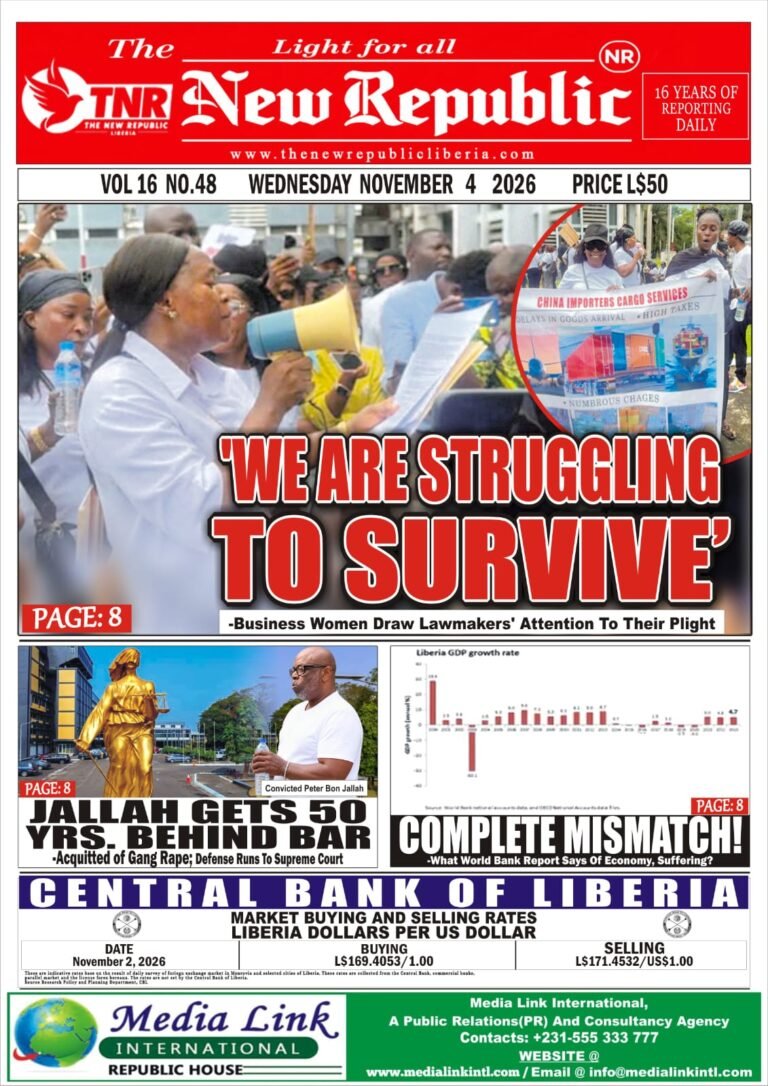
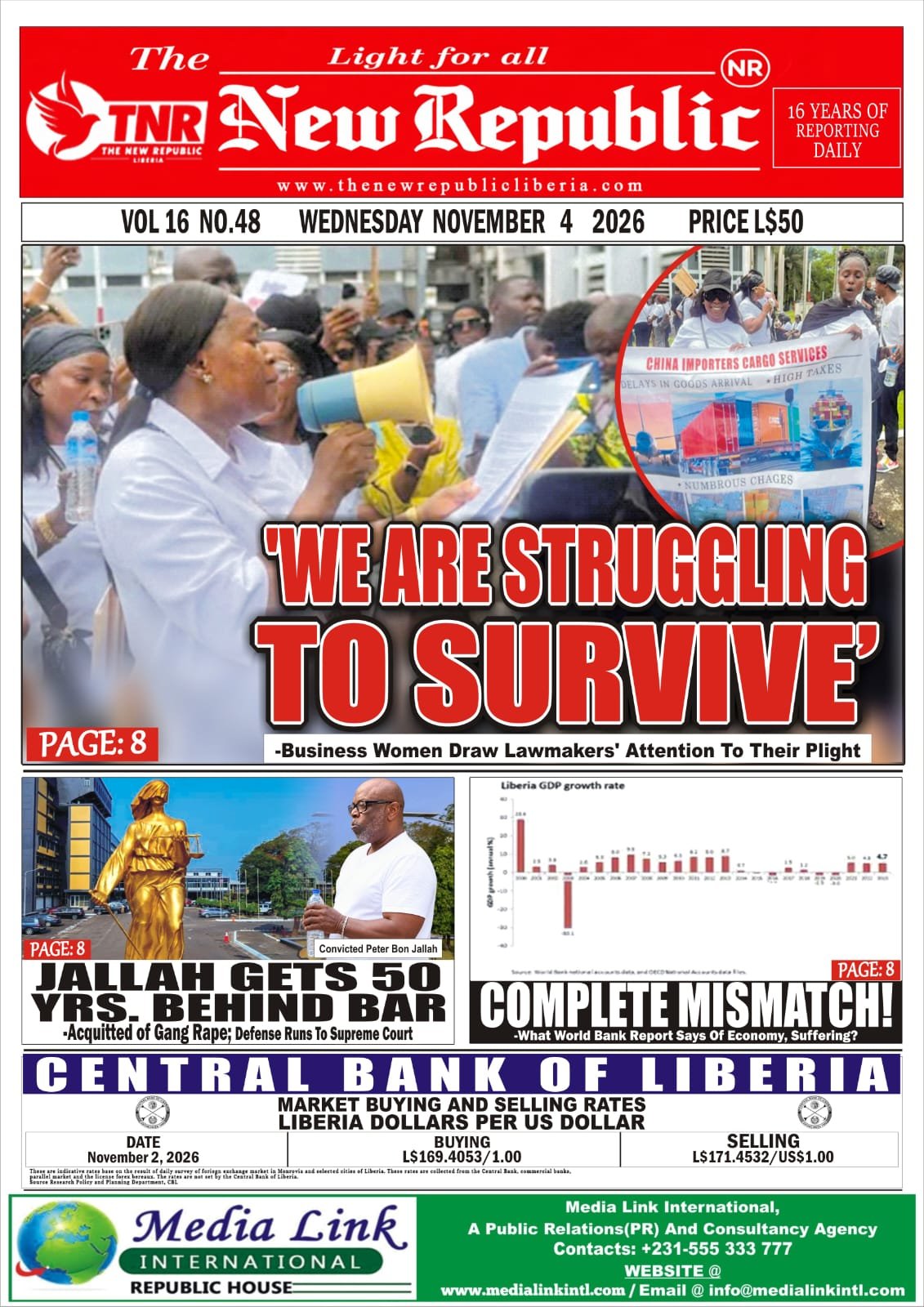
Monrovia-In a tacit mood intended to resist creeping setbacks and bottlenecks to their business endeavors, Liberian business women who said they are struggling for survival Tuesday came out in their numbers to draw stakeholders’ attentions to harsh conditions plaguing them.

Under the auspices of the China Business Women United with One Voice and Consortium of Liberia Importers, dozens of businesswomen thronged the courtyard of the National Legislature with a petition in which they crave urgent intervention.
In the petition, the concerned businesswomen decried “severe shipping delays, excessive port charges, and administrative bottlenecks” threatening the survival of local businesses.
The petitioners comprising China Business Women United with One Voice and the Consortium of Liberia Importers warned that prolonged shipping timelines and mounting financial obligations are pushing local entrepreneurs toward business closures.
Advocate Sriya Musu Momolu, reading the petition on behalf of the business community, disclosed that shipments originating from China and other parts of Asia are now taking between six and seven months to reach the Freeport of Monrovia.
She said the extended shipping periods have placed significant financial pressure on importers, many of whom depend on commercial bank loans secured with personal homes and other properties to finance their businesses.
According to the petitioners, the delays have made it increasingly difficult for business owners to repay loans, recover invested capital, and sustain their operations, while interest payments and other financial obligations continue to accumulate.
Momolu further highlighted challenges associated with port clearance, explaining that administrative delays frequently cause Delivery Orders to expire before importers can retrieve their goods.
Consequently, business owners are reportedly forced to pay additional fees for the renewal of expired Delivery Orders, administrative surcharges, and demurrage charges, even when the delays are beyond their control.
The petition also cited shipping companies, including Maersk Line, over what the business groups described as excessive transit schedules and arbitrary handling fees.
The groups further expressed concern that local entrepreneurs are increasingly facing competition from foreign traders who allegedly bypass existing regulatory frameworks to sell directly in Liberia’s domestic markets.
They warned that the combination of shipping delays, high borrowing costs, rental expenses, tax obligations, and additional port charges is placing local businesses under severe economic strain.
To address the situation, the petitioners outlined six major demands, including a formal legislative inquiry into shipping companies over prolonged transit periods and their surcharge structures.
They are also calling on the government to compel shipping lines and port terminal operators to waive re-issuance fees and demurrage charges resulting from expired Delivery Orders.
Other demands include establishing mandatory shipping arrival timelines, simplifying container clearance procedures at the Freeport of Monrovia, and eliminating bureaucratic obstacles that contribute to delays.
The business groups further called for strict enforcement of Liberia’s Liberianization Policy to protect local small and medium-sized enterprises from what they described as unfair competition from foreign traders.
They also want the government to establish long-term national logistics policies capable of improving the efficiency of maritime transportation and protecting the interests of local importers.
Liberian business women, burdened by what they considered “high taxes and delays” at Freeport of Monrovia, took to the streets Tuesday in a peaceful protest intended to claim policy makers’ attention and intervention to their plight.
The women, most of them in their 40s and 50s, expressed concerns over difficulties they are experiencing in getting their goods to Liberia due to several bottlenecks, including alleged overcrowdedness of the port of containers
The women most of whom dressed in unified attire warned that unprecedented delays in cargo clearance, combined with multiplying customs surcharges, are pushing small-scale cross-border traders to the brink of collapse.
”We take loans from banks, purchase goods in bulk, and send them home by sea, only for our containers to sit untouched at the wharf while demurrage fees pile up every single day,” said Madam Comfort Sirleaf, a lead representative for the collective.
“By the time our goods reach our shops in Red Light and Waterside markets, our margins are completely wiped out, and the goods are severely marked up just to break even.”
The group cited several structural grievances compounding their operational distress, including “unreasonable delay times in physical inspections and document verification lead directly to accrue daily storage penalty costs billed to importers.”
“We are struggling to get our goods here; sometimes it will take nine to ten months before we get our goods here. As we speak, our containers are stuck at the port in Abidjan in Ivory Coast because of space problems at the port,” said one of the ladies as she explained their plight.
“We have to pay rental, we get people to pay, we get bank loans to pay back, we get kids school fees to pay,” she said. “How do we manage with these responsibilities if we cannot get our goods on time to sell?”
They also complained of misalignment between port handling charges, shipping line assessments, and custom valuation tariffs, perishable and seasonal inventory deteriorating in shipping containers while awaiting regulatory sign-offs, among others.
”When a small businesswoman is forced to double her prices because she spent three extra weeks getting her single container out of the Freeport, it is the everyday Liberian consumer who suffers,” Madam Sirleaf added during the peaceful demonstration.
In a petition intended for terminal operators, the National Port Authority (NPA), and the Ministry of Commerce and Industry, China Business Women United outlined three key measures to resolve the crisis, including accelerated processing for micro, small, and medium-sized local enterprises to clear long-overdue consignments, immediate auditing and transparency regarding shipping line charges and terminal storage fee structures.
The women equally craved creation of a joint review committee comprising port authorities, customs officials, and representatives from domestic trade unions to prevent recurring gridlocks.
As part of their appeal, the petitioners requested an immediate formal audience with the leadership of the Liberian Senate, the House of Representatives, and the management of the National Port Authority to present their concerns and discuss practical solutions.
Receiving the petition on behalf of the Legislature, Montserrado County District #8 Representative Prince Toles pledged to bring the concerns before his legislative colleagues for consideration and possible intervention.
Representative Toles, who identified himself as a fellow businessperson, said the challenges raised by the petitioners were concerning and required prompt attention from both the Legislature and relevant government institutions.
He emphasized the importance of addressing the grievances to prevent further hardship for local entrepreneurs and ensure that businesses operating in Liberia are given a fair opportunity to survive and grow.
About The Author