By Jamesetta D. Williams
About 89 public high schools, according to the Liberia Telecommunications Authority (LTA), have been connected to high-speed internet under an ambitious digital transformation initiative aimed at improving access to quality education across Liberia.
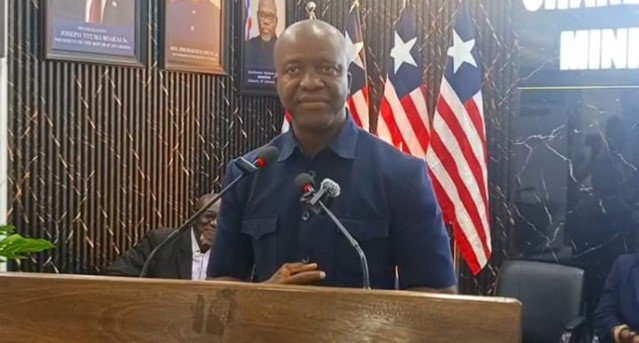
Head of the LTA, Clarence Massaquoi told reporters Thursday at the MICAT’s regular press briefing, that the project, being implemented in partnership with the Ministry of Education, is one of the flagship initiatives of President Joseph Nyuma Boakai’s administration to expand digital inclusion and bridge the technology gap in the country’s education sector.
According to him, when the current leadership assumed office, there were virtually no public high schools connected to high-speed internet under the initiative. However, significant progress has been made, with 89 schools already benefiting from reliable internet connectivity.
He disclosed that the project targets 156 public high schools nationwide and expressed confidence that the remaining schools would be connected within the next two weeks.
Massaquoi further revealed that an assessment conducted during a recent visit to Maryland County identified 28 additional public schools that were not included in the original project. He said President Boakai has instructed the LTA to ensure those schools are also connected, expanding the reach of the initiative beyond its initial target.
“The objective is to ensure that a child in any part of Liberia has access to the same educational resources available to students in more developed countries through the use of technology,” he said.
The LTA Chairman also disclosed that the Authority is extending its digital inclusion efforts to public tertiary institutions. He said Booker Washington Institute (BWI) has already been connected to high-speed internet, while assessments are ongoing at the University of Liberia and Tubman University ahead of similar interventions.
Beyond education, Massaquoi outlined several other initiatives being undertaken by the Authority, including plans to introduce an International Mobile Equipment Identity (IMEI) registration system aimed at combating mobile phone theft. He explained that every mobile phone carries a unique identification number that will eventually be registered, allowing stolen devices to be traced and blocked from operating on local networks.
Addressing consumer concerns over mobile data services, Massaquoi clarified that data bundles are consumed based on customers’ usage and assured subscribers that anyone who loses data because of network failures during the validity period can receive a refund after reporting the incident to the LTA.
He also provided an update on the construction of the Authority’s new headquarters, explaining that the project has slowed temporarily to allow for the installation of smart technological infrastructure before the building is completed.
Responding to questions about the implementation of Executive Order No. 154 governing international gateway services, Massaquoi defended the Authority’s actions, maintaining that all procurement and regulatory procedures were carried out in accordance with the Public Procurement and Concessions Commission (PPCC) Act and other applicable laws.
He added that telecommunications operator JamCell has been invited to meet with the LTA over regulatory compliance issues, noting that any future decision regarding the company will be based on legal and regulatory requirements.
Massaquoi praised the Ministry of Information for providing government institutions with a platform to communicate directly with the public, stressing that government agencies have a responsibility to tell their own stories and keep citizens informed about national development initiatives.
He reaffirmed the LTA’s commitment to expanding internet access, strengthening telecommunications regulation, protecting consumers, and ensuring that every Liberian, regardless of location or economic status, can benefit from the country’s ongoing digital transformation.
About The Author