With Liberia gradually gravitating toward another epochal elections in 2029, who is best suited or has a future in becoming president is not a going-away discussion amongst Liberians. Could it be sitting President Joseph Boakai retained, or that Liberians will muster the courage to look into another directions, to put their fate in one of the many would-be candidates including Mr. Alexander B. Cummings are the concerns weighing them under their consciences.
While others would-be candidates may be studying the existing political climate – reading into the current state of affairs and how they can align their interest with that of the ‘suffering masses’, the leader of the Alternative National Congress (ANC’s) is not mute, speaking his mind and how he believes the country should be run to engender holistic growth and inclusion.
Mr. Cummings’ assessment of the government’s performance is viewed with mixed-reactions – one point in time he hails the government, pats the president on the back even when others think otherwise about such appreciation of the administration.
His supporters see him as a pragmatic character – someone who sees reality and acknowledges, and also offers critical assessment or condemnation when the situation is wobbly.
But expert believe Liberian politics is not about he who critiques a sitting government gets the largest shares of votes at the polls, rather one who Liberians endeared to, loved, and trusted.
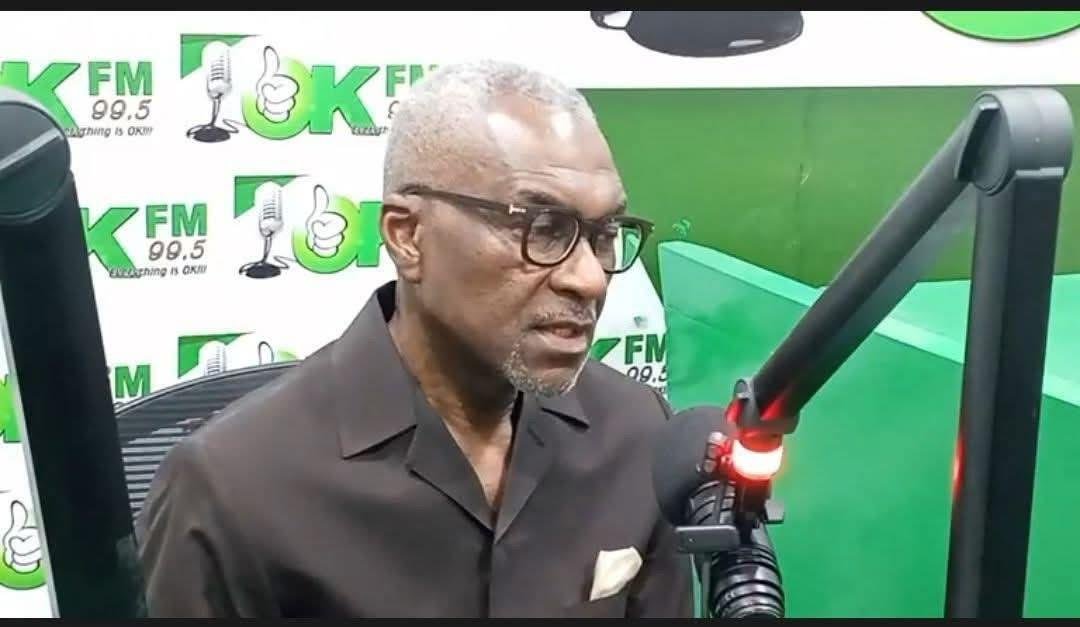
Cummings on OK FM
In an apparent move to reconnect with the Liberian people and begin to explain his vision for the country, the ANC political leader took the nation by storm Wednesday during an interview on OK FM, emphasizing that leadership should be centered on collaboration with citizens and targeted investments in key sectors.
“The presidency is not the end; it is the means to achieve that change,” he said, stressing his commitment to working alongside Liberians to improve the country’s future.
Cummings he used the platform regarded as the most listened-to in Liberia to outline priority areas he would focus on if elected, including healthcare, agriculture, housing, and tourism.
Mr. Cummings hold the belief that these sectors are critical for job creation and sustainable economic growth, while referencing countries such as The Gambia and Ghana as examples of how strategic investment in these sectors can drive national development.
He also raised concerns about the pace of infrastructure development in Liberia, particularly in the energy sector. “Why are we not investing in electricity?” he questioned, underscoring the importance of reliable power supply for economic expansion.
Drawing comparisons with Côte d’Ivoire, Cummings noted that despite having roughly three times Liberia’s population, the country operates a national budget exceeding $33 billion. He argued that Liberia’s current budget, estimated at about $1.2 billion, could surpass $2 billion with sound economic policies and effective governance.
Central to his vision, Cummings highlighted the importance of investing in human capital, particularly education. He stressed the need to strengthen science, technology, engineering, and mathematics (STEM) programs as a pathway to solving real-world problems and preparing young people for future opportunities.
“We must invest in the education system. If you invest in people, you solve real problems,” he said.
The ANC political leader also called for decentralization and the adoption of digital governance systems, describing technology as a key driver of national transformation. He said such reforms would improve service delivery, enhance transparency, and bring government closer to the people.
On public spending, Cummings criticized what he described as excessive waste within government institutions, particularly the Legislature. He argued that resources should be redirected toward development priorities and creating an enabling environment for private sector growth.
“There is too much waste in the system,” he said, adding that government should not position itself as the primary employer but instead support business expansion and job creation.
In a notable pledge, Cummings said he would forgo his presidential salary if elected, committing to redirect the funds toward education initiatives, particularly in STEM.
His comments come amid ongoing national debate on governance, economic reform, and strategies to address Liberia’s development challenges.
Has he a bright future for the presidency?
For Mr. Cummings, though seen as a lone opposition voice against societal and governmental ills, the question now centers on whether Liberians have changed their perspectives about him and his quest to become president, that he has a clear path in becoming president when his past efforts, his undiluted investments, are paired against the outcomes of two successive elections – 2017 and 2023.
The former Coco Cola executive performed dismally in the two past elections, mainly the last one, sparking concerns amongst his supporters and ordinary Liberians about his presidential suitability.
The results, according to political pundits, did not match the time, energy and financial investments made to win – though it is widely believed that the electorates are no longer carried away by financial and material inducements, rather their conviction in one’s ability based on his agenda to lead the country.
The ANC standard-bearer only managed 1.61% out of the accumulative votes of 29,613, according to the National Elections Commission (NEC) website – far below then politically incognito Edward Appleton.
Before the elections, he was regarded as top challenger of then President Weah, but the outcome proved otherwise and further dampened perception about him.
Political scientists find it hard to pinpoint exact reasons little attention is given Mr. Cummings, who has, overtime, shown commitment to statehood by remaining engaged with the power-that-be regardless of his poor shows at the polls.
Those who are closed to him see him as a nice character, someone who is altruistic and accommodating of everyone regardless of status.
However, pundits continue to point to two important factors they believe may be in the way of his ascendancy to the helm of power in Liberia. They insist that while Mr. Cummings is by far one of Liberia’s educated and successful personalities – someone with strong connections to make Liberia’s case and land in topnotch investors into the country if elected president – Congo man and gay perceptions remain undissolving with most Liberians.
Mr. Cummings, on many occasions, debunked gay allegations leveled against him, yet most Liberians are said to be hanging onto it,
However, as the only first-class politician yet to taste the president, and with the current state of affairs and insinuations about the availability of sitting President Boakai to be on the ballot in 2029, and owing to the fact that former President Weah is no longer new to Liberians, Cummings may have a future, some believed.
But as it stands, whether the ANC political has a future in becoming president in 2029, some said, depends on what happens in the years ahead, and he remains engaged, selling himself and his ideas/agenda.
About The Author