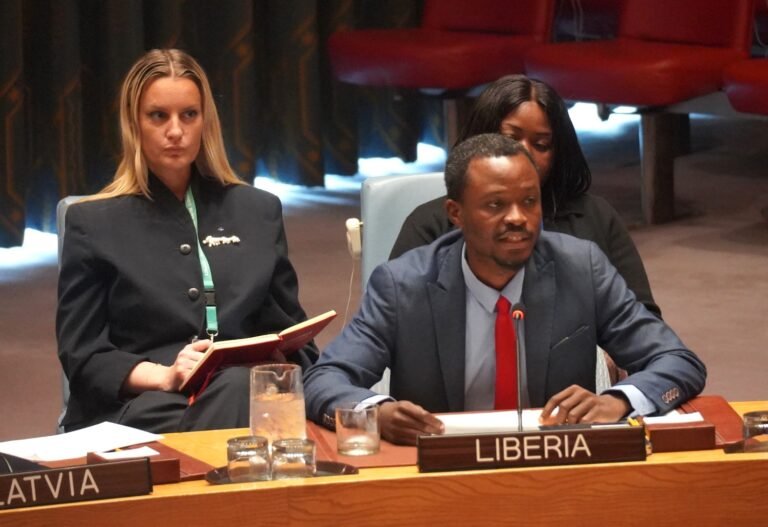

“Truth crushed to the grounds has its way to come out one day” is a belief strongly held by people of faith and other disciplines, though it is always not the case at times. So, whether it is true or not that Liberia Drug Enforcement Agency (LDEA) Officer-In-Charge, DCP Fitzgerald Biago is in cohort with the very people he is sworn to dismantle, the outcome is certain. Until then, Liberians are listening with itchy ears, waiting to know the finality of President Joseph Boakai’s 48-hr “report to me mandate” to the Ministry of Justice. Be as it may, the question remains: Biago, Too? The New Republic dips into how the nation’s security architecture is increasingly stained.
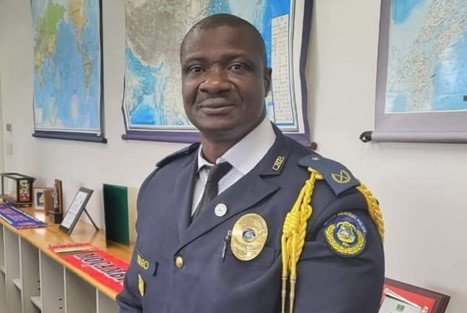
Also, too, the Liberia Drugs Enforcement Agency (LDEA) Officer-In-Charge DCP Fitzgerald T.M. Biago is alleged to have his hands in the cookes jar is the question being asked by citizens as security institutions continue to face a crisis of confidence amid allegations linking senior officers to drug-trafficking networks.
DCP Biago is the latest ranking officer of the country’s security apparatus to be accused of being in the pocket of the drugs cartel, something experts say has turned the case into ‘no one to trust’ scenario. Biago who has asked is recused from LDEA operations pending investigation is accused of receiving gifts from alleged topnotch cartel operative.
Amid reports that some ranking officers may have associations with individuals involved in drug trafficking, many Liberians no longer viewed the country’s security institutions solely as protectors of public safety, but are increasingly being discussed with suspicion.
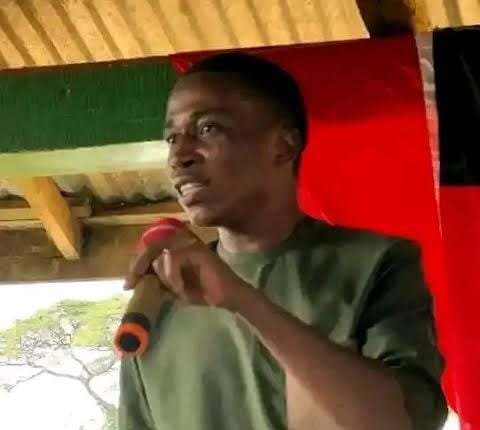
The latest allegations made by social justice advocate Martin Kollie via social media have not established the criminal responsibility of DCP Biago. Instead, they appeared to have intensified a broader crisis of growing perception that institutions expected to combat illicit drugs may themselves be compromised by corruption, political interference or criminal connections.
Security experts believe that perception is damaging in a country where public cooperation is essential to policing, intelligence gathering and drug enforcement.
The National Security Agency, the Liberia National Police and the Liberia Drug Enforcement Agency which occupy different positions within the state’s security architecture are on the spotlight for the wrong reasons, increasingly viewed as part of one system that has failed to provide convincing answers when serious allegations emerge.
In its post-conflict era, Liberia has seen growing concern over the movement and consumption of illicit drugs, particularly in urban communities, with families, community leaders, civil society organizations and lawmakers have repeatedly warned about the social consequences of drug abuse, including violence, unemployment, mental-health problems and the exploitation of young people.
Against that backdrop, allegations that security officials may have links to drug-trafficking networks carry exceptional weight.
The claims have taken several forms, including accusations that officers provide protection to traffickers, leak information about planned raids, interfere with investigations, accept bribes or use their official positions to intimidate rivals. In some cases, the allegations concern direct participation, while others speak of suspected relationships or unexplained contacts.
“These are serious claims that require evidence and impartial investigation. Association alone does not prove criminal conduct,” said an officer who begged not to be named. “Nor should public suspicion be treated as a substitute for due process.”
According to him, the absence of transparent investigations can be almost as damaging as proven misconduct, saying “When the public hears allegations and sees no credible response, suspicion tends to expand beyond the individuals involved and attach itself to the institution as a whole.”
He told this paper at the weekend that trust in law enforcement depends on three basic assumptions, such as “that officers will act lawfully, that they will be held accountable when they do not, and that the rules will apply equally to everyone.”
“When those assumptions weaken, citizens become less willing to cooperate with investigator, and witnesses may refuse to provide information,” he said. According to him, such may lead to victims not wanting to report crimes, and communities may conclude that powerful suspects will never face consequences.
For drug enforcement, he went on to say that “this is especially dangerous because investigations often depend on confidential sources, community intelligence and long-term cooperation.”
“If residents believe that information will be sold to traffickers, or that officers are protecting the very networks they are meant to dismantle, anti-drug operations become significantly harder.”
Also, another expert speaks of a vicious cycle that cannot be broken through public-relations statements alone, but also with visible accountability, stressing that institutions facing the greatest scrutiny, such as the NSA, LNP and LDEA, must each answer different questions.
As an intelligence institution, the NSA operates with a level of secrecy that can make public accountability difficult. Its work may involve confidential sources and sensitive national-security matters. However, secrecy cannot become a blanket justification for refusing all independent oversight.
As one he puts it, the public deserves assurance that intelligence capabilities are not being used to shield criminal activity, target political opponents or suppress legitimate criticism. He added “If officers or officials have been accused of facilitating drug trafficking, the agency should be able to demonstrate, through appropriate legal and oversight mechanisms, that the allegations have been investigated.
Speaking of the LNP, he also asserted that it is the most visible face of the state for many citizens because “Police officers are often the first authorities people encounter when reporting a crime, seeking protection or responding to a public disturbance.”
“That visibility also means allegations involving police commanders or senior officers can have an immediate effect on public confidence,” he emphasized. “The police administration must distinguish between legitimate operational discretion and conduct that amounts to corruption, obstruction or abuse of office.”
He reckoned how internal disciplinary procedures are important, but they may not always be sufficient where allegations involve senior officials or organized criminal networks, stressing “Independent investigation and prosecution may be necessary to avoid conflicts of interest.”
Among the three entities, he said the LDEA carries the direct responsibility for disrupting the narcotics trade. “Its credibility is therefore particularly vulnerable when allegations arise that officers may be connected to traffickers.”
According to him, the agency must be able to explain how suspects are selected, how seizures are documented, how evidence is preserved and how cases move from arrest to prosecution, noting “Any unexplained gaps, missing exhibits, abandoned cases, selective enforcement or sudden releases, can fuel the belief that enforcement is being manipulated.”
As an advice, he said a credible drug-enforcement agency must pursue both street-level sellers and well-connected organizers, noting that focusing only on vulnerable young people while failing to investigate financiers, importers and protectors creates the appearance of enforcement without accountability.
Liberia’s security institutions have often been criticized for uneven enforcement. Ordinary citizens may be arrested quickly for minor offenses, while influential individuals suspected of more serious crimes appear to avoid meaningful scrutiny.
If that perception persists, the law begins to look like an instrument used against the powerless rather than a framework that protects everyone.
Drug trafficking is not only a street-level problem. It involves money, transportation, communications, corruption and protection. A serious response must therefore follow the entire chain—from importation and financing to distribution and institutional collusion.
Arresting young people at the bottom of the network may produce headlines, but it will not dismantle the system if those who fund, organize or protect trafficking remain untouched.
Allegations involving senior security officials should be reviewed by a body sufficiently independent from the institution concerned. Depending on the case, this could involve the Ministry of Justice, the Liberia Anti-Corruption Commission, legislative oversight or a specially appointed investigative panel.
The current debate is not simply about whether particular officers committed crimes. It is about whether Liberia’s security system is capable of policing itself.
When agencies tasked with protecting the public are suspected of protecting criminal interests, the damage reaches far beyond a single investigation. It affects national security, public health, the justice system and the legitimacy of government.
The answer cannot be collective condemnation of every officer. Many security personnel perform difficult and dangerous work under challenging conditions. But neither can the response be blind institutional loyalty.
The public is entitled to demand evidence, accountability and equal treatment under the law. Security officers, like every other citizen, must be presumed innocent until proven guilty—but they must also be subject to investigation when credible allegations arise.
The central question is not whether every allegation circulating in public is true. Some may be exaggerated, politically motivated or unsupported by evidence. The deeper question is whether Liberia’s institutions are willing and able to establish the truth.
Despite, all seems not to lose because security experts argued that if officers are innocent, transparent investigations can clear their names, and if misconduct occurred, credible prosecution can help restore confidence. One of them said “What destroys trust is uncertainty combined with silence—the sense that investigations disappear when they reach powerful people.”
According to them, Liberia’s security agencies still have an opportunity to rebuild public confidence, saying “That opportunity will depend on whether they choose openness over denial, accountability over protection and professional duty over personal or political loyalty.”
Until then, the question being asked in communities across the country will remain “who can the public trust when those charged with fighting crime are themselves accused of standing too close to it?”
However, hours after the LDEA denied allegations that its Officer-in-Charge, DCP Biago received a Toyota pickup truck from an individual alleged to be associated with drug trafficking, the story took different dimension.
“The claim is false and has not been supported by any verifiable evidence,” an LDEA statement said. But not too long in the day when DCP Biago requested that he was recusing himself from active duties of the LDEA to allow him face investigation.
“DCP Biago states that he neither received nor accepted the vehicle described in the allegation and did not authorize anyone to receive it on his behalf. The LDEA is aware of no credible record, documentation, or evidence substantiating the claim,” the statement read.
The LDEA said it remains focused on its operational mandate, including disrupting drug-trafficking networks, protecting communities, preserving the integrity of investigations, and enforcing the law without fear, favor, or political influence. It added that unsubstantiated claims will not divert the Agency from that mission.
Biago expressed willingness to cooperate with any investigations to clear his name and produce the facts, adding recusing himself does not amount to guilt.
Meanwhile, President Joseph Boakai ordered the Ministry of Justice to launch a prompt and incisive investigation into the allegations and report back to him in 48 hours.
About The Author