
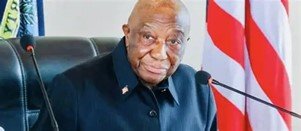
President Joseph N. Boakai appeared to be choked with tough decision-making dilemma as Liberia confronts a growing security challenge on two fronts, including a worsening drugs crisis at home and renewed tensions along its border with Guinea, where reports indicate that Guinean soldiers may be attempting to consolidate forces to reclaim the disputed Solumbarea area in Lofa County.
Sources said the developments have placed additional pressure on the President and his government, which is already facing public concern over the scale of drug trafficking and consumption across the country.
The government’s anti-drug campaign has gained momentum in recent months, but the arrest of several high-ranking security personnel, and allegations involving others, has complicated the effort and raised questions about possible official protection of the narcotics trade.
At the same time, reports of renewed military activity near Sorlumba Crossing Point in Lofa County have revived longstanding fears of a border confrontation between Liberia and Guinea. The situation remains fluid, as reports claimed that Guinean troops returned and demanded Liberian security forces brought down the hoisted Liberian flag.
The President reportedly called an urgent National Security meeting to review the developments. However, any attempt by armed forces to alter control of the disputed territory could rapidly escalate tensions between the two neighboring countries.
The border crisis has been simmering since this year when Guinean troops into the Liberian side of the border and hoisted their flag.
De-escalating the tension, President Boakai visited Guinea and held talks with President Mamadou Doumuya, with the two leaders pledging to resolve the issue through diplomatic means. As engagements continued, including the involvement of other regional players, Guinean soldiers returned to base, but the situation has reportedly taken a new face.
The President seems once more troubled by the situation which many see as litmus test to presidency and his ability to weather the storm in a positive manner.
Liberia’s drug crisis has become one of the most visible public-security and public-health concerns facing the country. Communities, civil society organizations and families have repeatedly raised alarm over the growing availability of illicit substances, particularly among young people.
The government has responded with intensified arrests, seizures and public campaigns aimed at disrupting trafficking networks. Yet the involvement, or alleged involvement, of security officials has cast a shadow over the campaign.
The arrest of several senior security personnel has generated public interest because it suggests that drug networks may have established connections within institutions responsible for enforcing the law.
Allegations against other officials have further fueled suspicion that the trafficking problem is not limited to street-level dealers, but may involve individuals with access to state resources, border routes and sensitive security information.
Those allegations require thorough and transparent investigation. Arrests alone will not establish guilt, and every accused person is entitled to due process. But the cases have nevertheless intensified demands for accountability, particularly from citizens who believe that corruption and political influence have allowed the drug trade to expand.
The credibility of the anti-drug campaign will depend heavily on whether the government can demonstrate that investigations are impartial and that enforcement applies equally to civilians, police officers, military personnel and other public officials.
Analysts and public-health advocates have also warned that arrests and seizures, while important, cannot by themselves resolve the crisis. Drug dependence, unemployment, limited rehabilitation services and weak community-based prevention programs are all contributing factors.
Without investment in treatment and reintegration, the country risks addressing the symptoms of the crisis while leaving its underlying causes untouched.
The reported movement of Guinean soldiers toward Solumbarea has introduced a separate and potentially more immediate security threat.
The area, located in Lofa County near Liberia’s border with Guinea, has been the subject of territorial disagreement and periodic friction. Reports that Guinean forces may be attempting to amalgamate or consolidate units to reclaim the disputed zone have raised concerns among residents and local authorities.
The reports come against the backdrop of a region where border communities often maintain close social and commercial ties that predate modern national boundaries. Families, traders and farmers on both sides of the frontier frequently depend on cross-border movement. Any military buildup could disrupt those activities, heighten fear among civilians and trigger displacement.
A confrontation in Lofa County would also carry wider regional consequences. Liberia and Guinea share a long border, and instability in one country has historically affected the other.
Armed movements, smuggling networks and political tensions have previously crossed national boundaries, making cooperation between security agencies and civilian authorities essential.
The Liberian government faces the difficult task of responding firmly without escalating the situation.
According to observers, an aggressive military posture could deepen tensions, while a delayed response could allow an alleged buildup to become more difficult to contain.
Diplomatic engagement, joint border monitoring and direct communication between the two governments may be necessary to prevent misunderstandings from turning into violence.
The simultaneous emergence of the drugs crisis and renewed border tensions exposes the strain on Liberia’s security institutions.
Resources that might otherwise be directed toward border surveillance, community policing and intelligence gathering are being divided between domestic enforcement and external security concerns.
The two crises may also be connected. Weak border controls can facilitate the movement of drugs, weapons and people, while insecurity along remote stretches of the frontier can create opportunities for criminal groups to operate with limited oversight.
If allegations of official complicity in the drug trade are proven, the problem would represent not only a law-enforcement failure but also a serious national-security vulnerability.
For ordinary Liberians, the consequences are likely to be felt most sharply in border communities and urban neighborhoods. Families affected by drug abuse face social and economic hardship, while residents near the Guinean frontier could be exposed to displacement, disrupted trade and possible armed confrontation.
The government is therefore under pressure to pursue a coordinated response rather than treat the two developments as unrelated incidents.
That response would need to include credible investigations into alleged official involvement in drug trafficking, stronger border controls, protection for civilians and sustained diplomatic contact with Guinea.
Regional organizations may also have a role to play if tensions continue to rise. Early intervention by regional mediators could help establish the facts surrounding Solumbarea and prevent the dispute from becoming a military confrontation.
For now, Liberia is navigating a dangerous period in which domestic criminal networks and cross-border security concerns are converging.
The government’s handling of both crises will determine not only the safety of affected communities, but also public confidence in the country’s institutions and its ability to protect its sovereignty without plunging the region into another cycle of conflict.
About The Author