By Stephanie M. Duncan
MONROVIA–President Joseph Nyuma Boakai has called for collective action among government, commercial banks, regulators, borrowers, the judiciary and development partners to resolve Liberia’s non-performing loan (NPL) crisis and unlock financing for private-sector growth and job creation.
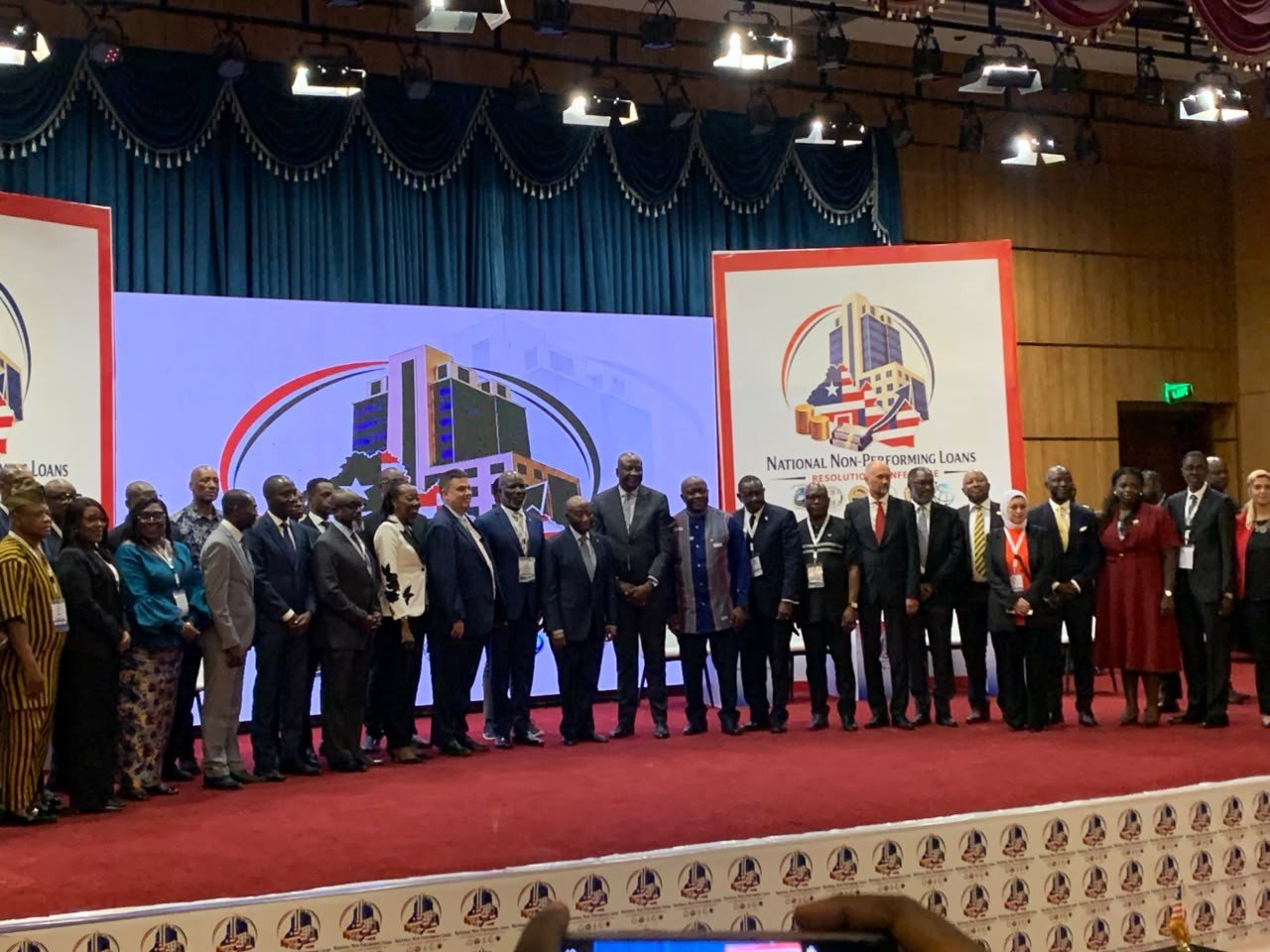
President Boakai made the call Wednesday at the opening of the National Conference on the Resolution of Non-Performing Loans, convened by the Central Bank of Liberia (CBL) in Monrovia.
The three-day conference brings together policymakers, regulators, financial institutions, members of the judiciary and legislature, development partners, the private sector and other stakeholders to develop practical measures for addressing distressed loans in Liberia’s banking sector.
President Boakai said NPLs should not be viewed merely as a technical banking matter, arguing that the issue has direct consequences for businesses, employment and economic opportunities.
“At first glance, non-performing loans, or NPLs, may sound like a technical banking issue, something for bankers, accountants, regulators and economists to worry about. But NPLs are not just about banks. They are about businesses. They are about jobs,” President Boakai said.
He said the challenge affects farmers seeking financing to expand production, entrepreneurs trying to access capital, businesses seeking to expand and young Liberians hoping to turn innovative ideas into viable enterprises.
According to the President, when loans are not repaid, money that should circulate through the economy becomes tied up, making banks more cautious about lending and making credit more difficult and expensive to obtain.
He said Liberia’s Agenda for Inclusive Development cannot be achieved without a strong and healthy financial system capable of financing productive economic activity.
President Boakai stressed that the responsibility for resolving the NPL problem must be shared.
“Banks must lend responsibly and conduct proper assessment of those to whom they lend. Borrowers must also understand that the loans are obligations that must be repaid,” he said.
He added that contracts and collateral must have meaning, while legal and judicial institutions must be capable of resolving financial disputes fairly and efficiently.
The President acknowledged weaknesses in Liberia’s credit assessment and risk-management systems, credit information, collateral enforcement, legal and judicial processes, financial discipline and repayment culture.
He called for improvements in credit reporting, land administration and collateral registration, greater use of technology, responsible digital financial services and an improved insolvency framework.
“Resolving today non-performing loans is important, but preventing tomorrow bad loans is equally important,” President Boakai said.
The President also emphasized the role of government in Liberia’s credit ecosystem, particularly its responsibility to pay contractors and suppliers on time.
Finance and Development Planning Minister Augustine Kpehe Ngafuan said government arrears can eventually contribute to the creation of NPLs within the banking sector.
He explained that when government fails to pay contractors, suppliers or service providers on time, those businesses may be unable to pay their workers, suppliers, taxes and bank loans, potentially turning government arrears into non-performing loans on commercial bank balance sheets.
Ngafuan said the Boakai administration has made restoring government’s credibility and creditworthiness a policy priority.
“Our message is simple: when this government contracts with you, government must pay you,” Ngafuan said.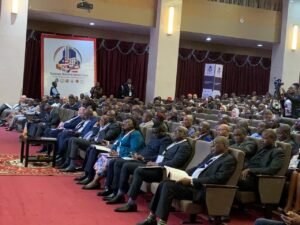
He disclosed that the government has budgeted nearly US$235 million for debt service in the current fiscal year, including more than US$90 million for debt service to commercial banks.
Ngafuan said restoring government’s creditworthiness is essential because credibility is an economic asset, warning that its loss can make borrowing more expensive, discourage investment and make partnerships more difficult.
He also called for sustained efforts to strengthen the economy and create an enabling environment for private-sector-led growth, noting that government cannot and should not be the employer of every Liberian.
Meanwhile, CBL Executive Governor Henry F. Saamoi said Liberia’s banking sector recorded an NPL ratio of 19.1 percent at the end of 2024, nearly twice the prudential benchmark.
Although the ratio declined to 4.9 percent in 2025, Saamoi cautioned that much of the improvement resulted from restructurings and write-offs rather than sustainable cash recoveries.
He said the situation underscores the urgency of structural reforms to strengthen repayment performance, credit discipline and debt recovery.
Saamoi noted that Liberia’s challenge is not unique, pointing to NPL ratios recorded in other African countries, including Ghana at 21.8 percent, Nigeria at 8.1 percent, Guinea at 6.7 percent and The Gambia at 4.6 percent in 2024.
He said the conference is intended to develop a shared understanding of the nature and causes of NPLs, assess regulatory, legal and judicial frameworks, identify practical reforms and develop a national NPL resolution roadmap.
Georgia Wallen, World Bank Country Manager for Liberia, said resolving NPLs is critical to Liberia’s growth and employment agenda, noting that distressed assets weaken bank profitability and reduce the capacity of financial institutions to provide credit.
Wallen said the World Bank-supported 2026 Financial Sector Assessment identified the scale and nature of Liberia’s NPL challenge, with NPLs accounting for about 19 percent of total loans at the end of 2024.
She noted that the subsequent decline was driven mainly by write-offs and restructurings rather than cash recoveries.
Wallen also said Liberia’s loan-to-deposit ratio remains around 35 percent, reflecting limited incentives for banks to lend, while nearly 40 percent of surveyed Liberian businesses identified lack of access to finance as their biggest challenge last year, up from 30 percent a decade ago.
She outlined four priorities for consideration, including building an ecosystem of trust through improved borrower identification and credit reporting, strengthening financial institutions’ underwriting and governance, resolving distressed assets quickly and transparently, and linking financial stability to deeper and more inclusive access to finance.
Wallen highlighted the World Bank Group’s ongoing support to Liberia, including the US$40 million Liberia Investment, Finance and Trade Project, which contains a US$6 million line of credit facility that has reached 253 MSMEs across the country.
She said 64 percent of the beneficiary businesses are women-owned and collectively employ more than 3,600 Liberians, while nearly 500 jobs have been created since businesses accessed financing through the facility.
Wallen said the World Bank Group, including the World Bank, IFC and MIGA, remains committed to partnering with Liberia to strengthen its financial sector and expand access to finance.
President Boakai said the ultimate measure of success would not be the speeches delivered or recommendations produced at the conference, but the actions taken afterward.
“The success of this conference will not be measured by the speeches we make or the recommendations we write. It will be measured by what we do after we leave this room,” he said.
He urged stakeholders to leave the conference with clear agreement on what must change and who will be responsible for implementing those reforms.
The conference is expected to conclude with a conference communiqué, an NPL resolution policy roadmap and a reform action plan aimed at reducing distressed assets, strengthening financial-sector resilience, modernizing credit infrastructure and expanding access to finance across Liberia.
About The Author