Othello s. Nimely
Monrovia-Former President George Weah’s Chief of Office Staff, Eugene Nagbe, says the Congress for Democratic Change (CDC) will seek judicial review of Liberia’s newly enacted Cybercrime Act, arguing that the law violates constitutional protections for freedom of expression.
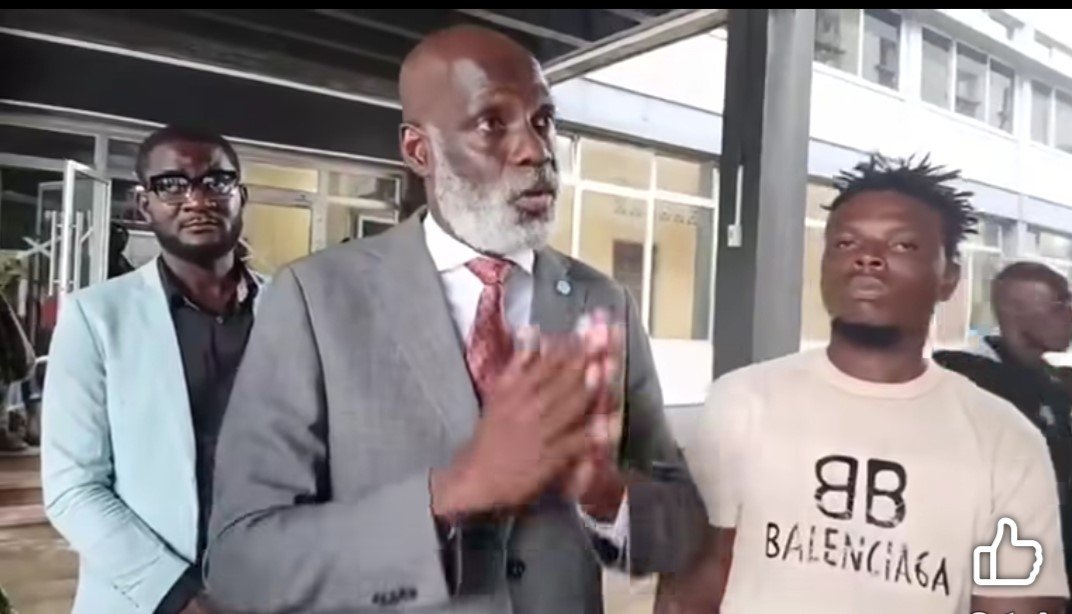
Nagbe made the statement in Monrovia Tuesday following the latest legal developments surrounding Jerry Nyantee Wratto, who was arrested in connection with the alleged posting of an artificial intelligence-generated photo involving Vice President Jeremiah Kpan Koung.
According to Nagbe, the CDC intends to ask the court to cancel the Cybercrime Act, which he described as unconstitutional.
He argued that the law could have a chilling effect on free speech if citizens become afraid to express their views.
Nagbe also maintained that people who enter politics should expect criticism and public commentary.
”If a person does not want to be posted, that person should not get into politics,” Nagbe said.
The former president’s Chief of Office Staff said the CDC would stand with Wrato in court and support his legal challenge.
The comments come amid growing public debate over the application of Liberia’s Cybercrime Act, particularly in cases involving political expression and content shared on social media.
The case attracted additional attention after Vice President Koung publicly called for Wrato’s release, saying he did not wish to pursue criminal charges against him.
However, Police Inspector General Gregory O. W. Coleman said the police would proceed with the case, arguing that once conduct potentially constituting a criminal offense comes to the attention of law enforcement, the matter is no longer determined solely by the wishes of the person allegedly targeted.
Police said their investigation resulted in four alleged cybercrime offenses against Wrato, misuse of devices, cyberstalking, distribution of data messages that incite damage to property or violence, and distribution of harmful data messages.
The police identified Sections 10.1, 15.1, 18.1 and 19.1 of the Cybercrime Act as the provisions involved.
Despite the charges, Wrato’s lawyers argued that he had spent more than 72 hours in police custody without being formally charged and brought before a court. The legal team subsequently filed a writ of habeas corpus, challenging his continued detention.
Following the filing, the court ordered Wrato’s release from custody.
Nagbe’s position is that the Cybercrime Act should not be used to restrict legitimate expression or political criticism.
About The Author