By Stephanie M. Duncan
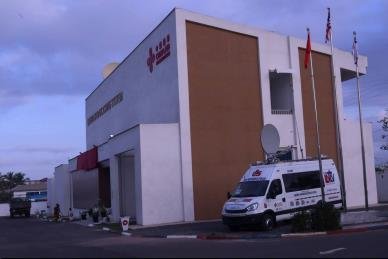
Monrovia -President Joseph Nyuma Boakai Sr. on Friday dedicated the newly constructed broadcast complex of the Liberia Broadcasting System in Paynesville, fully funded by the People’s Republic of China under its international aid program.
Performing the dedication ceremony, President Boakai described the facility as a major milestone in Liberia’s communication and media development.
Speaking during the dedication ceremony held at the LBS Compound on May 8, President Boakai said the modern facility, constructed at a cost of US$5.5 million through China Aid, represents a “proud and historic day for Liberia.”
The Liberian leader praised the Government and people of the People’s Republic of China for the support, particularly Chinese President Xi Jinping, whom he referred to as a “friend and brother.”
“On behalf of the Government and people of Liberia, I extend profound gratitude to President Xi, the Government of China, and the Chinese Ambassador to Liberia for this extraordinary support and partnership,” President Boakai stated.
According to the President, the new complex ushers in a new era for public broadcasting in Liberia, replacing the country’s long-used 2,000-kilowatt transmission system with a modern 10,000-kilowatt capacity aimed at expanding nationwide coverage and improving broadcasting services.
He disclosed that the facility contains seven modern studios, a central control system, satellite broadcasting capability, and other advanced technical infrastructure that meets international standards. The project also includes a fire hydrant and water supply system intended to benefit both the institution and nearby communities.
President Boakai used the occasion to reaffirm his administration’s commitment to press freedom and the protection of journalists. During the ceremony, the broadcast complex was named in honor of late Liberian journalist Charles Cornelius Gbeyon, who was killed while carrying out his professional duties.
“We are deeply honored that his two children have traveled from the United States to join us in preserving their father’s memory and legacy,” the President said.
He emphasized that honoring the late journalist reflects the government’s support for media freedom and the right of journalists to work without fear or intimidation.
“You may silence a journalist, but you can never silence the ideals of truth, liberty, and freedom,” he declared.
President Boakai also reflected on the long history of LBS, formerly known as the Liberia Broadcasting Corporation, which was founded in 1956 and has served as the national broadcaster for nearly seven decades.
He noted that the institution suffered severe damage during Liberia’s civil conflict, forcing many professionals into hardship and displacement, but commended the resilience of those who kept the institution alive over the years.
The President paid tribute to several former media practitioners and contributors to Liberian broadcasting, including Tommy Raynes, Eustace Smith, Kwame Clement, Charles Gbeyon, Victoria Raffell, Olivia Shannon, Cyrus Badio, Patrick Manjoe, and Charles Snetter.
Declaring that “LBS is back on track as a world-class broadcasting institution,” President Boakai said the new facility aligns with his administration’s vision of transforming the broadcaster into a truly public service institution that promotes education, culture, patriotism, reconciliation, and national unity.
He urged employees of LBS to uphold professionalism and integrity in managing the facility.
“To the employees of LBS — this building is now entrusted to your stewardship. Its true value will be measured by your professionalism, your integrity, and your service to the Liberian people,” he said.
President Boakai concluded by calling on Liberians to remain committed to national development and unity, while again expressing appreciation to China, the Board of LBS, Director General Eugene Fahngon, and the entire LBS team for their dedication and service.
About The Author