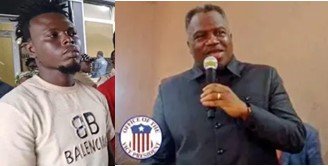
Wrato VP Koung
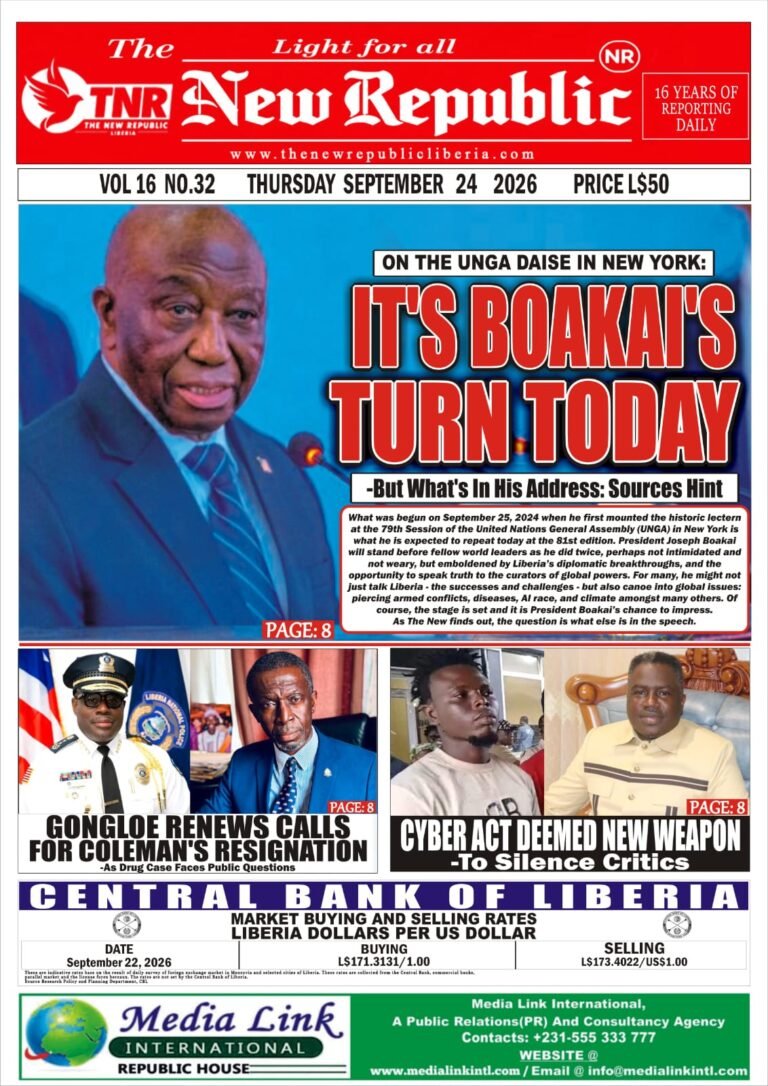
Monrovia-A new cybersecurity law being pushed by the Boakai administration is fast becoming one of the most contentious pieces of legislation in post-war Liberia, condemned by press freedom advocates as a weapon to silence critics, and defended by government as a shield to protect citizens from online abuse.
The debate exploded this week after the arrest of a Liberian citizen over allegations of cyberbullying Vice President Jeremiah Kpan Koung, triggering street protests online and fears that the law will be used to criminalize dissent.
The Liberia Cybersecurity and Cybercrime Act, which was passed by the Legislature and is now being operationalized by the Liberia Telecommunications Authority and Ministry of Justice, was presented by government as a modern response to growing digital threats, fraud, hacking, identity theft, child pornography, and online harassment.
But buried inside the wide-ranging law are provisions on “cyberbullying,” “cyber harassment,” “publication of false information,” and “sending of offensive communication” that carry prison terms of up to 3-5 years and heavy fines.
For the Press Union of Liberia (PUL), Center for Media Studies, and several civil society groups, those clauses are dangerously vague.
“The definitions are so broad that a Facebook post criticizing a public official can be interpreted as cyberbullying,” said a senior PUL official who asked not to be named because the Union is preparing an official position.
“This is not a cybersecurity act. It is a political protection act.” But the Liberian Government disagrees with the assertion, as Information Minister Jerolinmek Piah has previously argued that Liberia cannot remain lawless online while other nations regulate.
“Freedom of speech is not freedom to insult, defame and threaten people. The Vice President is a human being. Public officials also have right to dignity,” a Justice Ministry source said.
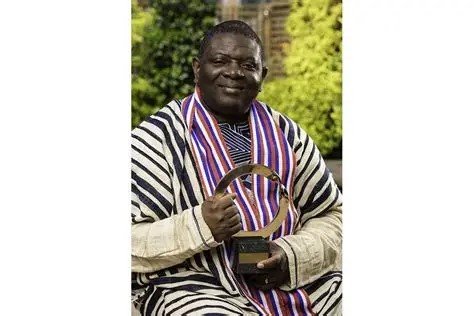
The flashpoint came when officers of the Liberia National Police arrested a young Liberian identified on social media as Jerry Nyanti Wratto for allegedly publishing offensive and demeaning content against Vice President Koung on Facebook and TikTok.
According to police sources, Wratto is accused of repeatedly posting videos and texts calling the Vice President derogatory names, accusing him of corruption and questioning his academic credentials, content which the VP’s office reported as cyberbullying and harassment under the new law. He made it clear he did not want the police to press charges against him, arguing “public office comes with a lot of things.”
The man was picked up in Monrovia, detained at LNP headquarters, and later charged and forwarded to court.
The developments drew critics concerns, asking when insulting a Vice President become a felony.
“If you are a public official, public scrutiny comes with the job. You cannot use police to arrest everyone who calls you names on Facebook. Then you will arrest the whole country,” said human rights activist and lawyer.
For President Joseph Boakai, who came to power promising to rescue Liberia and restore rule of law and who himself was a frequent target of online attacks during the campaign, the law presents a political trap.
His supporters argue Boakai needs to protect his officials from a toxic social media culture where disinformation spreads faster than truth. They point to rampant fake news, AI-generated deepfakes ahead of 2029, and the recent NAYMOTE warning about AI threats to elections.
But his critics, including some within his own Unity Party, warn he risks repeating the mistake of former President George Weah, whose administration was accused of trying to pass similar restrictive laws and was slammed for press freedom violations.
“The same Spoon Talk, Punch FM, and Facebook bloggers who helped Boakai win by attacking Weah daily are now realizing that the same law can be used to jail them,” said a political analyst in Monrovia.
“The government is essentially criminalizing the very weapon that brought it to power.
Legal experts who reviewed the Act point to three problematic sections, including Section 14.3, on Cyberbullying, which says “Any person who uses electronic communication to bully, harass, threaten or cause emotional distress commits an offence,” section 18 on false Information, which also points to “publishing false information likely to cause public panic or tarnish reputation,” and Section 22 on offensive communication, which speaks to “sending messages deemed grossly offensive, indecent or menacing.”
The punishment ranges from fines of US$500 to US$5,000 and imprisonment of about 2-3 years.
There is no clear distinction between public figures and private citizens, no public interest defense, and no requirement to prove actual harm beyond emotional distress.
But supporters say Liberia is not alone in this kind of law, indicating that Sierra Leone, Ghana and Nigeria have all passed similar cybercrime laws that have been used to arrest journalists and activists, drawing condemnation from ECOWAS Court and UN Human Rights bodies.
The Liberia National Bar Association is said to be reviewing the law for constitutional challenge, arguing it violates Article 15 of the 1986 Constitution guaranteeing freedom of speech and press.
Meanwhile, civil society is calling for amendments, to decriminalize defamation, define cyberbullying narrowly, exempt political commentary on public officials, and provide civil remedies rather than jail.
The opposition Congress for Democratic Change (CDC) has announced it is mulling the possibility of seeking judicial review of the Cybercrime Act, which it claims violates constitutional protections for freedom of expression.
Len Eugene Nagbe, an Executive of the CDC said amid legal developments surrounding Wratto, who was arrested in connection with the alleged posting of an artificial intelligence-generated photo involving Vice President Jeremiah Kpan Koung.
he said the CDC intends to ask the court to cancel the Cybercrime Act, which he described as unconstitutional, arguing the law could have a chilling effect on free speech if citizens become afraid to express their views.
Nagbe also maintained that people who enter politics should expect criticism and public commentary. ”If a person does not want to be posted, that person should not get into politics,” Nagbe said.
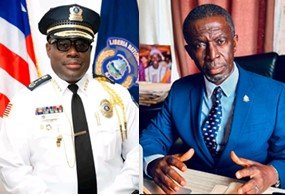
VP Koung publicly called for Wratto’s release, saying he did not wish to pursue criminal charges against him, but Police Inspector General Gregory O. W. Coleman said the police would proceed with the case. He insisted once conduct potentially constituting a criminal offense comes to the attention of law enforcement, the matter is no longer determined solely by the wishes of the person allegedly targeted.
Police said their investigation resulted in four alleged cybercrime offenses against Wrato, misuse of devices, cyberstalking, distribution of data messages that incite damage to property or violence, and distribution of harmful data messages.
The police identified Sections 10.1, 15.1, 18.1 and 19.1 of the Cybercrime Act as the provisions involved.
Nagbe’s position is that the Cybercrime Act should not be used to restrict legitimate expression or political criticism.
However, at the Ministry of Justice, sources say the government is willing to issue regulations to narrow implementation, but will not repeal the law entirely.
In Duala and Red Light, where politics is debated loudly, the feeling is mixed. “VP Koung is my leader but you can’t arrest people for talking. If you don’t want to be insulted, don’t do politics,” said a commercial motorcyclist.
“If they insult your mother on the internet, will you be happy? There must be law,” countered a market woman.
For now, the citizen remains in detention awaiting court, while the larger question that awaits the nation is whether Liberia’s new cybersecurity law a necessary shield for the digital age, or a new weapon to silence critics.
For a president who promised that “no one will be above the law and no one will be below it,” how he handles this first major test of free speech under the new act may define his legacy more than any revenue target.
About The Author