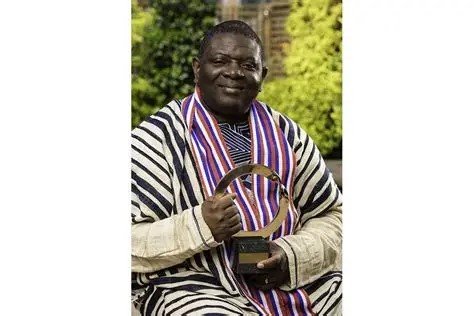
Monrovia-Liberian environmental lawyer and human rights defender Cllr. Alfred Brownell has won another major international honor, cementing his status as one of Africa’s most celebrated champions of environmental justice.
The Elisabeth Haub School of Law at Pace University announced that the 2026 Elisabeth Haub Award for Environmental Law and Diplomacy, regarded as the world’s most prestigious award in environmental law, will be jointly awarded to Brownell and American environmental lawyer Durwood Zaelke.
The award, which recognizes groundbreaking contributions to the progressive development of environmental law, will be presented during a ceremony at Pace University in New York City on Wednesday, October 21, 2026.
In a statement Monday, Dean Horace E. Anderson Jr., who also serves as President of the Haub Award Jury, said both honorees have demonstrated the transformative power of law to address some of the world’s most pressing challenges.
“Alfred Brownell and Durwood Zaelke exemplify the vision and leadership that the Elisabeth Haub Award was created to recognize,” Anderson said. “Throughout their distinguished careers, they have demonstrated the power of law and international cooperation to turn environmental priorities into meaningful action. Together, their work has strengthened legal systems and institutions, protected communities and the natural world, and advanced innovative responses to increasingly complex global environmental challenges.”
“Alfred Brownell has pioneered legal strategies to protect communities, environmental and climate defenders, and natural resources while advancing environmental rights and climate justice across Africa and globally,” the statement noted.
His co-honoree, Durwood Zaelke, founder and President of the Institute for Governance & Sustainable Development (IGSD), was recognized for leading efforts to strengthen the Montreal Protocol and secure the landmark Kigali Amendment, which phases down powerful greenhouse gases and could avoid up to 0.5°C of warming by 2100.
Brownell, a Liberian environmental lawyer, law professor and human rights advocate, is the Founding President of Global Climate Legal Defense (CliDef), which provides legal support and protection to climate activists and defenders worldwide.
He previously founded and led Green Advocates International, Liberia’s first public interest environmental law and human rights organization, where he led the fight against large-scale palm oil companies threatening Liberia’s tropical rainforests and community land rights – work that earned him the Goldman Environmental Prize for Africa in 2019, often called the Green Nobel.
An academic of global standing, Brownell has served as Distinguished Scholar in Residence and Associate Research Professor at Northeastern University School of Law, Visiting Fellow at Yale Law School, and Visiting Professor and Robert F. Drinan Chair 2024-2025 in Human Rights at Georgetown University School of Law.
Today, Brownell is at the forefront of two historic Pan-African legal campaigns, seeking an advisory opinion from the African Court on Human and Peoples’ Rights on the legal obligations of African States in responding to the climate crisis; and an effort to develop a binding regional environmental rights treaty for Africa.
He serves as Lead Campaigner for both the African Climate Platform (ACP) and the Environmental Rights Africa Coalition (ERA), while through CliDef, he is building legal defense infrastructure to protect climate activists facing harassment, lawsuits and threats.
“Alfred Brownell and Durwood Zaelke embody the courage, vision, and commitment necessary to move environmental law forward,” said Liliane Haub, environmental advocate, Pace University Trustee and member of the Haub Award Jury.
“Their work demonstrates the power of law, advocacy, and international cooperation to protect people and the natural world and to drive meaningful action on environmental challenges that transcend borders.”
The Elisabeth Haub Award for Environmental Law and Diplomacy has a distinguished history dating back to 1979, shaped through collaborations with the Université libre de Bruxelles and the International Council of Environmental Law. Since 2016, it has been established in its current form by the family of Elisabeth Haub (1899–1977), a noted philanthropist and conservation advocate.
About The Author