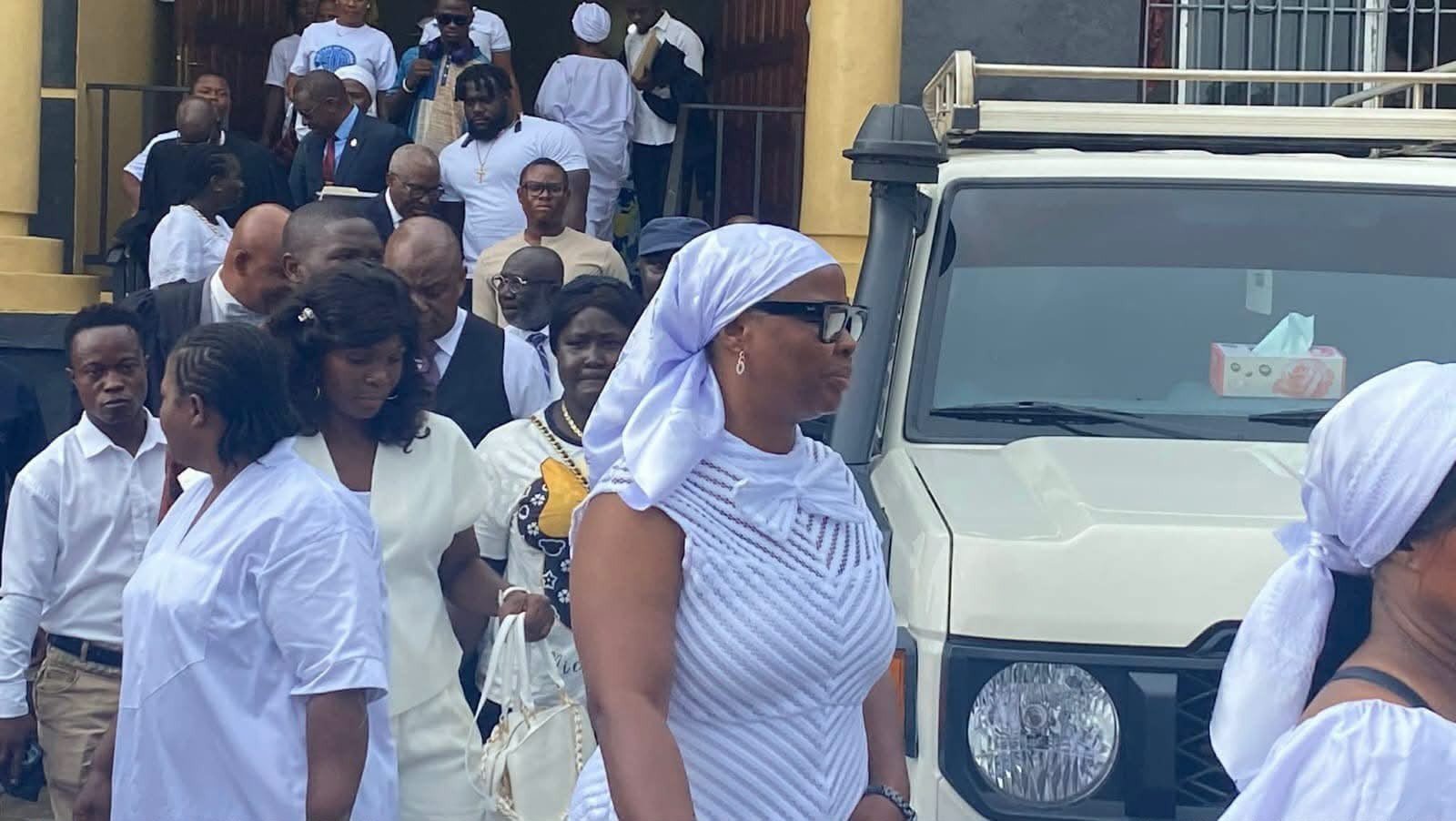
MONROVIA-Former Executive Mansion Chief of Protocol Nora Finda Bundoo has petitioned the Supreme Court of Liberia to halt the enforcement of a Criminal Court “C” ruling that resulted in her detention at the Monrovia Central Prison, arguing that the trial court violated both statutory law and constitutional protections.
Through a Petition for a Writ of Prohibition filed before the Justice in Chambers, Bundoo is seeking to overturn Judge Ousman F. Feika’s decision rejecting her criminal appearance bond, denying her motion to justify sureties, ordering her immediate re-arrest, and requiring her to post an US$8 million criminal appearance bond.
Bundoo is among more than 48 current and former government officials and private individuals indicted in a corruption case being prosecuted by the Assets Recovery and Property Retrieval Task Force (AREPT). She faces multiple charges, including money laundering, theft of property, misuse of public money, criminal conspiracy, forgery, criminal facilitation, and the illegal use of public property and records.
According to the petition, Bundoo was outside Liberia undergoing medical treatment when the Grand Jury returned the indictment on November 5, 2025. Upon learning of the charges, she voluntarily returned to Liberia on June 9, 2026, appeared before Criminal Court “C,” accepted service of the writ of arrest and indictment, and submitted herself to the jurisdiction of the court.
Her legal team argues that her decision to return voluntarily demonstrates her willingness to face the charges and contradicts any suggestion that she intended to flee the country.
Court records indicate that Bundoo’s initial criminal appearance bond was rejected because one of the proposed sureties, Cllr. Abraham Wade Simpson, also served as defense counsel, while another surety, Fallah Fallabou, was himself a co-defendant in the case. Judge Feika subsequently granted her 72 hours to submit a new bond.
Bundoo later filed a replacement bond backed by Cllr. John Moses Gbetee and Kai Garlo Farley. However, prosecutors objected, arguing that Gbetee’s property had already been pledged to secure several other criminal appearance bonds and that the bond amount did not correspond with the value of the funds Bundoo allegedly misappropriated.
In a ruling delivered on July 21, Judge Feika agreed with the prosecution, finding that Gbetee’s property—valued at approximately US$350,000—had already been used to secure bonds totaling more than US$2 million, making it inadequate as security. The court also accepted the prosecution’s argument that Bundoo’s bond should reflect the amount attributed to her in the indictment and fixed the bond at US$8 million.
The judge further ordered that Bundoo be arrested and detained at the Monrovia Central Prison if she failed to satisfy the court’s bond requirements.
Before the Supreme Court, Bundoo contends that Judge Feika exceeded his authority by ordering her imprisonment without first allowing her the 72-hour period provided under Liberia’s Civil Procedure Law to file a replacement or additional bond after declaring the previous one insufficient.
Her lawyers also argue that the US$8 million bond violates Article 21 of the Liberian Constitution, which guarantees the right to reasonable bail and prohibits excessive bail. They maintain that requiring Bundoo alone to post such a substantial bond, while other defendants in the same case have been released on separate bonds, amounts to unequal treatment under the law.
The petition further challenges the trial court’s interpretation that a criminal appearance bond should equal the amount allegedly stolen. Citing previous Supreme Court decisions, the defense argues that the purpose of a criminal appearance bond is to ensure a defendant’s appearance before the court, not to compensate the government for alleged financial losses.
Bundoo’s petition also states that after learning of Judge Feika’s arrest order, she did not evade authorities. Instead, her lawyers say she voluntarily reported to the Monrovia Central Prison, informed prison officials of the court’s decision, contacted the court sheriff, and waited to be formally taken into custody.
The defense argues that her conduct reflects good faith and demonstrates her continued willingness to cooperate with the judicial process as the Supreme Court considers her petition.
At the same time, the Supreme Court of Liberia has ordered the immediate release of the former Chief of Protocol from the Monrovia Central Prison pending a conference on her petition for a Writ of Prohibition challenging proceedings before Criminal Court “C.”
In an official communication dated July 22, 2026, Associate Justice Yussif D. Kaba, sitting in Chambers, cited Criminal Court “C” Judge Ousman F. Feika to appear at a conference on Tuesday, August 4, 2026, at 3:00 p.m. to respond to the petition.
Bundoo’s petition names Judge Feika as the first respondent, while the Asset Recovery and Property Retrieval Task Force (AREPT), represented by its Chairman, Cllr. Edwin K. Martin, along with the Ministry of Justice, are listed as second respondents.
Justice Kaba further ordered Judge Feika to release Bundoo into the custody of her legal counsel, Cllr. M. Watkins Wright and Cllr. Abraham Wade Simpson, pending the outcome of the conference.
As a condition of her release, the Supreme Court directed Bundoo to surrender her passport to the Sheriff of Criminal Court “C” while the matter remains before the Court.
The order effectively pauses the enforcement of Criminal Court “C”’s decision that remanded Bundoo to the Monrovia Central Prison after the court rejected her second criminal appearance bond and imposed an US$8 million bond in the high-profile corruption case involving allegations of the diversion and laundering of millions of dollars in public funds.
Bundoo’s legal team is seeking a Writ of Prohibition to halt further enforcement of Judge Feika’s ruling while the Supreme Court reviews the legality of the lower court’s actions.
The August 4 conference is expected to determine whether the Supreme Court will grant the writ sought by Bundoo or allow Criminal Court “C” to proceed with the prosecution.
About The Author