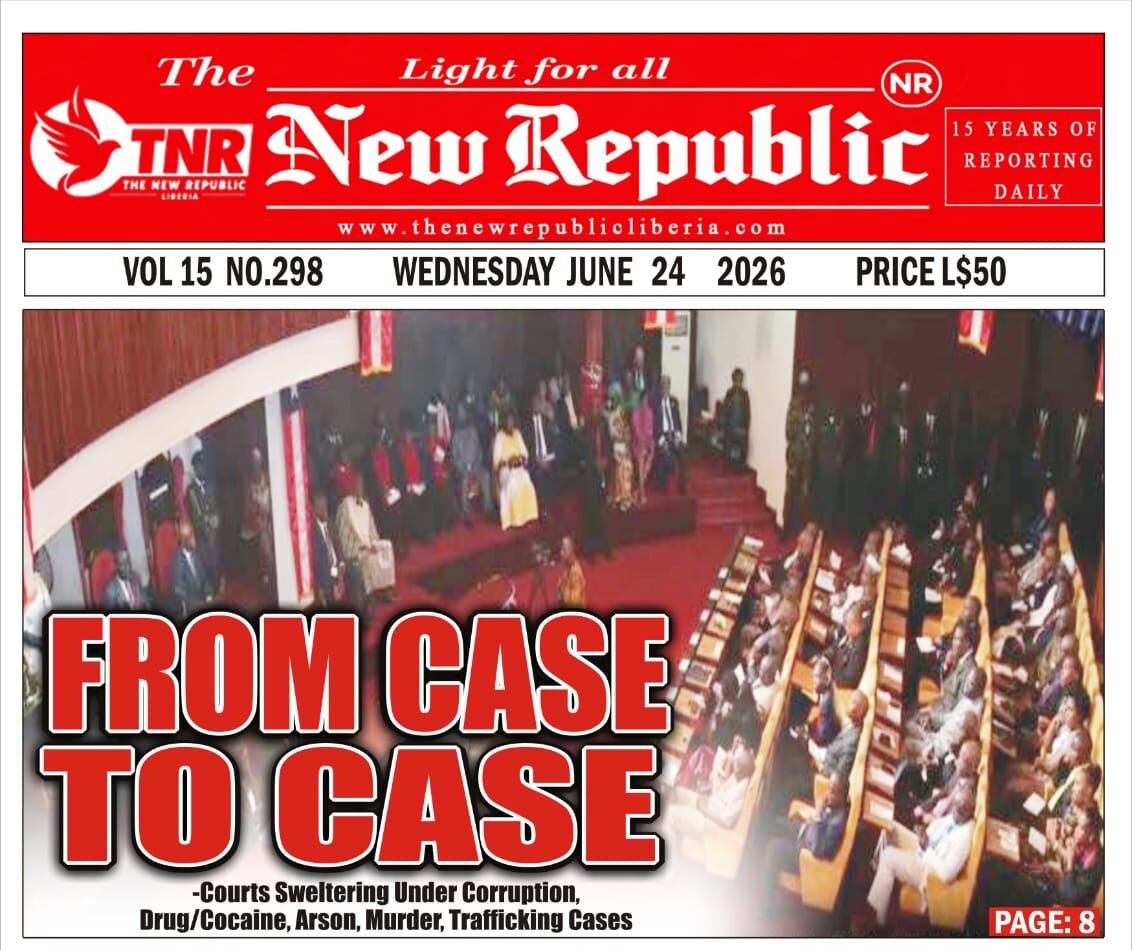
MONROVIA – While Civil Law Court, Criminal Courts A and C are endeavoring to dispose of big corruption, drug and other cases involving high-profile individuals with conviction or acquittal, more and more cases are surfacing on a daily basis. With the corruption case involving former officials of government still swinging and others are opening for trial, the big cocaine bust case is adding weight to the neck of the judges.
As it stands, the Temple of Justice, the epicenter of Liberia’s prosecution regime, is bursting at the seams.
From one court to another, dockets are overflowing with different cases and trials ranging from arson, trafficking, armed robbery, sodomy, and drug cases stacking up week after week. One legal expert told this paper that the building itself is hot, crowded, and under pressure, calling it a “physical reflection of the strain inside Liberia’s justice system.”
Legal experts say the overload has spiked sharply since the Boakai administration took office in 2024. The government’s push to bring more corruption and criminal cases to court means more files, more defendants, more lawyers, and more citizens waiting years for a verdict.
What is begging answer is whether the overflow of docket a sign that justice is finally working or a warning that the system itself is about to break.
Court staff and lawyers describe the situation as “unprecedented” in recent memory.
At present, Criminal Court A & C are piled up with cases of all sorts with the dominant ones being murder, armed robbery, drug trafficking, rape/sodomy. Some murder files have been pending since 2020-2022 with repeated continuances.
While most of the cases are under trial, but somehow prolonged due to legal ramifications, new cases, very serious ones are emerging.
Criminal Court C, specialized in drug and trafficking cases, is said to be feeling the pinch.
The $19m cocaine saga and other large seizures have added complex, evidence-heavy trials that require months of hearings. The Liberia Anti-Corruption Commission (LACC) and Ministry of Justice have sent multiple high-profile cases to court since 2024 — involving public officials, SOEs, and procurement fraud. Each case brings boxes of documents and long witness lists.
The Capitol Arson case is far from over so also are others such as land conflicts all of which have fueled a rise.
The situation has brought to bear capacity and load issue. As it stands, Liberia has 9 judicial circuits covering 15 counties, but most complex cases are tried in Monrovia.
It is gathered that the Temple of Justice was not designed for this volume. “Courtrooms are often standing-room only. Air conditioning fails regularly. Judges, clerks, and jurors work in sweltering conditions,” one lawyer interjected.
Prior to the Boakai administration’s sweeping prosecution pursuit, the courts were already backlogged before 2024.
COVID-19 court closures, jury delays, and lack of sheriffs created a pipeline of old cases. New prosecutions are being added to that pipeline without a matching increase in judges, prosecutors, or courtrooms.
“The government is doing its job by sending cases,” says one senior defense lawyer who asked not to be named. “But the Temple was already full. Now it’s overflowing.”
A swollen docket doesn’t just mean long waits. It creates ripple effects for defendants as Pre-trial detention periods stretch. Some accused of non-violent crimes spend more time in Monrovia Central Prison waiting than they would if convicted. The constitution requires “speedy trial,” but reality lags.
Also, families of murder victims wait years for closure. Witnesses lose interest, move, or die before testifying, and evidence degrades, while judges face 5-8 cases per day. “That pressure increases risk of errors, plea bargains just to clear files, and “justice fatigue,” he said.
According to them, when cases take 3-5 years, citizens conclude “justice delayed is justice denied.” That cynicism hurts the same anti-corruption drive the government wants to promote.
Judiciary officials acknowledge the strain but point to steps being taken. Criminal Court C has added special sessions to hear drug cases faster, while prosecutors are using more plea deals in minor cases to free up trial time for murder and trafficking.
The Ministry of Justice defends the prosecution push, saying “You can’t fight corruption by keeping cases in drawers. A jammed docket means impunity is being challenged. The solution is more resources for the courts, not fewer cases.”
Legal analysts call this a “good problem to have” — it means cases are being filed instead of buried. But they warn it becomes dangerous if infrastructure doesn’t catch up.
Without those fixes, experts warn, the Temple of Justice risks “justice gridlock” — where filing a case becomes symbolic because trial may never happen.
The image of the Temple of Justice today is telling: packed courtrooms, sweating lawyers, defendants in handcuffs waiting hours for 5 minutes before a judge. It’s the face of Liberia trying to do more justice with the same tools.
The Boakai administration’s decision to bring more corruption and criminal cases to court is a political and legal statement. But statements don’t clear dockets. Only judges, clerks, sheriffs, and working systems do.
Liberia wants accountability. But accountability without capacity creates a new problem: a justice system so jammed that the very people demanding “rescue” lose faith in the rescue itself.
The courts are sweltering. The dockets are jammed. The next move belongs to the Legislature and Executive: fund the courts, reform the process, and make sure “more cases” actually means “more justice.”
About The Author