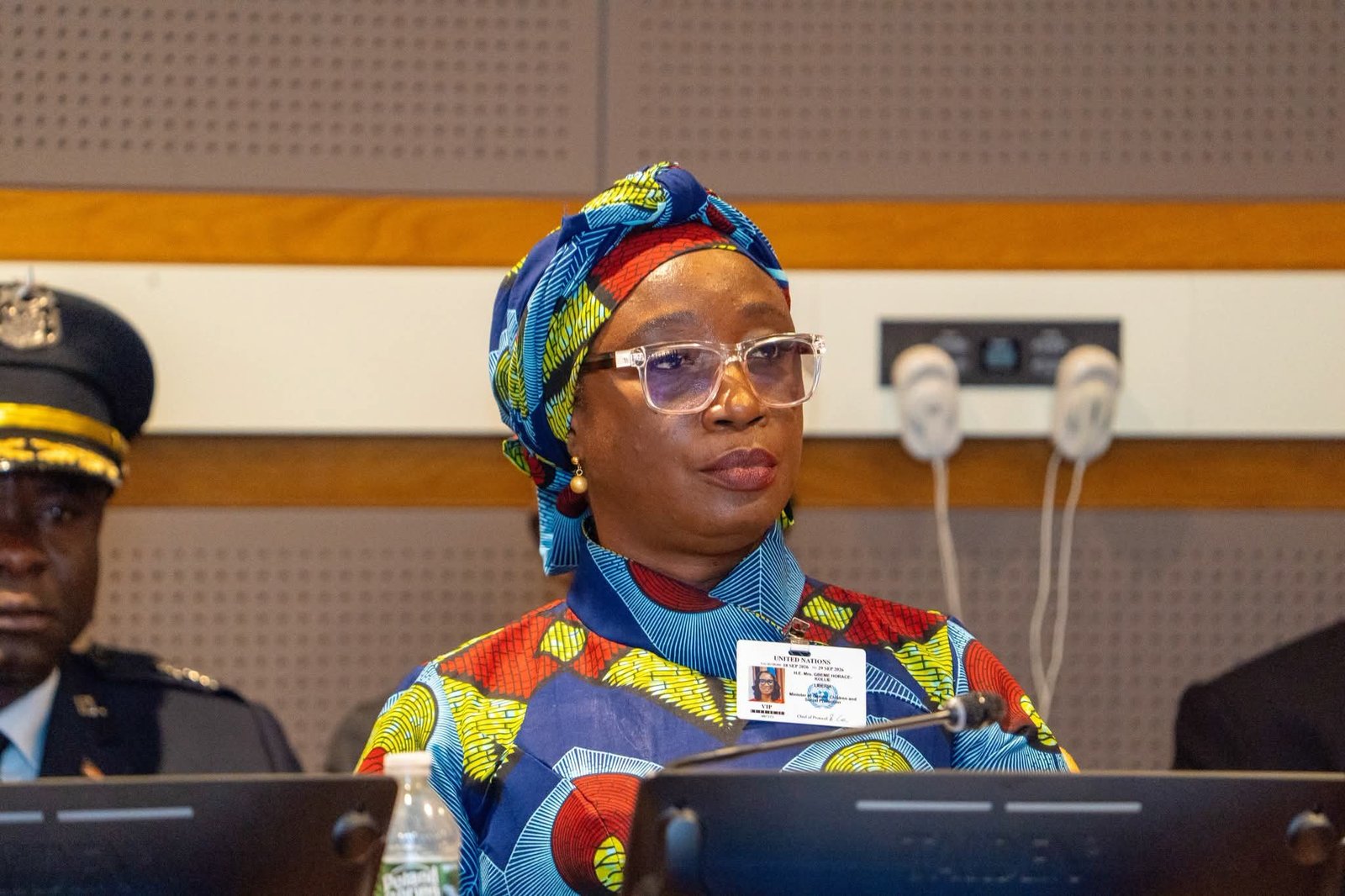
Monrovia-Minister of Gender, Social and Children Protection Gbeme Horace Kollie has called for sustained government investment in women’s safety, economic empowerment and leadership as Liberia moves to implement its Third National Action Plan on Women, Peace and Security for 2026–2031.
Kollie made the call Tuesday during Liberia’s high-level gathering at the United Nations Headquarters in New York, where she highlighted the contributions of Liberian women to peacebuilding and urged greater inclusion of women in decisions affecting the country’s future.
She said the Third National Action Plan must be backed by resources, clear targets and mechanisms for accountability if it is to produce meaningful results.
“Because a commitment without accountability is simply a promise,” Kollie said.
President Joseph Nyuma Boakai Sr. launched the Third National Action Plan with a commitment to provide political support, strengthen coordination among institutions and make resources available for its implementation.
The plan is expected to guide Liberia’s efforts to strengthen women’s participation in peacebuilding, leadership and security while addressing challenges affecting women and girls.
Kollie said the plan should reflect the experiences of women who have played a role in Liberia’s peacebuilding process, including Peace Hut women, market women, rural women and women’s rights advocates.
She credited women’s organizations with helping to mobilize communities, mediate conflicts and advocate for women’s rights.
“This Plan is yours before it becomes ours,” Kollie told representatives of women’s organizations.
The Minister also highlighted government initiatives intended to improve women’s economic opportunities.
She cited the Liberia Women Empowerment Project as an investment in women’s livelihoods, businesses and economic opportunities.
Kollie also referenced social protection interventions, including the REALISE project, which provides support to vulnerable households facing economic hardship.
She said economic empowerment is important to ensuring that women can participate in public life and have greater influence over decisions affecting their families and communities.
Beyond economic empowerment, Kollie identified gender-based violence as another area requiring continued government attention.
She outlined measures aimed at strengthening Liberia’s response to gender-based violence, including the establishment of the 116 GBV Call Center, expanded service mapping, stronger referral systems and improvements in data and case management.
According to Kollie, the measures are intended to improve survivors’ access to protection, justice and essential services.
She said the implementation framework for the Third National Action Plan contains assigned responsibilities, indicators, targets and costs.
The Ministry of Gender, Social and Children Protection will chair the National Steering Committee responsible for coordinating implementation of the plan.
“We want NAP III to be measurable, financed and implemented, and we want to be held accountable for delivering on it,” Kollie said.
President Boakai also stressed the importance of expanding women’s participation in national leadership, peacebuilding and security institutions.
“Now, we must ensure they have the opportunity, authority, and institutional support to lead,” Boakai said.
The President’s remarks emphasized the need to translate women’s contributions to Liberia’s peacebuilding efforts into greater opportunities for participation in national decision-making.
Kollie welcomed the President’s support for women’s inclusion in leadership, saying greater representation at the highest levels could create opportunities for younger women and girls.
She said the success of the Third National Action Plan would depend on whether government commitments are translated into concrete programs and whether adequate resources are provided for implementation.
Kollie also stressed the importance of ensuring that women remain involved in shaping and monitoring policies that affect their lives.
The Third National Action Plan on Women, Peace and Security covers the period 2026–2031 and is intended to strengthen women’s participation in peace and security, address violence against women and girls, and promote women’s leadership and economic empowerment.
For the women who participated in Liberia’s peacebuilding efforts, the implementation of the plan is expected to provide a framework for greater participation in leadership, improved economic opportunities, and stronger protection from violence and better access to justice.
About The Author