By Jamesetta D Williams
MONROVIA – Two political leaders and former presidential candidates have taken a unanimous stance against the Liberian government’s handling of the investigation into the $19million cocaine bust at the Roberts International Airport (RIA).
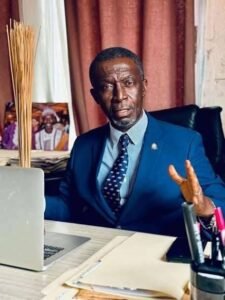
Cllr. Tiawan Saye Gongloe of the Liberia People’s Party (LPP) described it as an increasing culture of secrecy surrounding critical national issues, while Simeon Freeman said the authorities have failed to provide satisfactory answers about the case.
In a statement titled “Secrecy Is Not the Path to a Better Liberia,” Gongloe argued that the government’s handling of the high-profile drug case has raised serious concerns about transparency, accountability, and adherence to the rule of law.
According to Gongloe, the cocaine seizure should not be viewed as an ordinary criminal investigation but rather as a matter of national importance that demands public disclosure and accountability.
“This is not merely a police matter. It is a national security matter, a governance matter, and a rule of law matter,” Gongloe stated.
He emphasized that Liberians have a constitutional right to know key details surrounding the case, including the nature of the drugs seized, where the seizure occurred, who owns the shipment, who financed it, and whether arrests have been made or investigations are ongoing.
Gongloe maintained that such questions are legitimate in a democratic society and should not be dismissed by authorities.
“The citizens of Liberia deserve answers. These are not unreasonable questions; they are questions that citizens in a democracy have a right to ask,” he said.
The veteran human rights advocate warned that Liberia’s history has shown that secrecy in government affairs often breeds public distrust, fuels speculation, and undermines national stability. He argued that withholding critical information from the public weakens confidence in state institutions rather than strengthening them.
Beyond the drug seizure, Gongloe pointed to what he described as a broader pattern of secrecy under the current administration. He referenced concerns regarding the procurement of yellow machines, the controversial Foya Presidential Center Project, which he said was not included in the national budget, and ongoing concerns about the Liberia-Guinea border situation in Foya.
“The people deserve timely, accurate, and credible information, whether the issue involves public funds, national territory, or national security,” he asserted.
Citing Article 1 of the Liberian Constitution, Gongloe stressed that political power ultimately belongs to the people and that government officials have a responsibility to keep citizens informed about matters of significant public interest.
While acknowledging that certain aspects of criminal investigations may require confidentiality, Gongloe argued that there is a clear distinction between protecting an investigation and unnecessarily withholding information from the public.
“The people want to know who is behind this cocaine shipment. They want to know whether those responsible will be prosecuted. They want assurance that there will be no sacred cows and no untouchables,” he stated.
Gongloe further emphasized that justice must be applied equally to all individuals, regardless of social status, political affiliation, or influence.
“If powerful people are involved, let the law reach them. If public officials are involved, let the law reach them. If ordinary citizens are involved, let the law reach them. The rule of law must have no friends and no enemies,” he declared.
Drawing lessons from Botswana’s governance experience, Gongloe called on Liberia to embrace transparency, accountability, and strong democratic institutions, arguing that openness remains essential to building public trust and advancing national development.
His comments come amid growing public interest in the circumstances surrounding the multimillion-dollar cocaine seizure and renewed calls for greater transparency from government authorities.
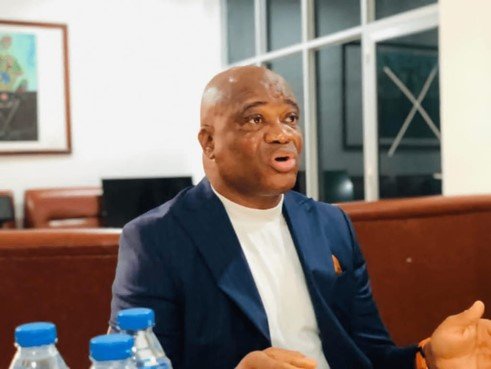
Also, Movement for Progressive Change political leader Simeon Freeman criticized the administration’s handling of the ongoing investigation into the recent multi-million-dollar drug seizure, arguing that authorities have failed to provide satisfactory answers about the case.
In a statement released on social media, Freeman questioned what he described as inconsistencies in the government’s approach to the investigation and accused officials of not moving aggressively enough to identify and prosecute those responsible.
According to Freeman, authorities initially argued that revealing certain information could compromise the integrity of the investigation. However, he claimed that the government later disclosed details about the case while key questions remained unanswered.
Freeman specifically pointed to the absence of arrests weeks after the drug seizure, contending that investigators should by now have identified major actors connected to the shipment.
“The drug story isn’t adding up,” Freeman stated, suggesting that information relating to the shipment’s origin, destination, handlers, and logistical arrangements should have already produced significant breakthroughs in the investigation.
He argued that international standards governing airport security and cargo handling typically provide investigators with access to critical information, including surveillance footage and documentation that can assist in identifying those involved in trafficking operations.
Freeman further questioned whether authorities have uncovered any evidence of previous shipments and called for greater transparency regarding the broader network allegedly linked to the seized narcotics.
Based on those concerns, Freeman concluded that the government has not demonstrated sufficient urgency in addressing the case.
“Announcing persons of interest after weeks without arrests raises serious concerns about the administration’s commitment to concluding the investigation,” he said.
The political figure also renewed criticism of the controversial Foya Presidential Center project, alleging that questions surrounding its funding sources remain unresolved. He claimed that the government has not adequately addressed public concerns regarding the financing of the project.
In addition, Freeman called for the public destruction of the seized drugs, arguing that prolonged storage of the narcotics could undermine public confidence in the handling of the evidence.
He also urged greater international scrutiny of the investigation and warned that Liberia’s reputation could suffer if authorities fail to provide clear answers regarding the drug trafficking case.
“This is no time for political loyalty when Liberia’s image and integrity are at stake,” Freeman asserted.
The government has not publicly responded to Freeman’s latest comments. However, officials have previously maintained that the investigation remains active and that authorities are committed to identifying all individuals connected to the shipment while protecting the integrity of the investigative process.
The recent drug seizure has generated widespread public debate and intensified calls for transparency as Liberians await further updates from law enforcement authorities regarding the status of the investigation and potential prosecutions.
About The Author