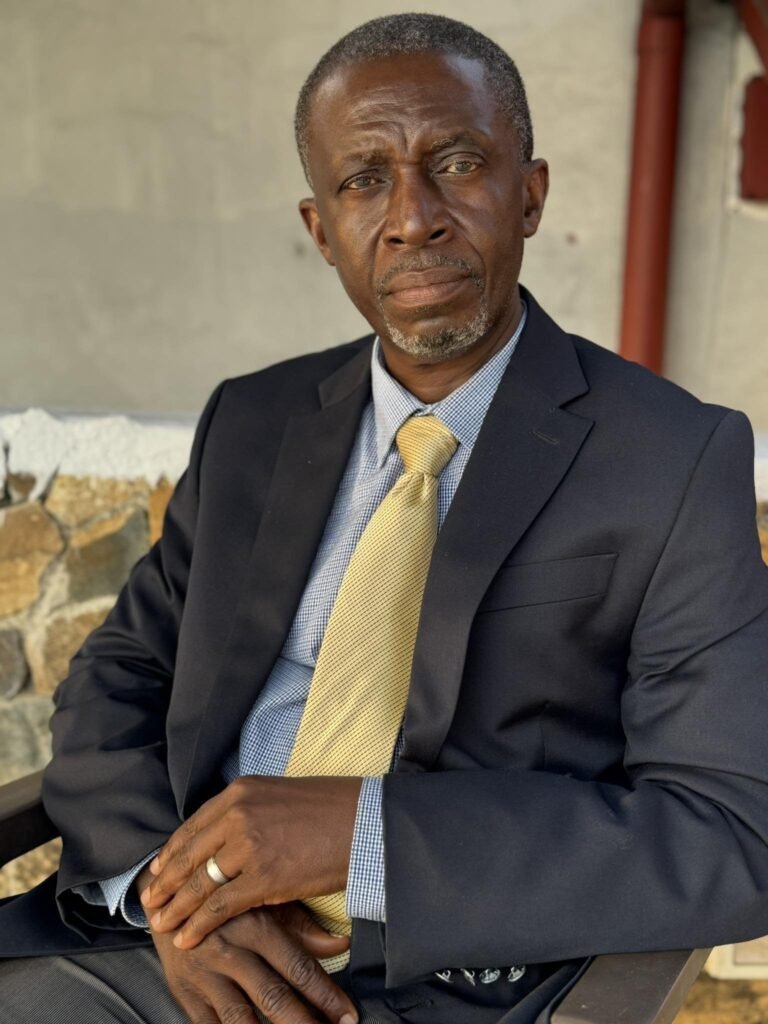

Cllr. Gongloe
Monrovia-Presidential hopeful Cllr. Tiawan Saye Gongloe has commended members of the Legislature for what he described as bold steps to put Liberia first, while urging them to carry that same political will into the debate over the draft 2027 national budget.
In a statement issued Thursday titled “Thank You, Legislature. Now Give Liberia a People-First Budget,” Gongloe praised the House of Representatives for rejecting the proposed National Identification concession with Austria’s OeSD International GmbH.
He also hailed the Senate for passing a vote of no confidence in MedTech Scientific Limited and Global Tracking and Marine Solution, and for ordering a review of the APM Terminals concession.
“These actions show what lawmakers can do when they have the political will to put Liberia first. Let this be the beginning,” Gongloe said.
The former Liberia National Bar Association president urged lawmakers to reverse the outsourcing of public services that Liberians can perform themselves, including the issuance of national identification cards, registration of foreign residents, issuance of work permits and licensing of drivers.
He called on the Legislature to give Liberian institutions the staff and resources to perform those functions and hold them accountable for quality service.
“When we voluntarily surrender control of public functions that we can perform ourselves, we practice a form of voluntary colonization,” Gongloe said. “Giving Liberia back to its people begins with restoring their control over the public services they depend on.”
Turning to the budget, Gongloe criticized the salaries retained and proposed for top legislative leaders.
He noted that Liberia’s approved 2026 budget provides an annual basic salary of US$254,250 for the Senate President Pro Tempore and US$245,540 for the Speaker. The draft 2027 budget, he said, retains the Pro Tempore’s salary and proposes raising the Speaker’s to US$257,040.
By comparison, he said, their U.S. counterparts earn US$193,400 and US$223,500, respectively.
“How can we justify raising the Speaker’s salary while lower-paid civil servants struggle to feed their families and pay rent?” Gongloe asked.
He said a civil servant at the government’s US$150 gross monthly pay floor would need nearly twelve years to earn what either legislative leader would receive in one month of basic salary under the draft budget. A public-school teacher at the proposed US$200 monthly minimum for a C-Certificate holder would need nearly nine years.
Gongloe urged lawmakers to publish the same comparison for the lowest-paid police officers and nurses.
“How many years should a person who teaches our children, keeps our communities safe or cares for the sick have to work to earn one month of a senior official’s pay?” he asked.
He also questioned whether the President of Liberia is still being paid US$36,000 per year, the amount set in the Executive Law of 1972, or more.
“Liberians are entitled to a clear answer,” Gongloe said, calling on the Legislature to amend the law to reflect the President’s current annual basic salary and for the government to publish it.
He further called for publication of basic salaries, allowances and benefits for the Vice President, ministers and other senior officials, including those in autonomous agencies and public corporations.
“We have followed the United States in many respects. Why should we hesitate to follow its example in publishing what public officials earn?” he asked.
Gongloe urged lawmakers to examine what presidents and senior officials earn in Botswana, Rwanda, Namibia, Cabo Verde, Ghana and other countries that have made greater socioeconomic progress, and to compare how many years the lowest-paid civil servant in each country would need to earn one month of the highest-paid official’s basic salary.
He said allowances and benefits should be disclosed separately and the findings used to judge what Liberia can reasonably pay at the top and what workers at the bottom need to meet basic expenses.
Recalling that in the late 1970s and throughout the 1980s, college graduates entering public service could expect at least $300 a month, Gongloe argued that better pay for lower-paid civil servants raises purchasing power, boosts business for market sellers, and helps tenants pay rent on time.
He repeated his call to the President and the Legislature to revise the budget without delay: reduce excessive salaries and benefits at the top, raise pay for lower-paid civil servants and fairly compensate volunteers who keep essential services running.
He also called for setting and publishing minimum budget shares for education and health, and reporting how much money actually reaches schools and health facilities.
“A budget that protects excessive pay and privileges while leaving the majority without decent public services becomes an instrument of mass deprivation,” Gongloe said. “In my view, using public money this way is a form of legalized theft.”
“Government is a place to serve, not to steal. Make the 2027 national budget a people-first document,” he concluded.
About The Author