By: Emmanuel Tobotinho Quiah
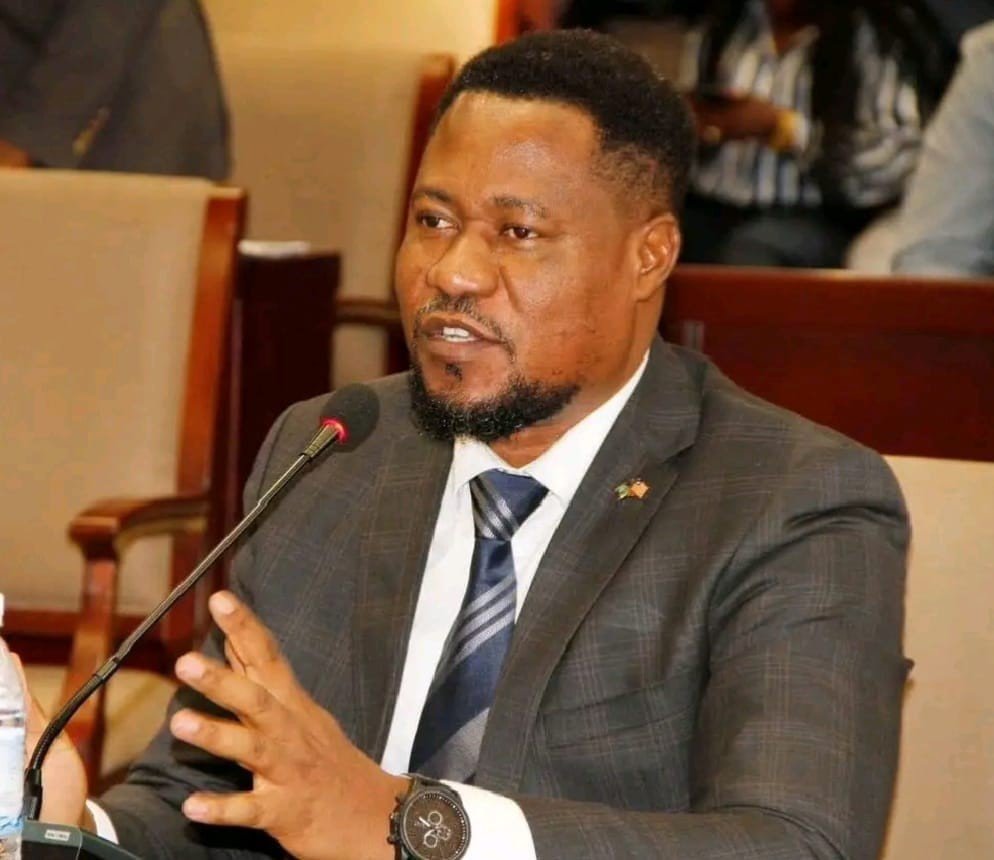
Maryland County District #3 Representative Austin B. Taylor has questioned the legality and fairness of the Ministry of Local Government’s decision to revoke the official city status of several communities across Liberia, arguing that residents should not suffer the consequences of the government’s failure to provide basic public services and infrastructure.
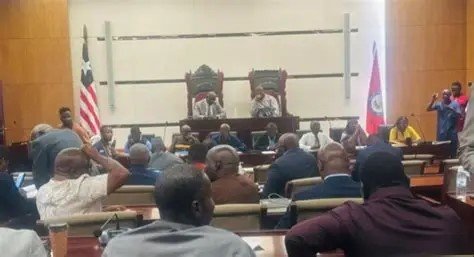
Taylor raised the concern on Tuesday, October 14, 2026, during the First Sitting of the Third Quarter of the House of Representatives, where lawmakers discussed the Ministry’s nationwide decision announced in September.
The decision has generated concerns in Maryland County, where only Pleebo and Harper reportedly retain official city recognition, while several other communities that previously enjoyed the designation have been stripped of that status.
Among the affected communities are Karloken City in Karluway Statutory District and Glofaken City in Barrobo Statutory District, both located within Representative Taylor’s electoral district.
Speaking before his colleagues, Taylor argued that the absence of essential facilities, including running water and banking institutions, should not automatically become grounds for withdrawing a community’s city status when the government bears significant responsibility for ensuring access to such services.
“Some of the requirements for having a city are just basic,” Taylor said, pointing to running water and banking services as examples of facilities expected in recognized cities.
He questioned whether ordinary citizens should be held responsible for the absence of public infrastructure that requires government intervention and investment.
“Who is responsible for getting running water to the people? Is the government. Is it the citizens or the local people there who should be establishing banks?” he asked.
The lawmaker maintained that the government should prioritize addressing infrastructure deficiencies instead of withdrawing official recognition from communities whose residents have lived under the designation for decades.
Taylor also questioned why communities with long histories of existence continue to struggle with basic infrastructure more than a century after Liberia gained independence in 1847.
He argued that the situation raises broader questions about successive governments’ commitment to rural development and the delivery of essential services to communities outside major urban centers.
“What has government been waiting for these cities to catch up with the required status?” Taylor asked.
He warned against what he considers an unfair approach to local administration, insisting that citizens should not be penalized for infrastructure gaps that successive governments have failed to address.
“We cannot be renegades and refuse the status of these communities and citizens, simply because of these basic things,” he said.
Taylor’s remarks place the debate beyond the question of whether affected communities satisfy the requirements for city recognition. They also raise questions about the government’s responsibility to create the conditions necessary for communities to meet those standards.
However, the precise requirements applicable to each affected community, and whether the government considers them mandatory conditions for retaining city status, remain important issues for clarification.
Beyond the infrastructure concerns, Taylor challenged the procedure used by the Ministry of Local Government to revoke the status of the affected communities.
Referring to the Local Government Act, he argued that the minister responsible for local government should engage the Legislature on the matter and allow lawmakers to deliberate on the decision before such action is taken.
“He cannot sit unilaterally and make such a decision,” Taylor declared.
The Maryland County lawmaker joined calls for the Minister of Local Government and his deputies to appear before the Legislature to explain the legal basis for the decision, the criteria applied, and the process followed in determining which communities would retain or lose their official recognition.
Taylor further warned that if the officials failed to provide a satisfactory explanation, the Legislature should consider appropriate action against them.
His position signals a potential confrontation between lawmakers and the Ministry over the limits of executive authority in decisions affecting local government administration.
The outcome of the proposed legislative engagement could help clarify the applicable legal procedures and determine what options remain available to communities seeking to retain or regain city status.
Karloken, Glofaken Projects Underway
The controversy carries particular significance for Karloken and Glofaken, two communities in Representative Taylor’s district that have lost their official city recognition under the Ministry’s decision.
Interestingly, efforts to address some of the infrastructure concerns in the two communities were already underway before the decision was announced.
In August 2026, Maryland County Superintendent Nathaniel S. Toe Jr. disclosed that the government intended to take action against cities that lacked essential infrastructure, including city halls.
According to the superintendent, he had appealed for the affected communities to be granted until December to satisfy the required standards, warning that the Ministry could take action if the deficiencies remained unresolved after the proposed deadline.
On August 13, 2026, two days after taking the oath of office, Superintendent Toe broke ground for the construction of city halls in Karloken and Glofaken.
The projects are being financed through the 2025 County Development Fund, according to information provided about the construction initiatives.
A media assessment tour on September 29, 2026, reportedly observed that construction had commenced at both sites and was making steady progress.
The ongoing projects raise questions about the timing of the Ministry’s decision and whether the completion of the city halls, alongside the provision of other required facilities, could strengthen the communities’ cases for reinstatement.
Nevertheless, the construction of the city halls alone does not establish that either community will automatically regain its official status. That outcome would depend on the applicable legal requirements, the assessment of the relevant authorities, and any procedures available for restoring recognition.
The dispute has brought renewed attention to the relationship between local development, government accountability, and the legal requirements governing the recognition of cities in Liberia.
For residents of Karloken and Glofaken, the immediate concern extends beyond the loss of an official designation. The controversy also raises questions about the future delivery of public services, infrastructure development, and the government’s plans to support communities seeking to meet national standards.
Taylor’s demand for the Minister of Local Government and his deputies to appear before the Legislature could provide lawmakers an opportunity to examine the decision, question the criteria used, and seek clarification on whether affected communities were given adequate notice or an opportunity to address identified deficiencies.
The Legislature’s response may also help determine whether the Ministry followed the procedures required by law and what remedies, if any, are available to communities challenging the decision.
Meanwhile, construction continues on the city halls in Karloken and Glofaken, offering a visible indication of efforts to address at least some of the infrastructure concerns associated with city recognition.
Whether those projects, together with improvements in other required services, will lead to the restoration of the two communities’ city status remains uncertain.
For now, Representative Taylor’s challenge has intensified the debate over whether the government should withdraw official recognition from communities that fail to meet established standards or first ensure that they have the necessary support and infrastructure to meet those requirements.
About The Author