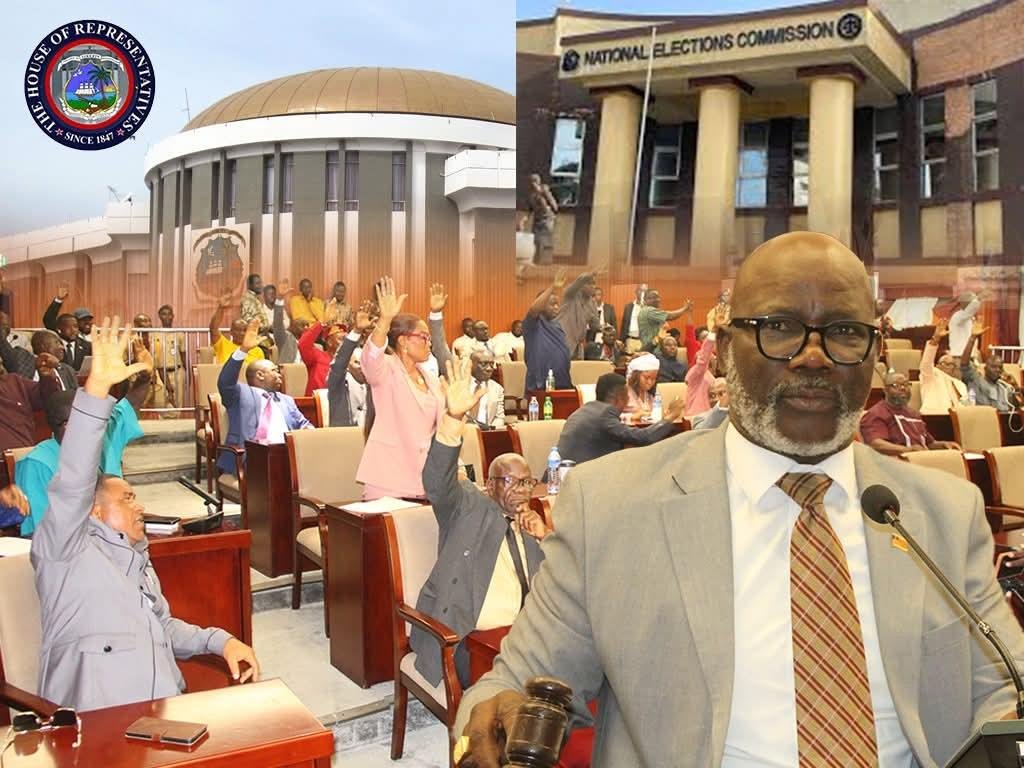
As per major amendments to the election law passed by the Plenary of the House of Representatives, previous voting hours of 8:00am to 6:00pm has been reduced by two hours. The current voting will be from 8:00am to 4:00pm – approximately six hours.
The august body cited better election-day management and security as prime reasons for the revision of of polling hours.
The revision formed part of a series of sweeping amendments to Liberia’s New Elections Law (1986), as amended in 2014, following the submission of a comprehensive report by its Joint Committee on Elections and Inauguration.
The decision was reached during the 9th day sitting of the ongoing Special Session, with lawmakers describing the move as part of efforts to strengthen electoral integrity, improve efficiency, and enhance public confidence in Liberia’s democratic process.
Presenting the report, the Joint Committee recommended several significant changes aimed at modernizing election administration and addressing operational gaps identified in previous electoral cycles.
One of the major amendments increases the maximum number of registered voters per polling precinct from 3,000 to 4,000, a move intended to improve voter distribution and reduce congestion during elections.
The House also approved the revision of polling hours, reducing voting time from 8:00 a.m. to 6:00 p.m. to 8:00 a.m. to 4:00 p.m., a change lawmakers say will support better election-day management and security.
In a bid to accelerate dispute resolution, lawmakers amended provisions governing electoral complaints.
The filing window for election-related grievances has been reduced from seven (7) days to forty-eight (48) hours after an alleged violation.
The amendment also expands the submission channels for complaints, allowing filings with the National Elections Commission (NEC), magistrates, or polling officers.
Additionally, new provisions strengthen the authority of hearing officers and magistrates assigned to electoral disputes, including clearer procedures for appeals and strict timelines for the Supreme Court review process.
The House further reinforced gender inclusion requirements, making it mandatory for political parties and coalitions to ensure that at least 30% of their governing structures and candidate lists are composed of each gender.
Under the new amendment, parties that fail to meet the requirement risk being disqualified from legislative elections unless they resubmit compliant candidate lists within the prescribed timeframe.
Another major change removes restrictions on who may be present at polling centers, a provision previously regulating access to voting premises.
Lawmakers also clarified the roles of election officers, observers, and security personnel to ensure transparency while maintaining order.
The amendments also introduce reforms in election financing and administration.
Candidate filing fees have been revised upward across several categories, including presidential and legislative aspirants, with the aim of strengthening the operational budget of the NEC.
In addition, procurement procedures for election materials have been streamlined, requiring the Public Procurement and Concessions Commission to process election-related requests within three days to ensure timely delivery of materials ahead of elections.
The House also restructured the electoral appeals system, introducing strict timelines for hearings, rulings, and Supreme Court appeals.
The reforms aim to reduce delays in resolving election disputes and ensure final decisions are made within defined legal timeframes.
Other amendments include provisions governing the relocation of political party headquarters, enhanced procedures for handling election complaints involving criminal allegations, and clearer rules on sanctions imposed by the NEC.
Lawmakers say the reforms are designed to close legal loopholes, improve accountability, and strengthen confidence in Liberia’s electoral system ahead of future elections.
With the passage of these amendments, the House of Representatives says Liberia is taking a significant step toward improving the credibility, transparency, and efficiency of its electoral process.
The revised law now awaits implementation by the National Elections Commission and other relevant institutions responsible for overseeing elections in the country.
About The Author