By Stephanie M. Duncan
MONROVIA, Liberia — August 26, 2026: Justice Minister and Attorney General Cllr. N. Oswald Tweh has assured Liberians that the government will remain relentless in its fight against drug trafficking, stressing that traffickers will not be allowed to defeat the authority of the Liberian state.
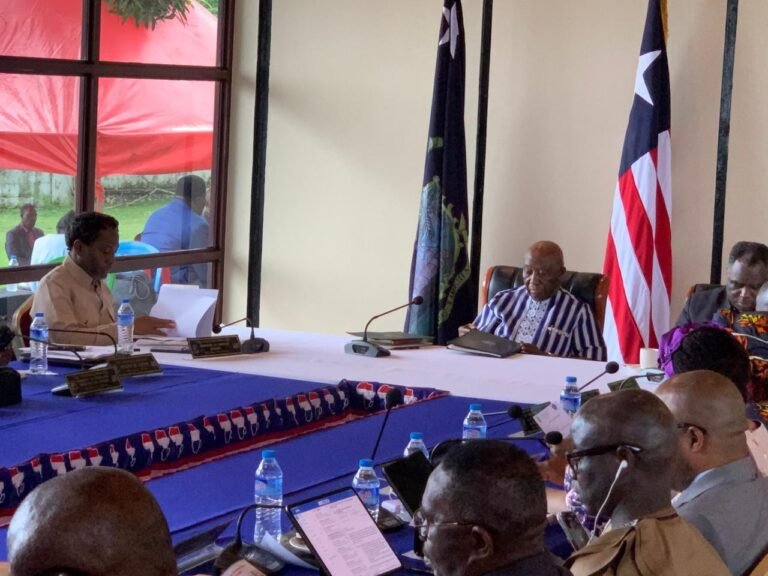
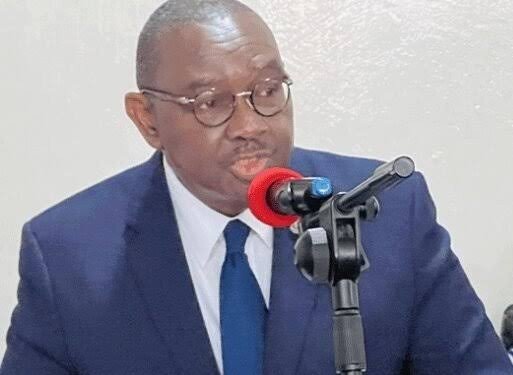
Speaking Wednesday at the relaunch of the Edward Wilmot Blyden Intellectual Discourse organized by the Press Union of Liberia (PUL) in Sinkor, Monrovia, Minister Tweh said the fight against illicit drugs requires strong institutions, accountability and strict adherence to the rule of law.
The discourse was held under the theme, “Confronting Drug Trafficking: Strengthening Institutions, Advancing Accountability, and Safeguarding the Rule of Law.”
Minister Tweh said the theme was particularly appropriate under the name of Edward Wilmot Blyden, describing the late Liberian intellectual, diplomat, educator and journalist as a man who understood both the power of ideas and the importance of strong institutions.
He said Liberia’s drug crisis is not only a criminal justice issue but a threat to the country’s social and institutional stability.
“Narcotics do not merely violate our criminal laws. They destroy young lives, weaken families, corrupt institutions, finance criminal networks and threaten the very capacity of the State to govern,” Tweh said.
The Justice Minister also praised the Liberian media for keeping the issue of drug trafficking in the national spotlight through reporting, investigations and public discussions.
He, however, urged journalists to maintain professional responsibility by distinguishing facts from speculation while holding government officials accountable.
According to Tweh, the government’s ongoing anti-drug campaign has produced significant results.
He disclosed that during the first quarter of 2026, the Liberia Drug Enforcement Agency (LDEA) seized more than 400 kilograms of illegal narcotics and arrested over 200 suspects.
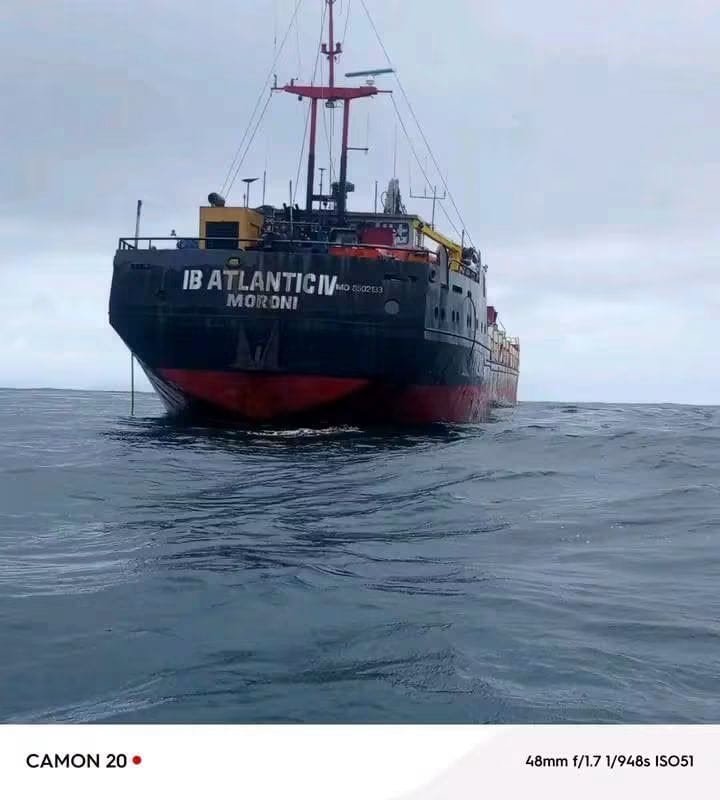
He further referenced the seizure of approximately 237 kilograms of cocaine at the Roberts International Airport in June, followed by the discovery of nearly four tons of cocaine in Duazon, Montserrado County, which he described as the largest narcotics seizure in Liberia’s history.
Tweh said more than US$336 million worth of the seized cocaine was subsequently destroyed in Margibi County in July in the presence of the public.
“These are not slogans. These are concrete actions,” the Justice Minister declared, attributing the results to coordinated efforts involving the LDEA, Liberia National Police, Ministry of Justice, prosecutors, investigators and other security institutions.
He said the government has drawn a clear battle line between the Liberian state and drug cartels, insisting that there will be no accommodation with criminality.
“Our sleeves are rolled up, and the battle line between the drug cartels and the Liberian State has been clearly drawn,” Tweh said.
He stressed, however, that the government’s fight against drug trafficking must be conducted within the framework of the law, warning against vengeance, political persecution and convictions based solely on public accusations.
According to him, the Ministry of Justice has a responsibility to ensure that drug seizures lead to proper investigations, investigations produce credible evidence, and evidence is presented before the courts.
He also called for investigations to move beyond couriers and low-level dealers to those financing and facilitating the drug trade.
“If the evidence leads to a customs officer, a security officer, a businessman, a politician or any other person, the law must be allowed to take its course,” Tweh said.
He assured that no individual would be protected because of influence, friendship, wealth or political connections, but cautioned that no person should be convicted based on allegations circulating on radio, social media or political platforms.
“The Government will not fight lawlessness by abandoning the law,” he said.
Tweh also rejected criticisms that the government has failed to adequately address Liberia’s drug problem, arguing that the scale of recent seizures, arrests and investigations demonstrates significant law enforcement activity.
He acknowledged, however, that every major drug seizure also exposes potential weaknesses within the country’s security and border-control systems.
The Justice Minister said the government must therefore strengthen screening and intelligence gathering, improve coordination among security agencies and investigate possible corruption or facilitation within the drug-trafficking chain.
“Strong institutions are not institutions that claim perfection. Strong institutions are institutions that can detect failure, correct it, investigate wrongdoing and continue to improve,” he said.
Tweh reaffirmed the government’s commitment to a coordinated national response, noting that the LDEA will continue to lead drug interdiction efforts while the police and other security agencies support investigations and public safety.
He said the Ministry of Justice will continue to guide prosecutions and ensure that cases proceed through the legal system.
The Minister also warned against attempts to weaken the anti-drug campaign through misinformation, intimidation or political interference.
“The law will not be negotiated with traffickers, and the enforcement of the law will not be suspended to satisfy political convenience,” Tweh said.
He emphasized that the rule of law must protect all sides, including the government’s authority to prosecute, the rights of accused persons, journalists’ ability to question government and citizens’ right to demand accountability.
“If we weaken due process in the name of fighting drugs, we weaken the very Republic we claim to defend,” he said.
Tweh concluded by drawing a parallel between Liberia’s current fight against drug trafficking and Edward Wilmot Blyden’s legacy of nation-building, intellectual independence and strong public institutions.
He said Liberia did not choose the drug-trafficking threat but must choose how it responds to it.
“Under the leadership of the current Administration, the Ministry of Justice and the law enforcement community have made that choice: Liberia will confront drug trafficking, strengthen its institutions, advance accountability and safeguard the rule of law,” Tweh said
About The Author