
By Benjamin Q. Z. Johnson
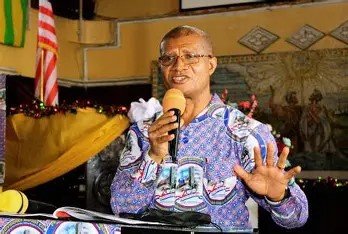
Monrovia- The President of the Liberia Council of Churches (LCC), Bishop Dr. Samuel B. Reeves Sr. has challenged Liberians to confront the country’s history of failures, demand accountability from those entrusted with public authority and pursue national renewal through integrity, responsible leadership and concrete action.
Preaching on Sunday, October 18, 2026, at the historic Providence Baptist Church, located at the intersection of Broad, Center and Ashmun Streets in central Monrovia, Bishop Reeves warned that neither individuals nor nations can build a meaningful future by remaining trapped in past disappointments or surrendering to anxiety about what lies ahead.
Reeves’ sermon raises a fundamental question about Liberia’s continuing struggle with governance, public trust and national reconciliation: Can a country genuinely move forward if those responsible for past failures are allowed to evade accountability in the name of unity and forgiveness?
Drawing from Philippians 3:12–14, Reeves delivered a sermon titled “Yesterday Ended Last Night: Freedom From Regrets and Future Anxiety,” as part of his series, More Than Enough: A Journey into Stress-Free Living.
His central message was captured in three principles: “Release the past. Reclaim the present. Reach toward the future with faith.”
Yet his call to move forward was not an invitation to forget wrongdoing or dismiss the consequences of past decisions. Rather, Reeves emphasized that meaningful progress requires individuals and institutions to acknowledge their failures, accept responsibility and demonstrate a willingness to change.
Although he did not single out any government official, political party or ongoing criminal case, his message carries broader implications for a country where public accountability, institutional credibility and the fulfillment of political promises remain central to national debate.
One of the strongest moments in Reeves’ sermon came when he challenged Liberia’s political leadership to stop allowing past failures to determine the country’s future while continuing to offer citizens promises without sufficient evidence of progress.
“Liberia’s children cannot eat yesterday’s speeches by politicians,” he declared.
The statement underscored the gap between political rhetoric and the practical realities confronting ordinary Liberians.
For citizens struggling with limited economic opportunities, inadequate public services and uncertainty about the future, promises of national transformation mean little unless they translate into tangible improvements in daily life.
Liberia’s development challenges cannot be resolved through speeches, declarations of good intentions or repeated appeals for patience. They require effective public institutions, transparent decision-making, responsible management of public resources and leaders willing to be judged by the results they deliver.
Reeves illustrated the danger of becoming trapped in past failures through the example of a farmer disappointed by a poor harvest.
The farmer, he explained, cannot recover the previous season’s harvest but can learn from the experience, prepare the soil and plant again.
“The farmer’s greatest danger is no longer last season’s failed harvest. It is allowing last season to destroy this season’s opportunity,” Reeves said.
Applied to Liberia, the analogy challenges leaders and citizens alike to acknowledge what went wrong, identify the causes and take corrective action rather than repeatedly revisiting past disappointments without producing meaningful change.
However, learning from history requires more than declaring that the past is over. It demands an honest assessment of the decisions, policies and institutional weaknesses that contributed to failure.
Without such an assessment, the language of renewal risks becoming another political slogan.
Reeves’ emphasis on accountability was among the most consequential aspects of his sermon, particularly as Liberia continues to grapple with the challenge of rebuilding public confidence in its institutions.
He argued that moving forward does not mean pretending misconduct never occurred. Instead, it requires acknowledging the truth, accepting responsibility and refusing to allow past failures to dictate every future decision.
That distinction is critical in a society where calls for forgiveness and national unity can become contentious when they appear to demand silence from victims or protection for those accused of wrongdoing.
“Grace does not excuse wrongdoing. It gives us courage to repent, make amends, and live differently,” Reeves said.
Drawing on the biblical examples of the Apostle Paul, who persecuted early Christians before becoming a leading figure in the Christian faith, and Peter, who denied Jesus three times before being restored, Reeves emphasized that failure need not permanently define a person’s future.
But restoration does not erase responsibility.
Those who have harmed others must be prepared to acknowledge their actions, apologize where appropriate and make amends where possible. Equally, victims should not be pressured to abandon legitimate demands for justice simply to satisfy calls for reconciliation.
“You can establish boundaries, pursue accountability, and seek healing without allowing bitterness to govern your life,” he said.
The argument rejects two dangerous extremes: allowing past grievances to obstruct every opportunity for progress and invoking reconciliation as a means of avoiding accountability.
For Liberia, genuine reconciliation must be supported by truth, fairness and credible accountability mechanisms. Unity cannot be sustained merely by asking citizens to move on while leaving the underlying causes of mistrust unresolved.
“A nation cannot heal by pretending its wounds never existed. But neither can it flourish if its wounds are allowed to determine every possibility ahead,” Reeves said.
His message places responsibility on political leaders to demonstrate that calls for national unity are accompanied by meaningful reforms and a willingness to subject public decisions to scrutiny.
It also challenges citizens to demand accountability consistently, regardless of whether allegations involve political allies or opponents.
Reeves maintained that personal and national progress depends on distinguishing between learning from history and allowing history to become an obstacle to future development.
His interpretation of Philippians 3:12–14 emphasized that growth is an ongoing process and that acknowledging imperfection should encourage improvement rather than resignation.
The biblical passage presents the Apostle Paul as someone who had not yet attained perfection but remained determined to press forward toward his calling.
Reeves applied that principle to relationships, education, business, faith and leadership, encouraging individuals to identify their mistakes and take practical steps toward improvement.
For Liberia, the implication is that the country must neither deny its historical failures nor remain permanently immobilized by them.
The country’s experiences should inform public policy, institutional reform and the protection of citizens’ rights. Reflection becomes unproductive, however, when it is not accompanied by action.
The same principle applies to public officials whose decisions affect the wider population. Acknowledging past mistakes is an important first step, but meaningful accountability also requires corrective measures and safeguards against the repetition of those failures.
Reeves’ message suggests that forgiveness and responsibility should not be treated as opposing principles. Instead, they should work together to create conditions in which individuals and institutions can correct their conduct and rebuild public trust.
The Present Is Where Change Must Begin
In another major section of his sermon, Reeves urged Liberians to reclaim the present, arguing that although individuals cannot change yesterday or completely control tomorrow, they can make meaningful decisions today.
He stressed that personal development does not occur through a single achievement but through continued reflection, discipline and responsible action.
Applied to public administration, the principle raises important questions about whether Liberia’s institutions are adequately responding to the needs of the population.
Reeves argued that the country needs an education system capable of preparing children for the future, institutions worthy of public confidence, employment opportunities for young people and leaders who understand that public office is a responsibility rather than a personal entitlement.
Those expectations require more than expressions of hope. They demand measurable improvements in public service delivery, greater transparency in government operations and a willingness among public officials to explain their decisions.
Reeves also challenged citizens to examine their own conduct, warning against demanding honesty from political leaders while tolerating dishonesty in personal and community life.
“We cannot demand honesty from our leaders while excusing dishonesty in ourselves. We cannot pray for justice while mistreating our neighbors,” he said.
The observation introduces a difficult but necessary dimension to the national accountability debate. Public integrity cannot depend solely on the conduct of political leaders; it must also be reflected in citizens’ everyday decisions and their willingness to reject corruption, dishonesty and the abuse of trust.
Nevertheless, personal responsibility must not become an excuse for weakening the obligations of public officials. Those entrusted with state authority carry institutional responsibilities that demand transparency, compliance with the law and accountability to the public.
“Faith must shape our decisions. Grace must influence our conduct. And hope must become visible in our actions,” Reeves said.
In the final section of his sermon, Reeves returned to Paul’s image of an athlete stretching toward the finish line, using it to emphasize perseverance and determination despite uncertainty.
He argued that hope does not guarantee that circumstances will unfold according to personal expectations. Rather, it provides the courage to continue making responsible decisions even when outcomes remain uncertain.
Drawing from Matthew 6, Reeves cautioned against allowing anxiety about tomorrow to dominate the present while emphasizing the importance of responsible action.
“Faith often begins where certainty ends,” he said.
Young people need opportunities that extend beyond the limitations they have inherited. Public institutions must operate with integrity, while leaders must recognize that historical experience should inform reform rather than serve as a substitute for it.
Reeves also challenged the church to preach hope in ways that encourage responsibility, urging citizens to understand national development as a shared undertaking.
Bishop argued that optimism alone can resolve Liberia’s problems. Instead, it calls for hope to be matched by practical action, honest reflection and the courage to confront uncomfortable truths.
About The Author