MONROVIA–Liberia has called for stronger preventive diplomacy, improved coordination among elected members of the United Nations Security Council, and greater use of early-warning mechanisms to prevent conflicts before they escalate into crises.
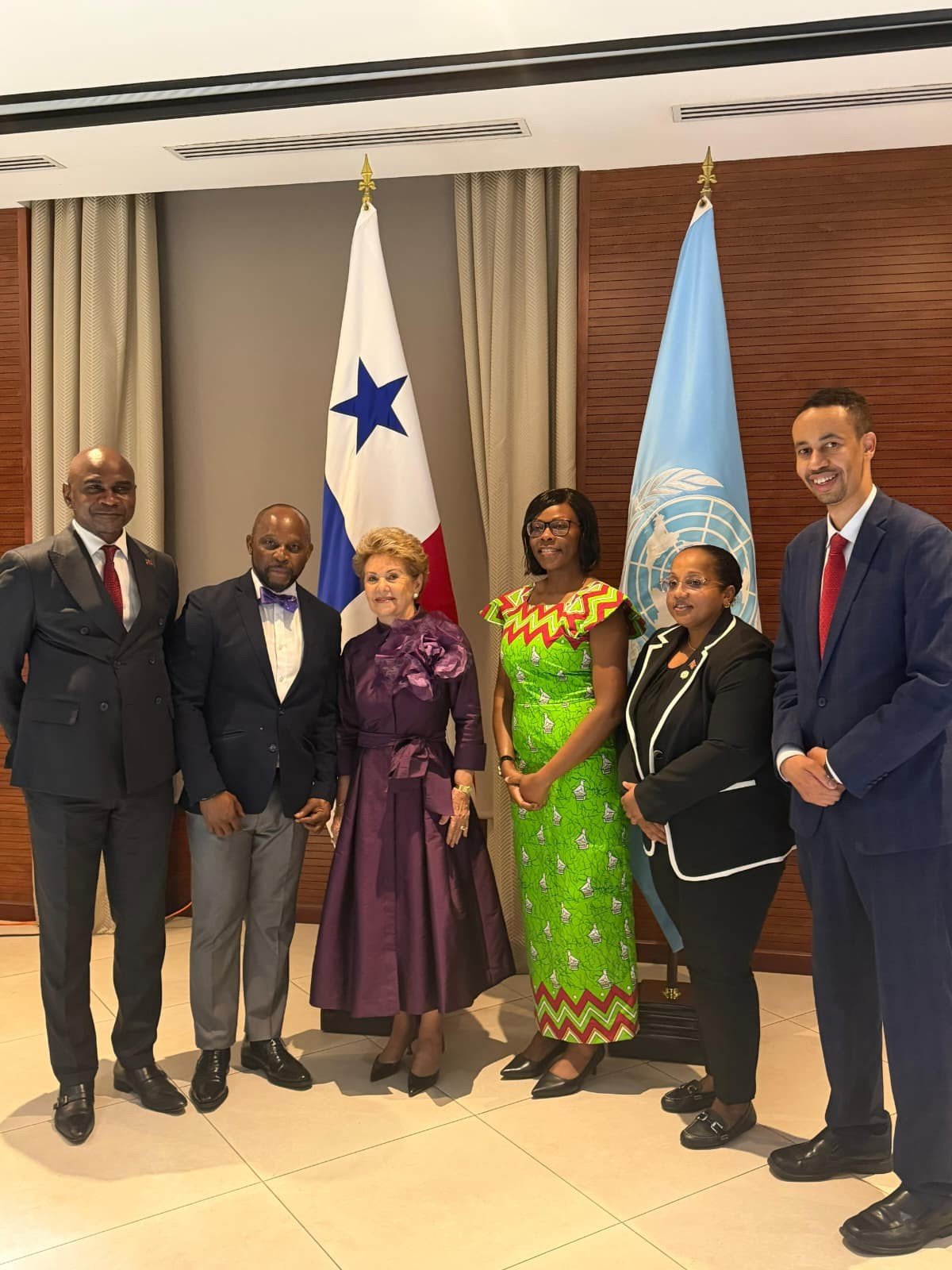
Liberia’s Political Coordinator to the UN Security Council, Cllr. Aloysius Jappah, made the call while representing Liberia at the 9th E10 & I5 Annual Dialogue, hosted by the Republic of Panama in Panama City from September 1–2, 2026.
The annual dialogue brings together the 10 elected members of the Security Council, known as the E10, and the five incoming members, or I5, to strengthen coordination, promote the transfer of institutional knowledge, and improve the Council’s capacity to respond to threats to international peace and security.
Speaking during a session on “Preventive Diplomacy in Action,” Cllr. Jappah emphasized that the most effective intervention by the Security Council is one that prevents a crisis from occurring in the first place.
He anchored Liberia’s position in the provisions of the United Nations Charter dealing with the peaceful settlement of disputes, regional arrangements, and the Secretary-General’s early-warning responsibilities.
Cllr. Jappah stressed the importance of moving beyond early warning toward concrete early action, warning that warnings about emerging conflicts are of little value if the international community fails to respond before violence erupts.
He described this challenge as a “prevention paradox,” noting that successful preventive diplomacy often receives less attention because the crisis it was intended to prevent never occurs.
According to him, sovereignty concerns and geopolitical divisions can sometimes delay collective action by the Security Council, allowing situations to deteriorate until violence becomes unavoidable.
He warned that “early warning without early action” risks becoming merely a prediction of failure.
Drawing from Liberia’s own post-conflict experience, Cllr. Jappah said peace agreements, while essential to ending wars, do not automatically resolve the grievances, institutional weaknesses, and local tensions that may threaten long-term stability.
He therefore called for sustained international, regional, and national engagement after the signing of peace agreements.
Among the measures he highlighted were good offices, mediation support, regional engagement, inclusive dialogue, confidence-building measures, early-warning systems, and locally owned peacebuilding mechanisms.
“Peace agreements close a chapter; preventive diplomacy helps keep the next chapter from reopening the war,” Cllr. Jappah said, stressing that sustained engagement has played an important role in consolidating Liberia’s hard-won peace.
He emphasized that such interventions should be undertaken with the consent and ownership of the country concerned.
During another session focused on reinvigorating the Security Council’s role in preventive diplomacy, Liberia also raised concerns about the potential consequences of a premature or poorly managed drawdown of peacekeeping operations.
Cllr. Jappah said the dialogue provided an opportunity for Security Council members to reflect on how a rapid reduction in peacekeeping support could leave countries emerging from conflict vulnerable, particularly where national institutions remain fragile.
He pointed to transnational organized crime, including international drug trafficking, as one of the threats capable of undermining governance and reversing peacebuilding gains in post-conflict countries.
On the question of how the E10 should engage the incoming UN Secretary-General, Cllr. Jappah urged elected Security Council members to first strengthen their internal coordination and assess their collective capacity to influence Council decisions.
He proposed that the E10 develop greater discipline and coordination to create what he described as a collective “veto,” while establishing safeguards to ensure that such leverage is exercised responsibly.
Cllr. Jappah also highlighted the short duration of elected members’ terms, noting that members often have limited time to understand the Council’s complex procedures and dynamics before their mandates come to an end.
He therefore called for a more systematic transfer of institutional knowledge from outgoing Council members to incoming members.
He referred to the five outgoing members as the “Farewell Five,” arguing that their experience should be deliberately captured and passed on rather than lost when their mandates expire.
According to him, stronger institutional memory would enable newly elected members to become effective more quickly and contribute more meaningfully to Council deliberations.
Cllr. Jappah also criticized what he described as the Council’s tendency to hold frequent briefings and open meetings where important concerns are raised but are not always followed by concrete action.
He urged elected members to use the traditional E10 luncheons as a platform for substantive coordination rather than limiting them to discussions about the agenda for the Secretary-General’s luncheon with Permanent Representatives.
He said the meetings should instead provide an opportunity for elected members to develop common positions and act collectively on critical issues before the Council.
Cllr. Jappah welcomed the five newly elected members of the Security Council — Austria, Kyrgyzstan, Portugal, Trinidad and Tobago, and Zimbabwe — and emphasized the importance of continuity as the Council’s composition changes.
He called for continued coordination among elected members and adherence to the principles and responsibilities outlined in the UN Charter.
The current E10 for 2026 includes Bahrain, Colombia, the Democratic Republic of the Congo, Denmark, Greece, Latvia, Liberia, Pakistan, Panama, and Somalia.
Beginning January 1, 2027, Austria, Kyrgyzstan, Portugal, Trinidad and Tobago, and Zimbabwe will join the Council as elected members, replacing Denmark, Greece, Pakistan, Panama, and Somalia, whose mandates end on December 31, 2026.
The 9th E10 & I5 Annual Dialogue was hosted by Panama as part of its tenure as a non-permanent member of the Security Council. The forum, established in 2019, is designed to strengthen cooperation among incoming, serving, and outgoing elected members and promote continuity in the Council’s work.
The opening and closing sessions were led by Panama’s Minister of Foreign Affairs, H.E. Javier Eduardo Martínez-Acha Vásquez, while former Panamanian President H.E. Mireya Moscoso was honored during the closing ceremony.
Concluding Liberia’s contribution, Cllr. Jappah stressed that preventive diplomacy should be viewed as a practical responsibility rather than an abstract principle.
“Prevention is not an abstract ideal. It is the disciplined practice of acting before choices disappear,” he said.
About The Author