
Liberia has been commended as one of West Africa’s leading examples of progress in tobacco taxation, with regional experts highlighting the country’s use of fiscal policy to protect public health while strengthening domestic revenue mobilization.
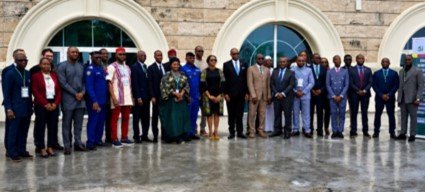
The recognition came during the ongoing Regional Technical Meeting on the Review of the ECOWAS Directive on the Harmonisation of Excise Duties on Tobacco Products, being held in Conakry, Guinea, from August 10 to 12, 2026.
Liberia’s position was presented by Robert Quaye Dwuye Jr., Director of the Indirect Tax Unit at the Ministry of Finance and Development Planning, who outlined the country’s excise tax regime and its approach to tobacco taxation.
Dwuye’s presentation drew commendation from participants and was highlighted as a model that other ECOWAS Member States could study as the region works to strengthen excise duty systems, improve public health outcomes and increase domestic revenue.
The meeting, supported by the World Health Organization, the World Bank and the ECOWAS Commission, has brought together tax policy officials and technical experts from across West Africa to assess implementation of the existing regional framework and consider reforms to modernize the ECOWAS excise duty regime on tobacco products.
During Liberia’s presentation, Dwuye said the country has exceeded minimum regional expectations in several areas of tobacco taxation.
He explained that Liberia applies a specific excise tax of US$0.40 per pack, in addition to an ad valorem rate of more than 25 percent. The mixed structure combines a fixed tax with a value-based tax on tobacco products.
Liberia also applies an excise tax of US$0.25 per stick on other tobacco products, compared with the ECOWAS recommended rate of US$0.02 per stick of cigarettes.
According to the presentation, the country also imposes a US$25-per-kilogramme excise tax on other manufactured tobacco and substitutes; US$25 per kilogramme on products containing tobacco, reconstituted tobacco and nicotine without combustion; and US$0.10 per millilitre on e-cigarettes presented with vaping liquid.
The combination of specific and ad valorem taxes places Liberia among countries using taxation as both a revenue-generation instrument and a public health measure.
Participants at the meeting commended Liberia’s progress and its use of fiscal policy to support public health objectives.
The ECOWAS Commission noted that, as of 2024, no Member State had fully implemented the 2017 regional directive. Liberia and The Gambia, however, were identified as being in partial compliance and as examples of good practice within the region.
The recognition highlights Liberia’s policy direction as the country maintains excise rates above regional minimums in several important tobacco product categories.
The approach is intended to discourage tobacco consumption while strengthening domestic revenue mobilization, two of the key objectives of the ECOWAS tobacco taxation framework.
During the meeting, the Nigerian delegation also proposed that ECOWAS Member States demonstrating strong performance in implementing regional excise tax directives should be considered for incentives.
The proposal was presented as a way of encouraging stronger compliance and rewarding countries demonstrating progress in tobacco taxation.
Meanwhile, the ECOWAS Commission, in a presentation delivered by Darlingston Y. Talery, Acting Director of the Directorate of Customs Union and Taxation, projected significant public health and revenue gains from the proposed reforms.
According to the projection, the reforms could increase regional tobacco tax revenues by 300 percent compared with the 2024 baseline.
The reforms also target a reduction of more than 30 percent in smoking prevalence, a 20 percent decline in cigarette sales volumes, an excise burden equivalent to 70 percent of the retail selling price of cigarettes, and a 50 percent reduction in smoking among people under 25.
The three-day meeting is examining the implementation of the existing directive, national excise duty structures and revenue performance, as well as barriers to regional harmonization.
Delegates are also discussing international experiences, tracking and tracing systems, measures to combat illicit tobacco trade, tax administration, data systems, audit capacity and technical assistance requirements.
The meeting is expected to conclude with priority recommendations and a communiqué to guide ECOWAS Member States and regional institutions in modernizing the framework governing excise duties on tobacco products.
For Liberia, the recognition in Conakry provides regional acknowledgment of its efforts to use fiscal policy to advance public health and domestic revenue mobilization.
It also places Liberia among the ECOWAS countries demonstrating that tobacco taxation can serve both as a public health intervention and a tool for strengthening sustainable domestic financing.
About The Author