

By Stephanie M. Duncan
MONROVIA–The Government of Liberia is moving to transform historic Providence Island into a major heritage tourism destination as the country seeks to convert its cultural and historical assets into sustainable economic opportunities.
The development comes with the commencement of the Providence Island Development Project, a government-funded initiative being implemented through the Public Sector Investment Program (PSIP) under a Design-and-Build arrangement.
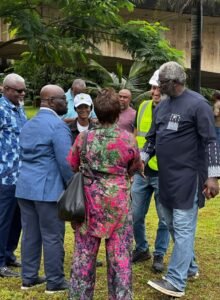
As part of preparations for the project, Minister of State for Presidential Affairs Samuel A. Stevquoah, Director General of the Cabinet Nathaniel T. Kwabo, Nimba County Senator Samuel G. Kogar, who chairs the Senate Committee on Information, Broadcasting, Cultural Affairs and Tourism, and senior officials of the Liberia National Tourism Authority (LNTA), joined executives of major media institutions on a tour of the historic island.
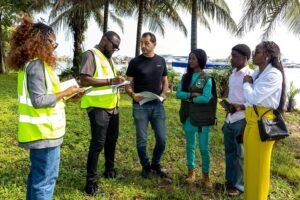
The visit provided government officials, lawmakers and media executives an opportunity to assess the current condition of the site and review the development vision for an area considered central to Liberia’s history and national identity.
The technical teams are expected to use site assessments and other technical considerations to inform the detailed design and implementation of the project, while ensuring that the island’s historical and cultural significance is preserved.
Providence Island holds an important place in Liberia’s history and is being positioned as a potential anchor for heritage tourism in Monrovia. The project is expected to move the site beyond being primarily a historical landmark toward becoming a structured visitor destination where Liberians and international visitors can engage with the country’s history, culture and identity.
The emerging development concept includes heritage walks, historical interpretation, educational spaces, guided tours, cultural performances, arts and crafts, Liberian cuisine, community vending and riverfront areas designed to enhance the visitor experience.
The initiative is also expected to create opportunities for local businesses and individuals operating within the tourism value chain. Tour guides, artisans, cultural performers, food vendors, photographers, transport operators, event organizers and other service providers could benefit from increased visitor activity once the destination becomes fully operational.
For Liberia, the project represents a broader effort to move tourism development beyond the promotion of attractions toward the creation of functional and marketable destinations.
Although Liberia possesses beaches, forests, cultural traditions and historic sites with significant tourism potential, the ability to compete in the international tourism market depends not only on the existence of attractions but also on accessibility, visitor facilities, interpretation, safety, hospitality services, professional management and maintenance.
Providence Island could therefore serve as a demonstration of how the country can develop its heritage assets into organized visitor experiences capable of generating economic and social value.
Its location in central Monrovia could further allow the island to become part of a wider heritage tourism circuit linking visitors to other historical and cultural landmarks across the capital.
Such an approach could encourage visitors to spend more time exploring Monrovia rather than limiting their experience to individual attractions, while creating additional opportunities for businesses and communities connected to the tourism sector.
The project also has implications for domestic tourism and education. A properly developed Providence Island could provide a setting for school excursions, university research, cultural programs, historical education and national commemorative activities, giving young Liberians greater opportunities to engage directly with aspects of the country’s history.
The island’s historical significance could also strengthen Liberia’s appeal to diaspora and heritage travelers interested in African history, ancestry, cultural identity and Liberia’s unique historical experience.
The involvement of senior government officials, legislative leadership and media executives in the site visit highlights the growing national attention being placed on tourism as a potential driver of employment, investment, cultural preservation and economic activity.
For the Liberia National Tourism Authority, the Providence Island project provides an opportunity to demonstrate that tourism promotion must be accompanied by investment in the destinations being marketed.
As Liberia seeks to strengthen its tourism sector, the development of Providence Island could become an important test of the country’s ability to preserve its heritage while creating modern, accessible and economically productive tourism experiences.
About The Author