Monrovia-The Director General of Liberia’s National Fisheries and Aquaculture Authority (NaFAA), J. Cyrus Saygbe Sr., has held discussions with a senior World Bank official on expanding investment in Liberia’s fisheries sector to create jobs, improve livelihoods, and strengthen economic growth.
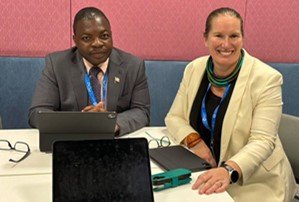
The meeting with Valerie Hickey, Director for Environment and Blue Economy at the World Bank Group, took place on the sidelines of the 2026 Annual Meetings of the International Monetary Fund and the World Bank Group in Bangkok, Thailand.
According to an official NaFAA press release, the discussions focused on progress under the Liberia Sustainable Management of Fisheries Project (LSMFP) and the need for additional investment to expand economic opportunities in the fisheries and aquaculture sectors.
Briefing Hickey on the project’s progress, Saygbe highlighted achievements in fisheries management, aquaculture development, livelihood support, and preparations for key infrastructure investments.
He reported that project disbursement had exceeded 80 percent, emphasizing the importance of maintaining the progress made under the World Bank-supported initiative.
Saygbe said continued financing for infrastructure, productive capacity, and fisheries value chains would help sustain the project’s achievements and encourage greater private-sector participation.
He identified investment opportunities in aquaculture, fish processing, cold storage, transportation, fisheries infrastructure, and related services.
According to Saygbe, addressing infrastructure gaps and improving the business environment would help attract investors, expand local enterprises, and ensure that more economic benefits remain within Liberia.
He emphasized that investments in the fisheries sector should deliver practical benefits to Liberians, particularly women and young people, through employment, business development, increased productivity, and improved incomes in fishing communities.
Saygbe also highlighted the sector’s potential to contribute to national economic growth, food and nutrition security, and economic diversification through sustainable fisheries management and the expansion of aquaculture.
For her part, Hickey commended the progress made under the Liberia Sustainable Management of Fisheries Project, describing its implementation progress as a remarkable turnaround.
She stressed the importance of sustaining the gains through continued collaboration and investment, while underscoring the private sector’s role in driving economic growth and creating employment opportunities.
Hickey also highlighted the need for an environment that enables businesses to invest, innovate, increase production, and create jobs.
The discussions emphasized the complementary roles of public investment and private enterprise in developing Liberia’s fisheries sector.
Investment in infrastructure, institutional capacity, sustainable resource management, and value addition could help improve investor confidence and make fisheries businesses more productive and competitive.
The engagement also reaffirmed cooperation between the Government of Liberia and the World Bank Group in consolidating the project’s achievements and exploring opportunities for further investment.
NaFAA said it remains committed to developing Liberia’s fisheries and aquaculture potential into sustainable businesses, improved livelihoods, and employment opportunities while protecting the natural resources on which fishing communities depend.
The success of these efforts will depend on sustaining project implementation, mobilizing additional investment, addressing infrastructure challenges, and creating opportunities for Liberian businesses and workers across the fisheries value chain.
About The Author