By Jamesetta D Williams
MONROVIA – The National Transit Authority (NTA) has announced a series of reforms aimed at modernizing Liberia’s public transportation sector.
The reforms include the procurement of new buses and cargo trucks, the introduction of an electronic ticketing system, and the rehabilitation of transport terminals across the country.
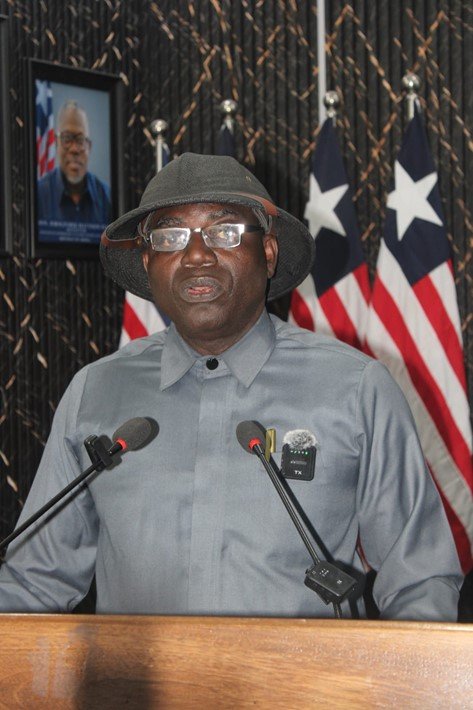
Speaking during a briefing at the Ministry of Information, (MOI), Managing Director Edmud Forh said the initiatives form part of the NTA’s ongoing reform and rebranding agenda designed to improve efficiency, accountability, and service delivery.
The NTA boss said the authority is currently procuring additional vehicles to strengthen public transportation services nationwide.
The acquisition includes passenger buses and cargo trucks intended to improve mobility and support economic activities, particularly in rural communities, he disclosed.
Forh disclosed that the NTA had initially planned to procure 20 units of 19-seater buses. However, complications arose when suppliers proposed delivering 15-seater vehicles instead of the agreed specifications.
He explained that the NTA rejected the proposal and engaged the Ministry of State and the Ministry of Transport to address the issue. Following negotiations, authorities reached a revised agreement that ensured value for money and resulted in a reduction in the procurement cost.
“The process was reviewed to protect the government’s interest and ensure that taxpayers receive value for money,” Forh said.
He added that the procurement process has advanced significantly, with the Ministry of Finance already approving the contract while final review by the Ministry of Justice remains pending before delivery of the vehicles can commence.
The NTA Managing Director also announced the procurement of five cargo trucks, which he said will be used to facilitate the transportation of goods, particularly agricultural products from farming communities to urban markets.
As part of the modernization effort, Forh revealed that the authority is preparing to introduce an electronic ticketing system that will gradually replace manual fare collection. The system is expected to improve transparency, reduce cash transactions, and strengthen operational accountability.
The NTA is also working with technical partners, including consultants from India, to improve maintenance systems, build technical capacity, and establish sustainable fleet management practices.
In another development, Forh said the authority is collaborating with international partners under climate-related initiatives, including the Green Climate Fund, to explore environmentally sustainable transportation solutions and reduce emissions in the sector.
He noted that data-driven planning will become a key component of NTA operations, with efforts underway to analyze passenger movement patterns, identify high-demand routes, and improve scheduling and service delivery.
The authority is also rehabilitating and upgrading transport terminals, some of which were previously damaged or destroyed.
According to Forh, the projects are intended to provide safer and more functional facilities for passengers and transport workers.
Some of the buses being acquired are expected to support a Special Presidential Project aimed at strengthening public transportation services across Liberia. The initiative is also expected to improve cargo transportation and provide support to farmers and traders by facilitating the movement of goods to markets.
Forh emphasized that all procurement activities are being conducted in accordance with government regulations and under the supervision of the Public Procurement and Concessions Commission (PPCC), with final legal review by the Ministry of Justice.
He described the reforms as more than a vehicle acquisition exercise, stating that they represent a broader effort to build a modern, reliable, and accountable public transportation system capable of meeting the needs of Liberians.
The NTA Managing Director reaffirmed the institution’s commitment to transforming public transportation and thanked the Government of Liberia, development partners, and the Liberian people for their continued support of the reform process.
“We are building a transport system that will serve the people efficiently and contribute to national development,” Forh said.
About The Author