
By Jamesetta D. Williams
The Office of the United Nations High Commissioner for Human Rights (OHCHR) has donated high-tech equipment to the Law Reform Commission (LRC) to strengthen its role in Liberia’s transitional justice process and support ongoing efforts toward the establishment of the War and Economic Crimes Court (WECC) and the National Anti-Corruption Court (NACC).
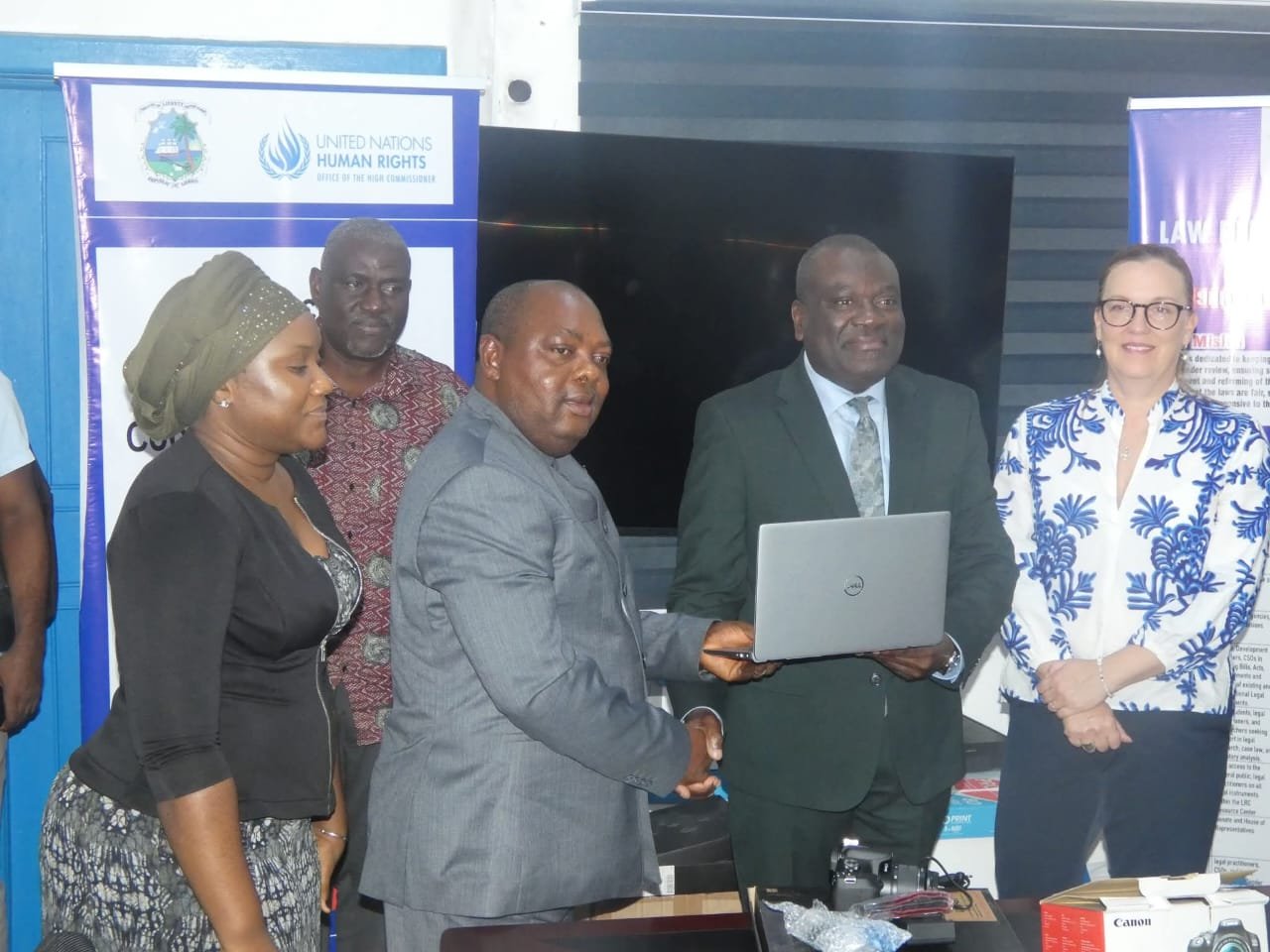
The donation, which includes laptops, printers, a state-of-the-art camera, and office stationery, was presented during a ceremony held at the Law Reform Commission headquarters in Monrovia.
According to OHCHR, the support is intended to enhance the Commission’s capacity to advance legal reforms, accountability, and reconciliation initiatives while strengthening the country’s human rights and justice institutions.
Speaking at the presentation ceremony, OHCHR Representative to Liberia Christian Mukosa reaffirmed the organization’s commitment to supporting national institutions in implementing victim-centered transitional justice mechanisms.
Mukosa said the equipment will strengthen the Law Reform Commission’s capacity to develop legal frameworks that will guide the establishment and operation of the proposed War and Economic Crimes Court and National Anti-Corruption Court.
He stressed that OHCHR remains committed to ensuring that the two proposed courts are inclusive, credible, and responsive to the needs of victims of past human rights abuses and corruption-related offenses.
Mukosa also emphasized that sustained collaboration with national stakeholders is essential to ensuring that Liberia’s transitional justice initiatives are anchored in strong legal and human rights standards.
The donation comes as Liberia advances efforts to establish the War and Economic Crimes Court and the National Anti-Corruption Court following the submission of the relevant bills to the National Legislature.
As part of that process, the Law Reform Commission is expected to conduct a comprehensive review of Liberia’s legal framework governing the prosecution of serious human rights violations and corruption-related offenses, taking into account international legal norms and best practices.
Established by an Act of the Legislature in 2011, the Law Reform Commission is mandated to review, reform, unify, and codify Liberia’s laws to ensure they reflect current national realities.
Representing the Embassy of Sweden, First Secretary Susanna Elmberger said strengthening the Commission’s institutional capacity is vital to ensuring that Liberia’s transitional justice mechanisms are built upon a sound legal framework that complies with international human rights standards.
She noted that since January 2025, Sweden has been providing financial support to OHCHR to strengthen key national institutions, including the Office for the Establishment of the War and Economic Crimes Court for Liberia, the Independent National Commission on Human Rights, the Liberia Anti-Corruption Commission, civil society organizations, academic institutions, and the media.
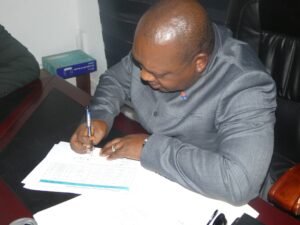
Receiving the donation, Law Reform Commission Chairman Cllr. Bornor M. Varmah expressed appreciation to OHCHR and the Government of Sweden for their continued partnership and commitment to strengthening Liberia’s justice sector.
Varmah said the Commission looks forward to deepening its collaboration with OHCHR as Liberia moves closer to establishing the War and Economic Crimes Court and the National Anti-Corruption Court.
OHCHR also announced plans to support the recruitment of a national consultant to work with the Law Reform Commission in reviewing Liberia’s legal framework on corruption-related offenses to help shape the legal foundation for the proposed National Anti-Corruption Court.
The donation forms part of broader efforts by OHCHR and its partners to support the Government of Liberia in strengthening accountability, promoting justice, and ensuring that future judicial institutions operate in line with international legal standards and best practices.
About The Author