-VP Koung Says
By Stephanie M. Duncan
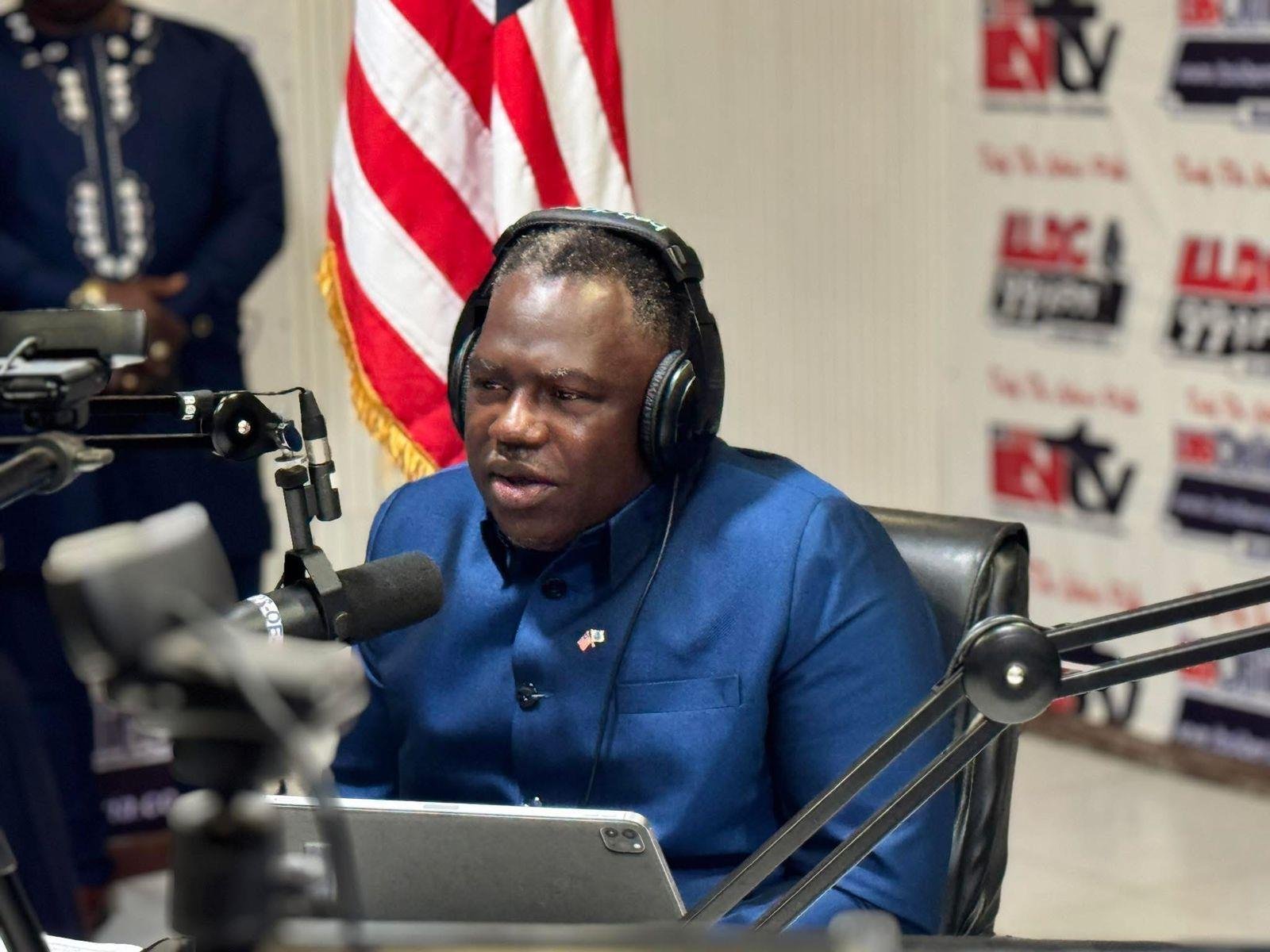
Appearing on national radio Monday for the first time since assuming the office of Vice President, Mr. Jeremiah Kpan Koung, unearthed a good number of issues affecting the state, including power supply and stability, private sector investment in energy, mineral development agreements, contractual agreements with foreign companies, and many others.
Expanding on Liberia’s wobbling energy sector viewed as backbone to economic growth, VP Koung called for urgent investment in the sector, warning that failure to act could lead to “future embarrassment” for the country.
The Vice President emphasized the need for a strategic shift in addressing Liberia’s electricity challenges. He pointed to Bea Mountain Mining Corporation and ArcelorMittal as the country’s top taxpayers and potential partners in solving the energy crisis.
According to Mr. Koung, the government should collaborate with these companies to finance and construct a hydroelectric power plant that would ensure stable and reliable electricity supply across the country.
“We just need to shift the focus and allow them, as the highest taxpayers now, to build the dam to supply electricity,” the Vice President said.
He noted that the cost of constructing a hydroelectric facility ranges between US$2 billion and US$3 billion—an amount he said the government is currently unable to shoulder alone. As such, he suggested that instead of collecting taxes from these major corporations, the government could allow them to invest directly in energy infrastructure.
The Vice President stressed that the country’s development hinges on fixing its electricity sector, which he described as the foundation for national progress. He identified the Liberia Electricity Corporation (LEC) as central to the issue, noting that persistent power shortages continue to hamper business growth and job creation.
“All of the sectors rest on LEC, which is the foundation for the nation’s progress,” he said. “Our people all want to work in government now because business is not going, and LEC is a major factor.”
Mr. Koung concluded by urging policymakers to prioritize foundational challenges in the energy sector, expressing confidence that resolving them would unlock broader economic opportunities and growth across Liberia.
About The Author