
Monrovia-The Press Union of Liberia (PUL) has called for comprehensive reforms of the 1986 Constitution, warning that existing constitutional loopholes could be exploited by political actors to undermine democratic governance, judicial independence and press freedom.
The Union is demanding an inclusive and impartial reform process that reflects the social, political and economic realities of Liberians, rather than serving the interests of political elites and partisan groups.
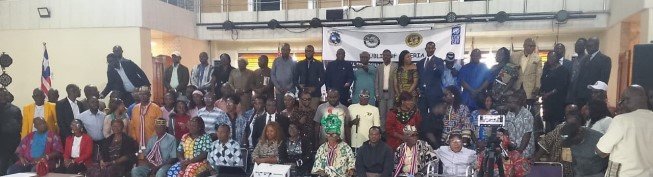
The call was last week at the opening of a three-day National Symposium on Constitutional Reform in Ganta, Nimba County, where the PUL presented its position through journalist Fabine Kwiah, a member of its delegation.
Kwiah, a broadcast journalist at the Liberia Broadcasting System, stressed that any revised constitution must guarantee fundamental rights, including freedom of speech and expression, press freedom, freedom of association, and civil and political liberties.
He also argued that constitutional provisions governing violations of these rights must be clearly defined to prevent conflicting interpretations and possible abuse by public officials.
Beyond civil and political rights, the PUL is calling for constitutional provisions that recognize and protect the economic rights of citizens, particularly their rights over the country’s natural resources.
“For too long, our citizens have languished in poverty, inequality, and human insecurity. This is the direct result of a lack of economic opportunities and a historical failure to constitutionally codify our people’s economic rights over their own natural resources,” Kwiah stated on behalf of the Union.
The PUL identified several areas of concern within the current Constitution, including what it described as excessive presidential powers and the centralization of authority in the Executive Branch.
According to the Union, the concentration of power weakens decentralization and leaves local governance vulnerable to political patronage.
It also raised concerns about constitutional ambiguities surrounding executive appointments within the judiciary, warning that such provisions could compromise judicial independence and expose the courts to political interference.
On presidential immunity, the Union questioned Article 61 of the Constitution, particularly the extent to which former presidents can be held criminally accountable after leaving office.
The PUL further wants stronger and independent constitutional mechanisms to address public officials facing serious corruption allegations, arguing that the current framework does not provide adequate safeguards against selective accountability.
Press freedom also featured prominently in the Union’s concerns.
It warned that broad national security provisions and legislative loopholes could be exploited to restrict freedom of expression, undermine the Kamara Abdullah Kamara Press Freedom Act and impose excessive non-disclosure requirements on government employees.
The Union maintained that protecting journalists, safeguarding civic space and ensuring accountability for violations of fundamental rights must remain central to the constitutional reform process.
Meanwhile, the PUL commended the Governance Commission and Law Reform Commission, with support from the United Nations Development Programme (UNDP), for organizing the three-day symposium.
Although PUL President Julius Kanubah was in Ganta, he could not attend the opening ceremony due to unforeseen circumstances. The Union was represented by Kwiah and another delegate.
The PUL pledged to remain engaged in the reform proceedings to ensure that the concerns of ordinary Liberians are adequately represented and not overshadowed by political interests.
Describing the 1986 Constitution as outdated, the Union argued that Liberia’s social, political, economic and environmental realities have changed significantly over the past four decades.
It maintained that constitutional reform must produce a supreme law that reflects the present circumstances and long-term aspirations of the Liberian people rather than the political anxieties that shaped the country’s existing constitutional framework.
About The Author