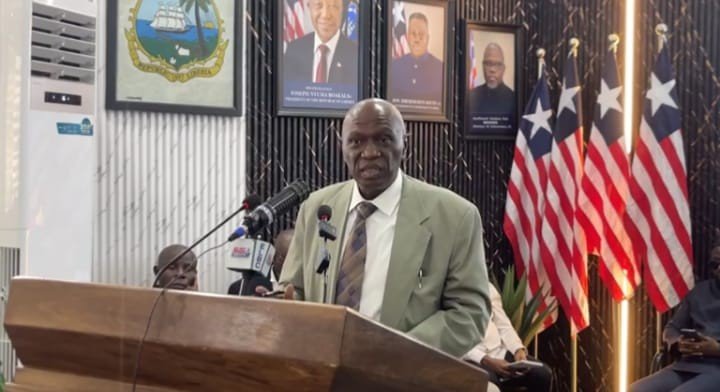

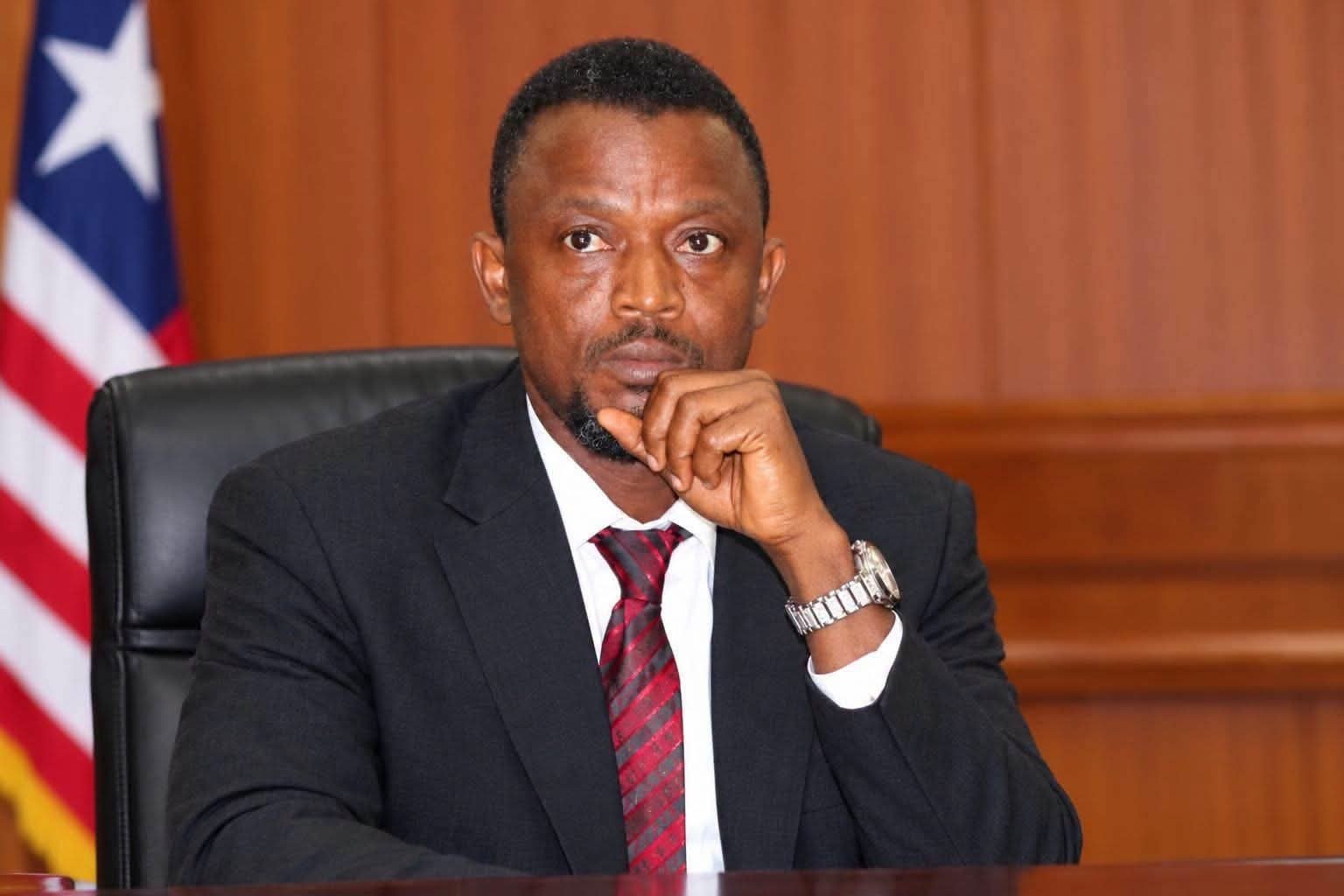
Rep. Mulbah
By Jamesetta D. Williams
Monrovia-Montserrado County lawmaker Mulbah has called on President Joseph Nyuma Boakai to intervene in ongoing land disputes in Johnsonville, urging the suspension of related court proceedings pending an investigation into alleged fraudulent historical deeds and the authenticity of land records.
In a letter to President Boakai, the lawmaker raised concerns over claims that individuals are using historical land documents allegedly dating back to 1863 to assert ownership of properties in Johnsonville, a township he said did not exist at the time.
Mulbah called on the President to direct the Liberia Land Authority (LLA) and the Center for National Documents and Records Agency (CNDRA) to explain how such documents are being authenticated and used in land ownership disputes.
He also urged the President to establish a preliminary investigation into the authenticity of the disputed deeds and halt ongoing land cases until the investigation is completed, arguing that the issue could have serious implications for property rights, public records integrity, and the administration of justice.
The lawmaker alleged that officials within the LLA and CNDRA may be validating compromised historical records, thereby contributing to legal disputes that could result in citizens losing properties they have occupied for years.
In his letter, Mulbah cited the case of an elderly woman who, according to him, had peacefully occupied her property for more than 20 years after purchasing it from what he described as the rightful owner.
He said the woman was recently served a writ of summons through Bill P. Alex, Clerk of Court of the Sixth Judicial Circuit, Civil Law Court, Montserrado County, in connection with a land dispute.
The lawmaker questioned the legal basis of the claim against the woman, alleging that the claimant lacked the necessary legal authority to pursue the case because Letters of Administration were not attached to the writ.
Mulbah further alleged that the land claim relies on a damaged historical record contained in Original Volume 3-B, pages 469–470, at the National Archives.
He argued that the condition of the record raises questions about its authenticity and legal validity, and called for an investigation into whether public records were altered, tampered with, or improperly used in the ownership dispute.
A major concern raised in the letter involves a deed reportedly claiming that the disputed land was surveyed in 1863 during the administration of former President Stephen Allen Benson.
Mulbah argued that the historical claim is questionable because Johnsonville Township, according to his account, was established between 1885 and 1887 and named after former Liberian President Hilary R. W. Johnson, who assumed office in 1884.
He maintained that the alleged 1863 survey raises questions about the validity of the deed, particularly if the document identifies the property as being located in a township that had not yet been established at the time.
Citing provisions of the Civil Procedure Law, Public Lands Law, and the 2014 Act Against Criminal Conveyance of Land, the lawmaker argued that the alleged inconsistencies could constitute grounds for challenging the deed and investigating possible criminal violations.
He also referenced the Land Rights Act of 2018 and Article 20(a) of the 1986 Constitution, arguing that the elderly woman’s longstanding possession of the property deserves legal protection.
However, the allegations and legal interpretations outlined in the letter have not been independently verified.
Mulbah said he was formally copying the House of Representatives and the Liberian Senate to encourage legislative scrutiny of the matter.
He called for the Plenary of the Legislature to summon the Chairperson of the Liberia Land Authority, the Director-General of CNDRA, and other relevant officials to explain how historical land records are verified and used in property disputes involving Johnsonville.
The lawmaker argued that public institutions responsible for land administration and historical records must be held accountable for ensuring that documents used in land claims are authentic and legally valid.
In his letter, Mulbah outlined four proposed actions he wants the President to take.
First, he called for a temporary halt to contentious land cases and the enforcement of Alternative Dispute Resolution (ADR) mechanisms through coordination with the Chief Justice and Minister of Justice.
Second, he proposed the establishment of an independent preliminary investigation committee comprising representatives from the Ministry of Justice, Liberia Land Authority, CNDRA, and the Liberia National Bar Association to verify the authenticity of disputed deeds and provide findings to the courts.
Third, he urged a forensic audit of land deed registers at the National Archives, beginning with Original Volume 3-B, pages 469–470, to determine whether the records have been mutilated or manipulated.
Finally, he called for the prosecution of public officials and private individuals found to have participated in falsifying records or engaging in criminal conveyance of land.
Mulbah said the alleged irregularities in land records pose a threat to citizens’ property rights and public confidence in the country’s land administration and judicial systems.
He urged President Boakai to intervene, arguing that a preliminary investigation could help establish the authenticity of disputed documents and prevent what he described as potential injustices against property owners.
The lawmaker said the matter also requires legislative oversight and cooperation among relevant institutions to ensure that land disputes are handled in accordance with the law.
His appeal comes amid concerns over land ownership disputes and the reliability of historical records used to establish property claims, with the lawmaker calling for greater scrutiny of documents presented in court.
Mulbah said decisive action by the Executive, alongside legislative oversight, would help protect citizens and restore confidence in Liberia’s land and court systems.
About The Author