By Jamesetta D. Williams
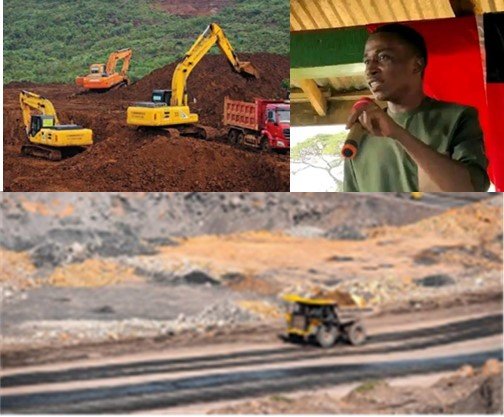
Monrovia-Liberia’s mining sector seems to become the country’s unavoidable problem child that has drawn national attention, to which every citizen is demanding tougher actions to curb ongoing mishaps that have the potential to deny government legitimate and basic revenue.
Reports of illegal mining activities have inundated the national political theatre for years, with little action on the part of stakeholders, the national government, to remedy the situation.
Since the administrations of former presidents Ellen Johnson Sirleaf and George Weah, the problem is said to remain unabated with reports pointing to foreigners overshadowing the sector, denying government and host communities of requisite revenue benefits.
President Joseph Boakai recently established a taskforce on illegal mining as a way of quelling the situation.
The fourth edition of the Government Town Hall (GTH) held at the weekend in Tubmanburg, Bomi County, focused on the extractive industry and the mining sector’s role in national revenue generation, economic growth, and Liberia’s transformation agenda.
Various speakers and presenters weighed in on how the country is losing millions of dollars due to lack of accountability, transparency in the sector.
Acting Superintendent Alphonso Sherman was one of those who called for greater transparency, accountability, and community participation in Liberia’s mining sector, stressing that the country’s mineral wealth must translate into tangible development for communities hosting mining operations.
Sherman said the county’s long history of mining, dating back to the days of the Liberia Mining Company (LMC), makes it an appropriate place for discussions on the extractive industry and its contribution to national development.
The town hall meeting focused on Liberia’s extractive industry, particularly the mining sector’s contribution to national revenue, economic growth, and the country’s transformation agenda.
Sherman said the benefits of mining should be reflected in improved public services and infrastructure, including roads, schools, clinics, and hospitals.
He questioned how the substantial revenue generated from Liberia’s natural resources could be translated into visible improvements in the living conditions of citizens, particularly those residing in communities where mining activities take place.
According to him, the country must move beyond extracting natural resources and focus on ensuring that the proceeds contribute meaningfully to community development.
“These are the questions we must address today as we move from extraction to transformation and ensure that the benefits of our natural resources reach the people,” Sherman emphasized.
The Bomi County Acting Superintendent also called for increased support from the Ministry of Mines and Energy to formalize informal mining activities, enabling miners to operate legally and safely.
He said formalizing the sector would allow miners to contribute to government revenue while improving their working conditions.
Sherman noted that cooperation between local authorities and the relevant government institutions is necessary to address the challenges confronting people engaged in informal mining.
He stressed that mining activities must be conducted in ways that promote legal compliance, protect workers, and contribute to the country’s development.
Sherman further emphasized the need for mining companies to be transparent about their commitments to host communities, particularly regarding the benefits and development projects expected from their operations.
He said residents need clear information about what mining companies have agreed to provide and whether those commitments are being fulfilled.
According to him, communicating such information in simple and understandable language would help citizens better understand their rights and the benefits they should expect from mining activities.
He maintained that transparency is essential to building public confidence and ensuring that communities are adequately informed about agreements involving their natural resources.
The Acting Superintendent also called for greater attention to the environmental effects of mining, particularly the potential impact on water sources, families, and surrounding communities.
He said discussions about the extractive industry should go beyond revenue generation and economic growth to include the protection of the environment and the well-being of people living in mining areas.
Sherman expressed hope that the town hall meeting would provide an opportunity for government officials, community leaders, young people, and women to share their concerns and contribute to practical solutions.
He encouraged participants to speak freely and respectfully, emphasizing that the dialogue should reflect the experiences and concerns of ordinary citizens rather than remain limited to discussions in Monrovia.
Sherman assured participants that the Bomi County Administration would support efforts to make the dialogue successful.
He said cooperation, transparency, and meaningful engagement among government institutions, mining companies, and host communities were necessary to ensure that Liberia’s natural resources contributed to inclusive development.
He also urged stakeholders to work together to ensure that the country’s mineral wealth creates lasting benefits for citizens and communities.
Also, Minister of Mines and Energy, R. Matenokay Tingban, called for stronger environmental protection measures and responsible mining practices to safeguard communities from the harmful effects of irresponsible mining activities.
Tingban emphasized the importance of enforcing environmental regulations to protect public health, preserve the environment, and ensure that Liberia’s mineral resources contribute to national development.
He said some individuals engage in mining activities without complying with established laws and regulations, exposing communities to dangerous substances, including mercury, and threatening the health, safety, and livelihoods of residents.
According to Tingban, the government is working to establish the necessary mechanisms to address these challenges, prevent environmental damage, and ensure that mining activities are conducted responsibly.
Tingban highlighted the role of the Environmental Protection Agency (EPA) in enforcing environmental regulations and addressing environmental challenges associated with mining activities.
He said effective environmental oversight is necessary to ensure that mining operators comply with applicable requirements and that their activities do not expose communities to unnecessary risks.
The minister stressed that responsible mining practices should protect surrounding communities, reduce environmental damage, and ensure that the exploitation of natural resources does not undermine the well-being of citizens.
He also emphasized the importance of cooperation between the government and the EPA in addressing environmental concerns and strengthening oversight of mining operations.
The Mines and Energy Minister further disclosed that a proposal had been submitted to President Joseph Nyuma Boakai seeking stronger arrangements for environmental restoration, including the establishment of rehabilitation escrow accounts for mining companies.
Under the proposed arrangement, mining companies would set aside funds to support the reclamation and rehabilitation of land affected by their operations.
The proposal is intended to ensure that funds are available to restore damaged land after mining activities end, reducing the risk of communities being left with degraded land and other environmental problems.
Tingban emphasized that mining companies must take responsibility for the environmental consequences of their operations rather than leaving affected communities to bear the burden.
He noted that strengthening environmental regulations and improving oversight are important steps toward ensuring that mining activities are conducted responsibly and contribute to sustainable development.
The minister’s remarks highlighted the need to balance the economic benefits of mining with the responsibility to protect the environment and the people living in mining communities.
While Liberia’s extractive industry contributes to national revenue and economic activity, environmental safeguards remain essential to ensuring that mining operations do not create long-term problems for local communities.
The proposed rehabilitation escrow accounts could help provide financial resources for land restoration and rehabilitation. However, the proposal’s implementation would depend on subsequent government decisions and the arrangements established for mining companies.
Tingban’s remarks formed part of discussions at the fourth edition of the Government Town Hall Meeting, held on October 9, 2026, in Tubmanburg City, Bomi County.
The meeting focused on Liberia’s extractive industry, particularly the mining sector’s contribution to national revenue, economic growth, and the country’s transformation agenda.
About The Author