Monrovia-The jurors have spoken, delivering verdicts that have left even the convicted ones as well as ordinary Liberians bewildered and divided.
Out of several former officials accused and indicted for wrongfully handling a bilateral rice donation to Liberia, about three defendants, including Mrs. Comfort Sawyer, wife of late Interim President Amos Claudius Sawyer, regained their freedom, found not guilty of all charges brought against them by the government.
Now referred to as “the rice verdicts,” Liberians are split over the outcome, with many describing it as controversial and political. But the Asset Recovery and Property Retrieval Taskforce (AREPT), which brought the charges, has welcomed the guilty verdicts against eight defendants in the Saudi-donated rice corruption case.
Cllr. Edwin Kla Martin, who heads AREPT, described the outcome as a significant milestone in the Government of Liberia’s fight against corruption and the protection of public resources.
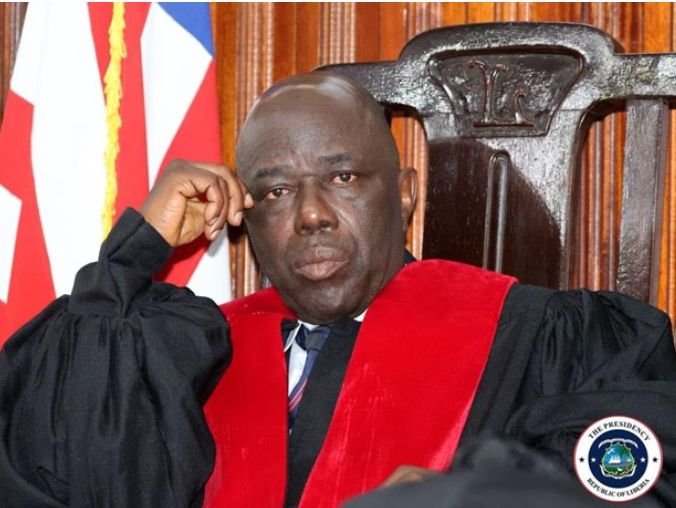
Jurors delivered the verdicts last Friday by a 12-man jury at Criminal Court “C” in Monrovia, presided over by Judge Ousman F. Feika, following weeks of testimony, documentary evidence, and rebuttal proceedings in a case involving the alleged misappropriation of rice donated by the Kingdom of Saudi Arabia for disaster victims and vulnerable Liberians.
At the heart of the case was an AREPT investigation into the alleged misappropriation of 29,412 bags of rice valued at approximately US$500,000, donated by Saudi Arabia in 2023 through the King Salman Humanitarian Aid and Relief Center to assist disaster victims and vulnerable communities.
The indictment alleged that 25,054 bags of the donated rice were unlawfully diverted or misapplied, re-bagged, sold on the market, or unaccounted for, raising serious questions about the management and distribution of humanitarian assistance intended for citizens in need.
All defendants were tried on five counts, including theft of property, economic sabotage, misapplication of entrusted property, abuse of office, and criminal conspiracy.
According to AREPT and courtroom reports, the jury returned guilty verdicts against eight defendants including Dee-Maxwell Saah Kemayah, former Minister of Foreign Affairs, guilty on all five charges. Kemayah, who facilitated the Saudi donation, was central to the prosecution’s case. The reported vote breakdown shows disagreement of 4 jurors voted not guilty on theft, 4 on economic sabotage, 3 on misapplication, and 4 on conspiracy, but all 12 voted guilty on abuse of office.
Varney A. Sirleaf, former Minister of Internal Affairs, guilty on all five charges. Sirleaf had argued the movement of rice from NDMA to GSA was an inter-agency decision due to storage constraints.
Momolu Johnson, former Deputy Minister of Internal Affairs, guilty on all five charges while Augustine M. Kollie, NDMA official for disaster victims, guilty on all five charges. Also, Edward S. Konneh, NDMA official, guilty (as confirmed by AREPT summary). Archievego M. Doe, NDMA, convicted according to AREPT, courtroom notes show mixed/hung on some counts, requiring official sheet confirmation.
Rosetta L. Gbassay Bowah / Rosetta Goah, NDMA, reported guilty on theft, economic sabotage, misapplication and conspiracy, abuse-of-office reportedly hung.
Edris Idris Bility, former Deputy Director, General Services Agency (GSA), guilty on all five charges. Bility had presented gate passes he said documented 5,000 bags released for Gbarnga.
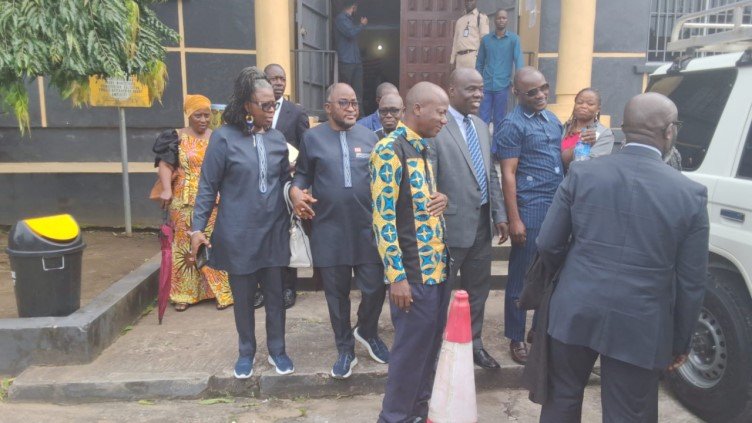
At the same time, three defendants were fully acquitted, including Comfort Sawyer Court while Henry O. Williams, former NDMA Executive Director, and Memmie Davie Larmie, former GSA official, as not guilty on all five charges, a significant outcome given their senior positions.
Their acquittal shows the jury did not treat the case as collective guilt. Everlyn Gbee reported not guilty on all charges, with only one juror reportedly voting guilty on theft.
The acquittals underscore that the jury distinguished individual responsibility, rather than convicting everyone connected to the operation.
Their legal consequence will be determined by Judge Feika, whether to order a retrial on those counts, dismiss them, or proceed to sentencing on the resolved counts.
Before final arguments Friday, Judge Ousman Feika reportedly rejected an attempt by defense counsel Cllr. Jimmy Saah Bombo to make a submission, ruling it was not appropriate at that stage and should have been made earlier.
What astonished observers, according to courtroom accounts, was Judge Feika’s reported remark made even before closing arguments concluded and the jury retired, predicting that the lawyer would take the matter to the Supreme Court.
That statement raised questions about timing and judicial commentary before deliberation. Its precise wording and legal significance will require the official transcript, but defense sources say it may form part of their bill of exceptions on appeal.
Jurors were also reportedly observed wearing masks to conceal their identities, underscoring the sensitivity of a case involving former ministers and a humanitarian donation.
AREPT has vowed to defend the verdicts.”We are prepared. Definitely when they go to the Supreme Court, we will equally go there and defeat them there,” Cllr. Martin said.
Under Liberian law, the convicted defendants retain the right to appeal to the Supreme Court, to seek bail pending appeal, and to challenge both the jury instructions and procedural rulings, including the rejected defense submission.
Sentencing is yet to be scheduled but the offenses carry penalties ranging from restitution to years of imprisonment.
For AREPT, the verdicts move the case from investigation to adjudication, and mark its first major jury victory. For the judiciary, it is a major test that Liberia can hold former senior officials accountable for humanitarian aid while preserving due process for those acquitted and those with hung counts.
The official verdict sheets from Criminal Court “C” will provide the definitive charge-by-charge breakdown. But as of Friday, the message is clear that 8 guilty, 3 acquitted, 2 with unresolved counts, and a national debate over rice meant for the vulnerable that never reached their tables.
About The Author