By Jamesetta D Williams
World Bank (WB) has once again shown generosity toward Liberia’s efforts to expand infrastructural growth, following renewed commitments to support the proposed Legacy Economic Corridor (LECO), a transformative road project expected to connect key economic zones across Grand Bassa, Bong, and Nimba Counties.
LECO is the Government of Liberia’s ambitious road infrastructure agenda intended to boost road connectivity throughout the length and breadth of the country.
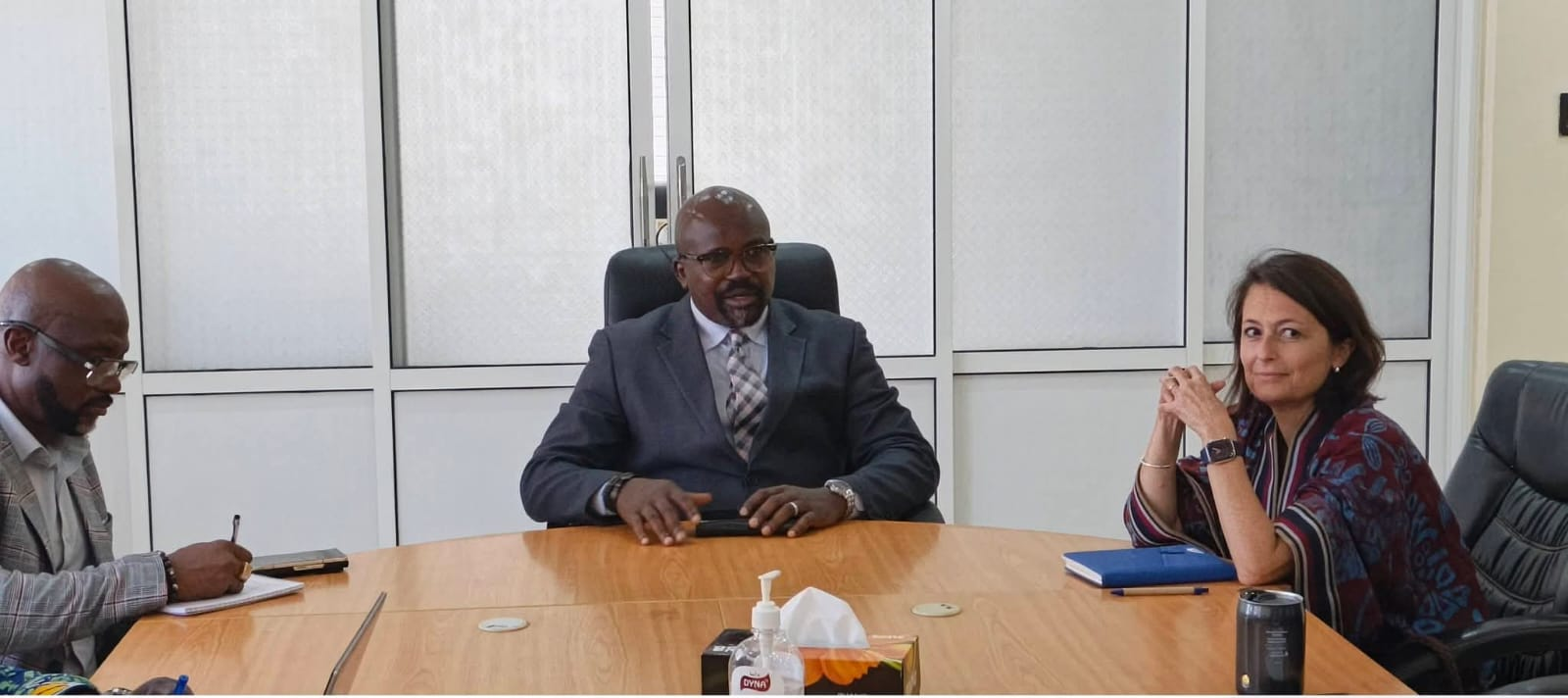
A World Bank delegation headed by Anne-Cecile Souhaid on Sunday held high-level discussions with officials of the Ministry of Public Works in Monrovia on the potential financing and implementation of the corridor project, which is expected to strengthen agricultural production, mining activities, and transportation networks across the country.
Speaking during the meeting, Souhaid conveyed the World Bank’s strong interest in supporting the initiative, describing the proposed corridor as a project that aligns with the institution’s broader mission of poverty reduction and economic inclusion.
According to her, the corridor has the potential to unlock economic opportunities for vulnerable communities while enhancing access to markets and essential services.
“The Bank’s vision is strictly aligned with the project objectives because it seeks to reduce poverty among vulnerable people while ensuring justice and equality,” she noted.
As part of the engagement, World Bank official Ellin Ivarsson presented a detailed proposal outlining a three-component financing framework for the construction of the Legacy Economic Corridor.
The presentation highlighted the strategic importance of the project and the justification for the Bank’s involvement in financing the initiative.
Responding on behalf of the Government of Liberia, Public Works Minister Roland Layfette Giddings welcomed the World Bank’s interest in the country’s reconstruction and infrastructure development efforts.
Minister Giddings praised the Bank for its continued support to Liberia’s development agenda, particularly initiatives aimed at promoting economic growth, reducing poverty, and improving living conditions for ordinary Liberians.
However, the Public Works Minister urged the World Bank to reconsider aspects of the proposed corridor design by including the paving of major cities and communities through which the road will pass.
Drawing reference to the Rural Economic Transformation Project (RETRAP I & II), Giddings pointed out that major cities such as Saclepea and Tapita were bypassed in terms of urban pavement despite the highways running through them.
According to him, the absence of paved inner-city roads has limited the full economic benefits expected from those projects.
“It does not look good for such a modern road to pass through Saclepea and Tapita while those cities remain unpaved.
We think it is a mistake that must be corrected beginning with the Legacy Economic Corridor,” Minister Giddings stressed.
He argued that for the corridor to achieve its intended impact, local businesses, farmers, and transport operators within those urban communities must be directly connected to the main highway through improved feeder and city road infrastructure.
The Minister further used the occasion to raise concerns about the possible reduction of Swedish support to Liberia’s Village Access Roads Project, warning that such a development could negatively affect rural farmers who rely heavily on feeder roads to transport produce to larger markets.
He called on the World Bank to consider supporting the continuation of the project, emphasizing that discontinuing the initiative could reverse years of progress made in improving rural accessibility and agricultural trade.
The Legacy Economic Corridor is expected to become one of Liberia’s flagship infrastructure projects aimed at driving regional integration, boosting commerce, and accelerating economic transformation across some of the country’s most productive counties.
About The Author