
By Jamesetta D. Williams
Monrovia-About one thousand people have been arrested in Grand Cape Mount County as part of the Government of Liberia ongoing crackdown on illegal mining spearheaded by the Presidential Protect Our Resources Task Force (PORT).
A Town Chief of Gonelor was among the group arrested during an enforcement operation in Grand Cape Mount County.
The operation, conducted in Gonelor Town, followed an earlier enforcement exercise by the Ministry of Mines and Energy (MME), during which members of the Ministry’s field team reportedly came under attack while attempting to address unauthorized dredge mining activities in the area.
According to the Ministry, the earlier incident resulted in the destruction of government enforcement vehicles, the confiscation of a motorbike and the seizure of communication devices belonging to members of the enforcement team.
The latest intervention by PORT, headed by Colonel Abraham Kromah, was intended to reinforce the Ministry’s previous operation, investigate reported violations and remove individuals involved in unauthorized mining activities.
During the operation, the Task Force reportedly confirmed the presence of illegal mining operators and arrested nearly a dozen suspects. It also confiscated equipment allegedly being used for unauthorized dredging.
Among those arrested was the female Town Chief of Gonelor. The suspects are undergoing further investigation to establish their alleged involvement in illegal mining and determine whether they violated Liberia’s Minerals and Mining Law.
The Ministry of Mines and Energy said the operation was conducted in collaboration with its field personnel, describing the intervention as part of the government’s renewed effort to protect the country’s mineral resources and strengthen enforcement of mining regulations.
Speaking on the operation, PORT Chairman Colonel Abraham Kromah described the Gonelor intervention as “a tip of the iceberg” in the implementation of the Task Force’s nationwide mandate under Executive Order No. 167.
He said the Task Force remains committed to confronting illegal mining activities across Liberia and ensuring that the country’s natural resources are protected in the interest of the State and its citizens.
The latest operation comes amid growing government concerns about the effects of unauthorized mining on the country’s environment, public revenue and community livelihoods.
President Joseph Nyuma Boakai Sr. established PORT on June 26, 2026, through Executive Order No. 167, giving the multi-agency body the responsibility to combat illicit mining and strengthen the protection of Liberia’s natural resources.
The Executive Order mandates the Task Force to investigate illegal mining operations, confiscate equipment used in unlawful activities, facilitate the arrest and prosecution of violators, and work with relevant government institutions to enforce the country’s mining and environmental laws.
The Task Force brings together representatives of key government institutions, including the Ministry of Mines and Energy, the Environmental Protection Agency, the Armed Forces of Liberia and the Liberia National Police.
In September, the Ministry of Mines and Energy held a consultative technical meeting with the Task Force to prepare for the implementation of its nationwide enforcement mandate.
During the meeting, Mines and Energy Minister R. Matenokay Tingban emphasized the need for coordination among the participating institutions and warned against interference or attempts to compromise enforcement operations.
The Minister also urged members of the enforcement team to remain professional and act within the framework of the country’s laws while carrying out their responsibilities.
The Ministry’s position followed concerns over the widespread exploitation of mineral resources and the need to strengthen compliance monitoring across the mining sector.
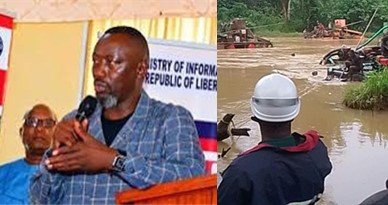
At a September 9 appearance on the Ministry of Information’s regular press briefing, PORT Chairman Kromah disclosed that the Task Force had identified 485 excavators in Grand Cape Mount County as part of its assessment of mining activities across the country.
He also said the Task Force had conducted operations across six regions, using intelligence gathering and drone technology to monitor mining activities, particularly in areas that are difficult to access.
Kromah warned that illegal mining could deprive the government of substantial revenue while contributing to environmental destruction. He also identified limited financial resources as one of the challenges affecting the Task Force’s ability to sustain its operations.
The Gonelor operation also comes weeks after the Government of Liberia took its mining-sector reform and resource-management discussion to Tubmanburg, Bomi County, during the fourth edition of the Government Town Hall Meeting held on October 9, 2026.
The engagement, organized by the Ministry of Information under the slogan “Kapa Kulono,” brought government officials and citizens together to discuss the country’s extractive industry, revenue generation, environmental protection and the need to ensure that mining communities benefit from natural resource activities.
During the meeting, Minister of Mines and Energy R. Matenokay Tingban emphasized the need for stronger oversight, improved transparency and greater local value addition in the mining sector.
Government representatives also addressed concerns about illegal mining and the seizure of mining equipment during enforcement operations in Bomi County. Officials indicated that investigations were ongoing and that individuals found responsible for violations could face applicable penalties.
The discussion reflected concerns raised by residents about the environmental and social consequences of mining activities, particularly in communities where extraction takes place.
One of the concerns came from Bomi County Market Superintendent Jenneh Vincent, who warned about the potential long-term effects of mining activities on communities across Bomi, Gbarpolu and Grand Cape Mount counties.
She raised concerns about mining-related pollution, the handling of waste materials and the possible dangers associated with chemicals used during mining operations.
Her concerns added to calls for stronger government monitoring and greater accountability from mining operators.
The Ministry of Mines and Energy has maintained that illegal dredging, unauthorized mineral extraction and other violations of the Minerals and Mining Law of Liberia will not be tolerated.
It has also called on residents of mining communities, traditional leaders and other stakeholders to cooperate with authorized government institutions and avoid obstructing lawful enforcement operations.
As PORT expands its enforcement activities, the Gonelor operation represents another test of the government’s commitment to translating its promises on mining-sector reform into concrete action.
However, the effectiveness of the crackdown will ultimately depend not only on arrests and equipment confiscation but also on proper investigations, lawful prosecution where evidence supports charges, environmental protection and sustained monitoring of mining communities.
The Ministry has reiterated that Liberia’s mineral resources are a national heritage and that protecting them requires cooperation among government institutions, local authorities, traditional leaders and citizens.
About The Author