Court Rejects Plantation’s Medical and Police Investigation Defenses
By Benjamin Q. Z. Johnson
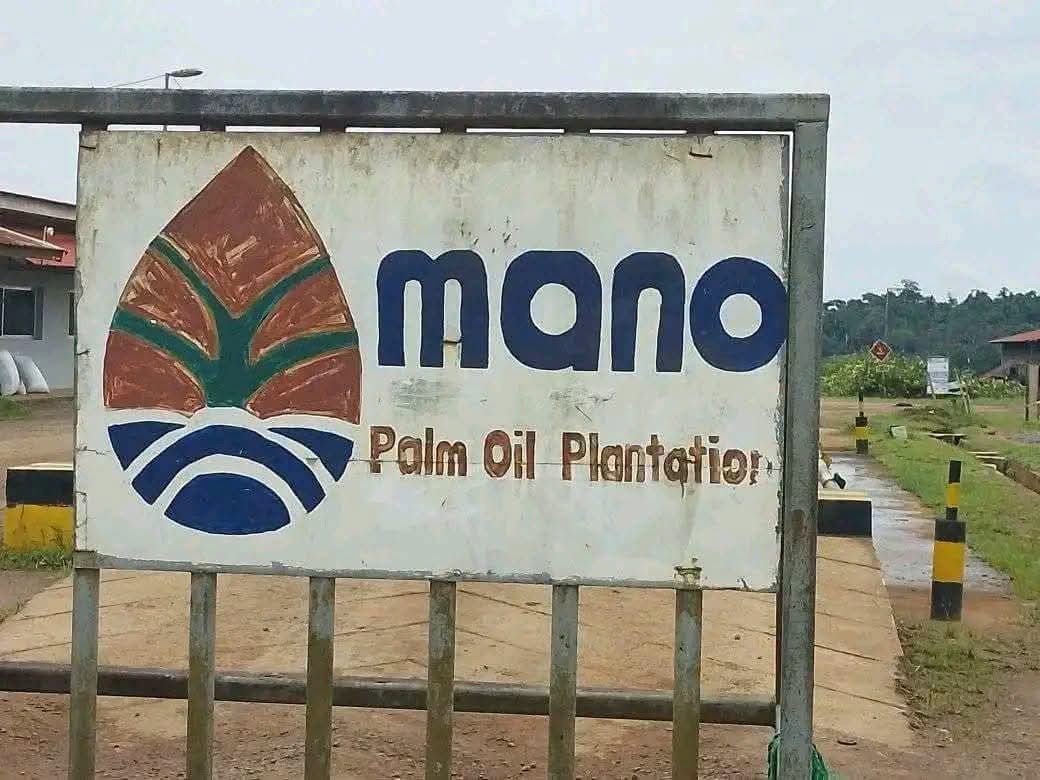
Monrovia-Mano Oil Palm Plantation has been ordered to pay US$405,000 in damages after the 11th Judicial Circuit Court in Tubmanburg found the company liable for negligence that left a 35-year-old motorcyclist with debilitating leg injuries and unable to earn a living.
Resident Circuit Judge Cllr. Ciapha Carey, in a final judgment issued on October 5, 2026, found that a Mano Oil Palm driver negligently left a broken-down company tractor on a public road at night without adequate warning signals and on the lane being used by the injured motorcyclist.
The court awarded US$350,000 in general damages, US$25,000 in specific damages for medical expenses, and US$30,000 in consequential damages, bringing the total judgment against the plantation to US$405,000, in addition to court costs.
The ruling followed a civil action filed by Isaac N. Quoiquoi of Ballah Town, Grand Cape Mount County, against Mano Oil Palm Plantation, its Manager and CEO Asa’ad R. Fadel, and other officials and agents over a March 9, 2023 accident.
According to the court’s findings, Quoiquoi was riding his motorcycle at approximately 10 p.m. when he collided with a company tractor that had reportedly broken down and was left unattended on the roadway.
The court found the circumstances particularly troubling because the tractor was allegedly left without reflective warning signals and positioned on the opposite lane, creating a serious hazard for motorists traveling on the road at night.
Police Traffic Commander Chief Inspector Mark S. Foyah testified that the police investigation held the plantation’s deceased driver, Nelson Fayiah, responsible for the accident.
According to the judgment, the police investigation concluded that Fayiah had parked the tractor on the opposite lane after one of its tires came off but failed to place a reflective triangle or other warning device to alert approaching road users.
Police subsequently charged the driver under Section 10.85 of Liberia’s Vehicle and Traffic Law, relating to signals required for disabled vehicles, and Section 10.4, relating to reckless driving.
The court said Mano Oil Palm Plantation did not dispute that its tractor had broken down on the public highway or that it had been left without reflective warning signals.
The court further concluded that the evidence established negligence.
“The Defendant did not dispute that its driver left the company’s tractor unattended,”
the judgment states, adding that the company also failed to establish that reflective warning signals had been placed around the disabled tractor.
The consequences of the accident, according to testimony accepted by the court, went far beyond the initial collision.
Quoiquoi sustained severe fractures to his legs and underwent multiple surgical procedures at medical facilities in Monrovia.
Medical testimony presented during the trial described his injuries as complicated, including fractures involving the tibia and fibula. Subsequent examinations showed that the tibia had failed to heal properly.
Dr. Senga Omeonga of St. Joseph’s Catholic Hospital testified that despite surgery, the tibia remained unhealed during a subsequent examination.
When asked whether a patient could walk normally while the tibia remained unhealed, the surgeon’s answer was unequivocal “No, the patient can’t.”
Another medical witness, Dr. Robert Gayflor Mulbah, a Consultant Orthopaedic and Trauma Surgeon and Assistant Professor at the A.M. Dogliotti School of Medicine, testified that Quoiquoi suffered a complicated fracture and limb-length discrepancy.
The court found that Quoiquoi’s injuries fundamentally altered his life. Before the accident, he depended on riding a motorcycle to earn a living and support his family.
Following the accident, the court said, he became dependent on crutches and could no longer engage in his former livelihood.
His fiancée, Agnes Anderson, testified that the family had been plunged into severe hardship, including difficulty providing food and keeping their children in school.
Quoiquoi himself testified that his five children had been affected by his inability to work and provide for the family.
One of the plantation’s principal defenses was its claim that Quoiquoi’s father, Morris Quoiquoi, had signed an Against Medical Advice (AMA) document and removed his son from the plantation’s medical care.
But the defense’s own evidence became a major point of contention in the case.
Peter Mulbah, Officer-in-Charge of the Mano Oil Palm Plantation Clinic, testified that Quoiquoi was conscious at the time his father allegedly signed the AMA.
Mulbah also acknowledged that Quoiquoi had been living at home and was only returning to the clinic for post-operative wound care.
The court found the defense’s position difficult to reconcile with those facts.
Morris Quoiquoi, who was called as a subpoenaed witness by the defense, denied requesting that the Mano Clinic release his son or signing an AMA document.
Quoiquoi himself also denied ever being informed about an AMA and testified that his father had never discussed or signed such a document with him.
The court ultimately found the AMA defense lacking logic under the circumstances, noting that Quoiquoi was already staying at home and returning to the clinic for post-operative care.
The ruling described it as “strange and not logical” for a patient who was not permanently hospitalized to require an AMA simply to remain at home.
The plantation also sought to distance itself from the police investigation into the accident.
That position, however, was directly challenged by police witnesses.
Moses Fallah, Mano’s Director of Security, testified that he had not participated in the accident investigation. But Police Chief Inspector Foyah strongly disputed that account.
Foyah testified that Fallah and another Mano employee, identified as Otis, were involved in the investigation from beginning to end.
The police officer questioned why Mano personnel would have allowed investigators to use Fallah’s vehicle to travel to the accident scene if they had not participated in the investigation.
He further testified that Mano representatives returned to the police station after the investigation and negotiated for the release of the company’s tractor.
Police Commander Emmanuel Pritchard also testified that Fallah, Otis and an insurance representative were present during the investigation.
The court accepted the police evidence and found that the plantation’s attempt to disassociate itself from the investigation was not supported by the evidence.
In holding Mano Oil Palm Plantation liable, Judge Carey invoked the legal doctrine of respondeat superior, under which an employer may be held responsible for negligent acts committed by an employee in the course of employment.
The court cited a 2022 Supreme Court decision, Guaranty Trust Bank Liberia Limited v. Sie Edward Freeman, explaining that the doctrine permits liability to be imposed on an employer for tortious acts committed by its employees.
The court concluded that the negligence of Mano’s driver was imputable to the plantation.
It further held that Quoiquoi had met the civil standard of proof by establishing his claim through a preponderance of the evidence meaning the evidence showed that it was more likely than not that the plantation’s negligence caused his injuries.
In determining the damages, the court considered Quoiquoi’s medical expenses, loss of earning capacity, pain and suffering, emotional distress and the permanent consequences of his injuries.
Judge Carey said the evidence demonstrated that Quoiquoi could no longer enjoy life as he did before the accident and could no longer ride a motorcycle to earn a living.
The court emphasized that general damages in personal injury cases are intended to compensate victims for injuries and losses that cannot easily be measured in monetary terms.
For Quoiquoi, the judgment said, the consequences included permanent physical limitations, loss of livelihood and profound changes to his family life.
The court therefore ordered Mano Oil Palm Plantation to pay US$350,000 in general damages, US$25,000 in specific damages for medical expenses, US$30,000 in consequential damages, and all applicable court costs, totaling US$405,000.
The judgment was signed and issued on October 5, 2026, by Judge Cllr. Ciapha Carey of the 11th Judicial Circuit Court in Tubmanburg, Bomi County.
For Quoiquoi, the ruling represents compensation for a life dramatically altered by a nighttime collision.
For Mano Oil Palm Plantation, the judgment represents a substantial judicial finding that the company’s handling of a disabled tractor on a public road, together with the conduct of its employee, legally contributed to the injuries that followed.
About The Author