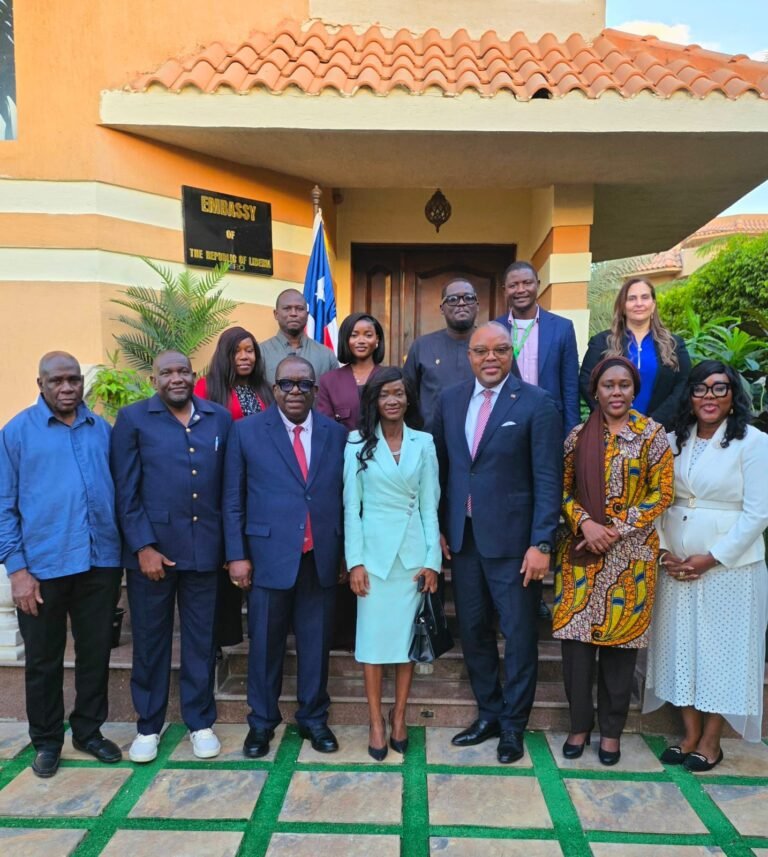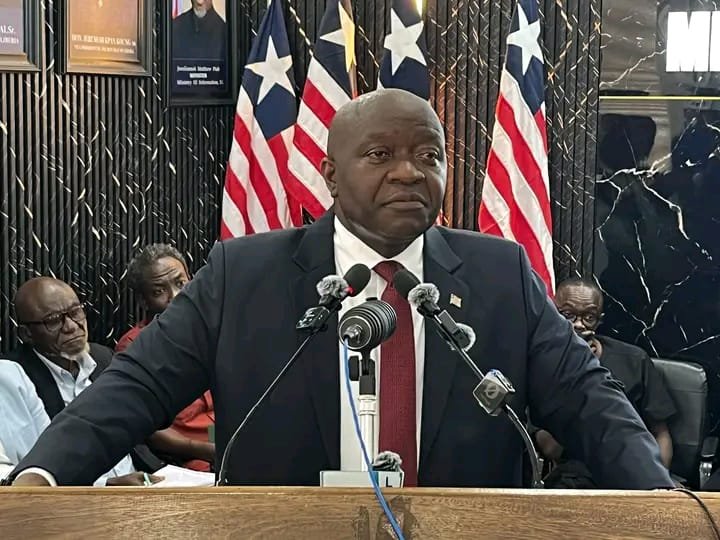


Monrovia-FOR TOO LONG, LIBERIA has operated as a country of two realities that it is only Monrovia, where everything works, and the rest of the country, where everything waits. And for too long, a farmer in Gbarnga with a problem of unfair billing, a student in Buchanan whose SIM was wrongly blocked, a market woman in Voinjama whose mobile money disappeared, or a health worker in Zwedru who could not get network, had only one option, travel to Monrovia, spend money they do not have, waste days they cannot afford, just to be heard. On the overall scale, that is not service, rather a punishment for living outside the capital.That is why the ongoing decentralization drive by the Liberia Telecommunications Authority (LTA) is not just an administrative exercise, but a national obligation, a moral duty, and a correction of a century-long injustice.
THE LTA IS PRESENTLY involved in undertaking initiatives that take telecommunications service provisions to rural areas of the country, breaking the century-long overly service concentration in Monrovia, which eventually denied rural dwellers their rights and privileges to prompt redress of their grievances. No matter how long the delay, citizens are on the verge of encountering a new phenomenon in the telecommunications evolution, a phenomenon where the regulator comes to the people, instead of the people going to the regulator. There is one reality that is unavoidable, which is that telecom is no longer luxury, it is life. In today’s Liberia, telecommunications is not a luxury for the rich, it is life itself, it is how a child learns, how a farmer checks market prices, how a mother sends money to her son in school, how a nurse calls for an ambulance, and how a small business survives.
OF COURSE, WHEN YOU deny a rural citizen access to telecom redress, you are not denying him a phone call, you are equally denying him education, health, business, and dignity. That is why the opening of the Consumer Support Centers in Buchanan and now Gbarnga must be celebrated, but not as an end. It must be seen as the beginning of a revolution. We commend the LTA Board of Commissioners for this bold step. But we must be clear that decentralization must not be mere presence. It must be power. A center that only receives complaints but cannot resolve them is just a beautiful building with a signboard. A center that is open but has no staff, no logistics, no authority to compel GSM companies to act, will quickly become another disappointment to our people.
THIS IS WHY THE LTA must ensure that these centers are empowered, empowered to investigate, empowered to mediate, empowered to hold service providers accountable on the spot, and empowered to report back to citizens in a language they understand. Decentralization must also mean inclusion. The woman in the village, the youth, the person living with disability, the elderly, all must feel welcome in these centers. As civil society rightly warned in Gbarnga, this must not end with a launching ceremony. It must translate into impact.
THIS EDITORIAL ALSO SPEAKS directly to the Mobile Network Operators, Lonestar Cell MTN and Orange Liberia. You make your money from the people in the counties. Your towers are in their towns. Your profit comes from their recharge cards. You cannot continue to give them poor network, drop calls, and unfair deductions while you give Monrovia better service. If the LTA is decentralizing, you too must decentralize, Expand coverage to rural communities, improve quality, compete fairly, and respect the consumer. The era where a citizen must call a Senator or a Representative in Monrovia to fix a network problem must end.
WE ARE AWARE PRESIDENT Joseph N. Boakai promised a government that would reach the people. The LTA’s action is a practical demonstration of that promise. But the government must go further that decentralization of telecom must be matched by decentralization of other services, health, education, agriculture, justice. Liberia cannot develop if everything is in Monrovia. We therefore call on the LTA to take this initiative to all 15 counties. Let every county capital have a Consumer Support Center. Let every one of the 14 administrative districts in Bong County, and the districts in other counties, hear about their rights under Sections 14.4, 14.6 and 14.8 of the Regulatory Framework, the right to complain, the right to be heard, and the right to redress.
YES, INDEED, HISTORY WILL not judge the LTA by how many colorful ceremonies it held, but by how many ordinary Liberians it served. The people of Gbarnga have spoken, and Liberians in other parts of the country are watching, demanding impact. Moreso, Liberia is watching to see if that promise will hold, not just in Gbarnga and Buchanan, but in every town, every village, and every farm where a Liberian holds a phone and deserves to be heard. Decentralizing telecom-related services is not a favor, it is a national obligation.
About The Author