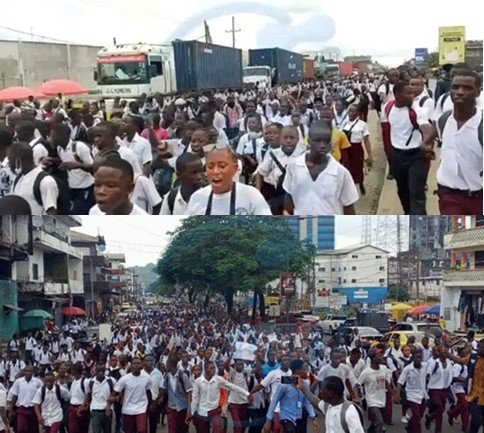
Monrovia-SINCE THE END OF the brutal civil war, the dynamic for education amongst young people has dramatically increased, and it means government must listen. For those who lived through the country’s dark years, the transformation is nothing short of a miracle. Remember that before the civil war, and even in its immediate aftermath, education was not the priority for many of our young people. In urban communities and in the villages, the story was a horror. Boys in their late 20s and 30s were still struggling in high schools, vying to come out. Many never came out at all. Girls dropped out early. Barely did young people desire school. Instead, they chose farming over education, hustling in the streets over the classroom, early marriage over books. The blackboard held no promise for a generation that had seen diplomas turn to ashes in war.
OF COURSE, THAT WAS a thing of the past.Today, the narrative has changed dramatically and hopefully. Young cadres are completing high schools as early as 12, 13 and 14 years, something that was not the case prior to the civil conflict. Walk into any public school in Monrovia, Gbarnga, or Zwedru and you will see a 14-year-old girl in 12th grade articulating her dream to become a doctor, a lawyer, an engineer. You will see boys who refuse to go to the farm unless their homework is done.Young people have now put schooling and education above other life engagements. Education is now fashionable. Education is now resistance. Education is now survival.And any obstruction to this newly found desire is not taken lightly.
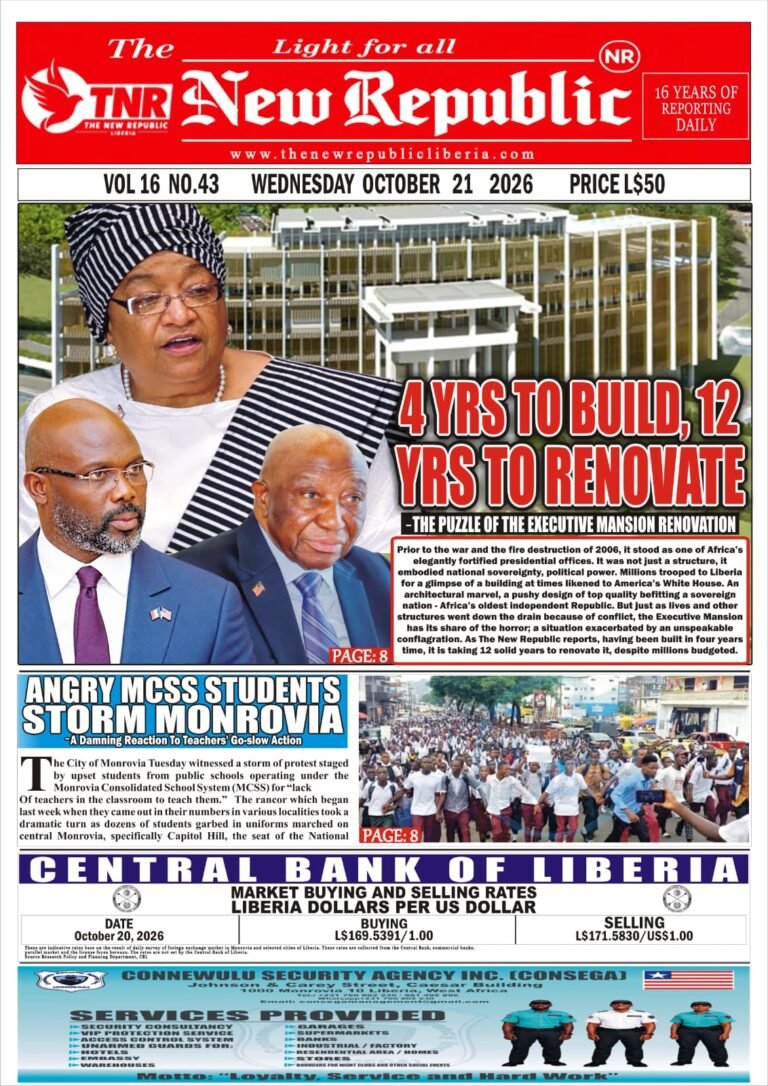
THAT WAS THE CASE on Tuesday when dozens of students of government-run schools took to the streets in a peaceful protest to demand action from the government.It was a small protest in size but monumental in meaning. These were not politicians paid to chant. These were not unionists demanding per diems. These were little children, some in oversized uniforms, some without socks, some holding placards written in marker, demanding what should be given to them freely, teachers in classrooms, benches to sit on, chalk, books, safe buildings, and a Ministry that cares.When little children protest for education, a nation must pause.
THE OVERRIDING QUESTION IS what were they protesting. It is the same old story that has plagued our public schools for years; prolonged absence of teachers who have not been paid for months; schools that reopen without learning materials; classrooms with 100 students squeezed onto broken benches; volunteer teachers abandoned by the Ministry of Education; and a government that talks big about education in budget speeches but allocates pennies in practice. Since the war ended, enrollment has exploded, but quality has collapsed. We celebrated that more children want to learn, but we did not prepare schools to receive them.
AND SO, ON TUESDAY, the children taught a lesson, reminded us that the desire for education that we prayed for after the war has arrived, but the leadership to sustain it has not. So, if this government fails to respond to the protest of little ones, it has failed morally. We recall that the Boakai administration, like the Sirleaf and Weah administrations before it, promised to prioritize education. That is why the Ministry of Education needs to go beyond press releases, pay the teachers, fix the schools, supply the books, visit the rural schools, not just the ones in Monrovia. It also needs to audit the ghost teachers and use the savings to hire real ones.
TO THE SECURITY FORCES who watched over the protest, we commend you for allowing them to march peacefully. That is how a democracy should treat its children.There was a time when Liberian children protested for rice. Today they protest for books. That is progress. But that is also a warning that if we ignore them now, when they are 12, 13, 14 and begging for education, we should not be surprised when they are 18, 19, 20 and demanding something else on the same streets, in a different tone. It is high time government listened to them now, and know that their protest is small in numbers, but big in truth.
Yes, even when the little ones protest for education, the nation must listen.
About The Author