
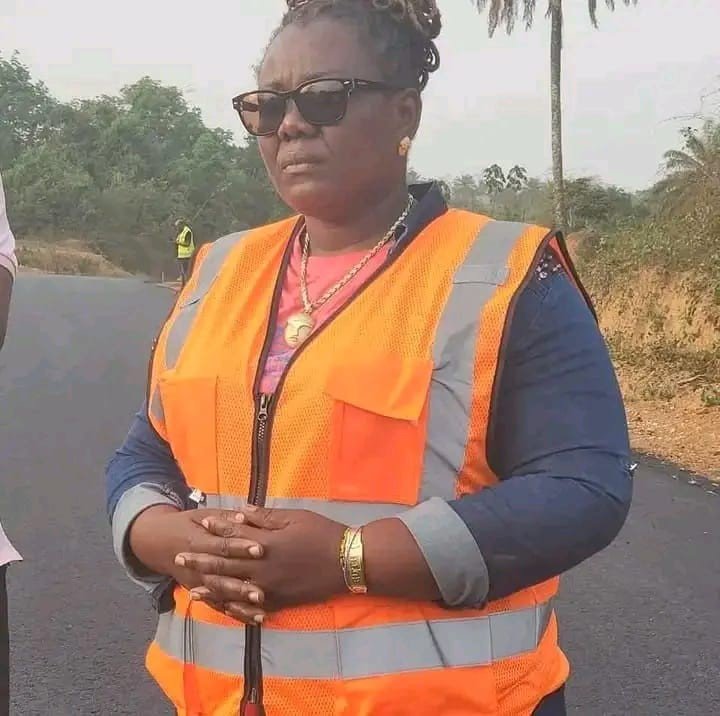
Monrovia-Former Minister of Public Works Ruth Coker-Collins has strongly reproached former Coalition for Democratic Change (CDC) partisan Dr. Lester Tenny concerning Ms. Pauleta Wie, warning that the use of sexually suggestive and degrading language against women in public life undermines their dignity and discourages female participation in leadership.
In a statement released under the theme “Women in Politics: All Women Deserve Respect,” Collins said she was troubled by Tenny’s response to recent public comments by Wie, particularly statements suggesting that women secure influential positions through sexual relationships.
The former minister argued that a woman’s professional standing should be determined by her qualifications, experience, competence, and contributions to society, rather than assumptions or allegations about her private relationships.
She said Liberia has made important strides in creating opportunities for women to participate in governance and public administration, making it necessary for political actors and other influential voices to demonstrate greater responsibility when discussing women who occupy or aspire to leadership positions.
According to Collins, disagreement is an essential part of democratic engagement, and no individual in public life should be exempt from criticism. However, she emphasized that criticism must focus on the substance of an individual’s statements, decisions, and public conduct.
She maintained that questioning a woman’s qualifications or reducing her achievements to alleged sexual relationships shifts public discussion away from substantive issues and subjects women to a different standard of judgment than their male counterparts.
Collins further challenged the relevance of personal insinuations in political discussions, asking why a woman’s private life should become the subject of debate when her public opinions can be challenged on their merits.
She noted that Wie has the same right as any other participant in public affairs to express her views, defend her positions, and respond to criticism without being subjected to language that attacks her personal dignity.
The former Public Works Minister also raised concerns about the broader implications of Tenny’s alleged comments, particularly because of his reported association with the University of Liberia as an educator.
She said individuals entrusted with educating young people should recognize the influence their public statements can have on students and the wider society.
Collins warned that young women observing such exchanges may begin to question whether entering politics or seeking positions of national responsibility exposes them to personal humiliation rather than professional scrutiny.
She stressed that women aspiring to become lawmakers, cabinet ministers, senior public officials, and professionals should be encouraged to pursue their ambitions without fearing that their personal lives will be used to discredit their achievements.
Against this background, Collins called on Tenny to publicly retract the remarks and apologize to Wie, as well as other women who may have felt offended by the statements.
She also appealed to political leaders and influential individuals across the country’s political divide, including members of the opposition, to reject language that demeans women, regardless of their political affiliations or personal differences.
According to her, defending women’s dignity should not be treated as an expression of political loyalty or support for a particular individual. Rather, it should be recognized as a broader commitment to equality, mutual respect, and responsible public engagement.
Collins further maintained that women’s participation in politics should not be conditional on their ability to withstand personal attacks. They must have equal opportunities to contribute to national conversations, contest elections, challenge public policies, and serve in government.
She concluded that Liberia’s democratic development requires a political environment where disagreements are settled through meaningful debate, public officials are held accountable for their performance, and every individual is treated with dignity.
“Respect for women is not a political favor; it is a matter of principle,” Collins emphasized
About The Author