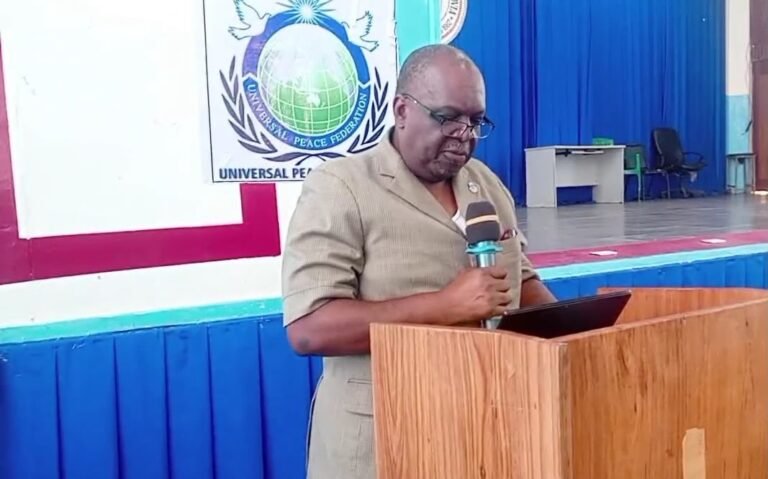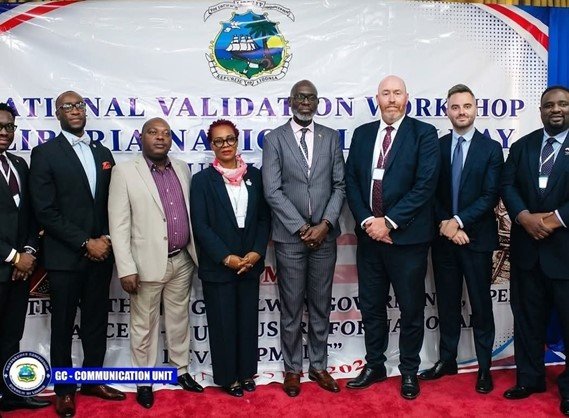
The Executive Director of the Governance Commission (GC), Jallah C. Kesselly, has reaffirmed the Commission’s critical role in shaping, monitoring, and evaluating Liberia’s governance and reform agenda, describing the institution as a key driver of national development and policy transformation.
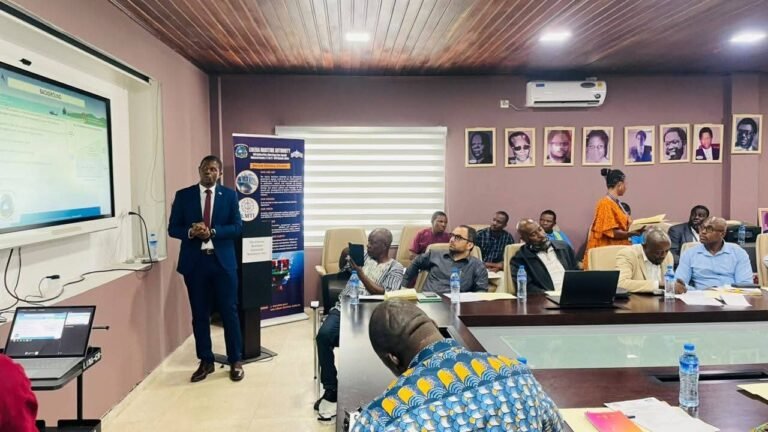
Speaking Thursday at a one-day National Validation Workshop on the Liberia National Railway Authority Draft Act of 2020, Kesselly emphasized that the Governance Commission remains committed to ensuring that government policies, laws, and reforms produce meaningful and measurable benefits for the Liberian people.
“The Governance Commission will make significant input to benefit the Liberian people,” Kesselly stated, while welcoming the opportunity to participate in the review of the proposed railway legislation.
He commended the Ministry of Mines and Energy for involving the Governance Commission and other stakeholders in the validation process, noting that broad consultations are essential to developing effective and sustainable governance frameworks.
According to Kesselly, one of the Commission’s primary responsibilities is to monitor and assess the impact of national policies and development initiatives to ensure they align with Liberia’s broader governance and development objectives.
While acknowledging that meaningful reforms often take time to yield results, he expressed confidence that well-designed policies and institutions can produce lasting benefits for future generations.
The validation workshop was held under the theme, “Strengthening Railway Governance, Open Access-Multi Users for National Development,” and focused on establishing a legal and regulatory framework that promotes transparency, efficiency, and equitable access within Liberia’s railway sector.
During his remarks, Kesselly also highlighted several accomplishments of the Governance Commission over the years, describing the institution as a catalyst for governance reform in Liberia.
He noted that the Commission played a significant role in the establishment of several key public institutions, including the Liberia Land Authority (LLA), the Public Procurement and Concessions Commission (PPCC), the Law Reform Commission (LRC), and the Internal Audit Agency (IAA), among others.
According to him, the creation of these institutions reflects the Commission’s longstanding commitment to strengthening accountability, transparency, and good governance throughout the public sector.
Participants at the workshop, including representatives from government ministries and agencies, civil society organizations, and development partners, praised the Governance Commission for its continued contributions to national reform efforts.
Many stakeholders described the Commission’s involvement in the review process as essential to ensuring that the proposed Liberia National Railway Authority Act promotes inclusiveness, transparency, effective governance, and sustainable national development.
The workshop forms part of ongoing efforts by the Government of Liberia and its partners to modernize the country’s railway governance framework and maximize the economic benefits of rail infrastructure for national growth and regional integration.
About The Author