With almost 180 years of existence, Liberia’s struggles for infrastructural development, good governance, corruption-free system, socio-political freedom, human development and many others remain dauntingly enormous, and with governments come and go, solutions and answers are also said to still be far-fetched.
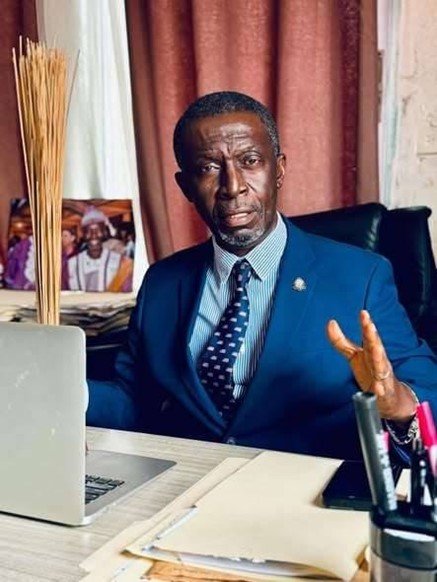
But Human rights lawyer Cllr. Tiawan S. Gongloe has summed up the problem to leadership wreck, saying Liberia’s struggle with poverty is not due to a lack of resources, but a failure of leadership, institutions, and respect for the Rule of Law.
Speaking at the Albert Porte Street Lecture Series, Gongloe delivered a sweeping reflection on corruption, arguing that it is “much broader than the theft of public money.”
“Corruption is the abuse of public power through disregard for the Rule of Law,” he said, defining it as spending without legislative appropriation, contracts awarded outside the Public Procurement Act, concession deals that don’t benefit Liberians, selective law enforcement, and concealed public information.
“Corruption begins where the Rule of Law ends, and the Rule of Law begins where no one is above the law,” Gongloe stated.
Drawing a stark contrast, Gongloe noted that Botswana gained independence in 1966, more than 100 years after Liberia, with little rainfall and a desert. Yet it is now one of Africa’s least corrupt and best-governed nations.
Liberia, by comparison, has fertile land, forests, rivers, iron ore, gold, diamonds, rubber, and timber, but continues to struggle with poverty.
“Natural resources alone do not create prosperity. Prosperity is created by honest leadership, prudent management of public resources, strong institutions, and unwavering respect for the Rule of Law,” he said.
He cited Liberia’s stagnant Millennium Challenge Corporation Rule of Law score of about 40 percent under both the CDC and current Unity Party administrations as evidence that “corruption flourishes where the Rule of Law remains weak.”
Call for an Anti-Corruption Court
Gongloe said an independent and competent Anti-Corruption Court could help ensure corruption cases are heard “expeditiously, fairly, and without political interference.” But he cautioned that a court alone is not enough. It must operate where investigations are professional, prosecutions are impartial, judges are independent, and due process is guaranteed.
He also called for full transparency: “Public officials are paid from public funds. The people therefore have a legitimate right to know how public resources are collected, allocated, and spent.”
“Make Liberia the Botswana of West Africa”
Framing corruption as a human rights issue, Gongloe said it destroys opportunity, fuels unemployment, and drives youth abroad. He urged Liberians to demand accountability for every concession, contract, and expenditure.
Closing, he led the audience in a pledge to support leaders of integrity, reject corruption, defend the Constitution, demand transparency, and hold all officials accountable.
“A better Liberia is possible if we remain faithful to these commitments,” he said. “I firmly believe that Liberia can become the Botswana of West Africa. The difference will be our leadership, our institutions, and our commitment to the Rule of Law.”
About The Author