By Jamesetta D Williams
MONROVIA-The Internal Audit Agency (IAA) is set to launch two key governance instruments aimed at strengthening accountability, standardizing audit practices, and improving financial management across Liberia’s public sector.
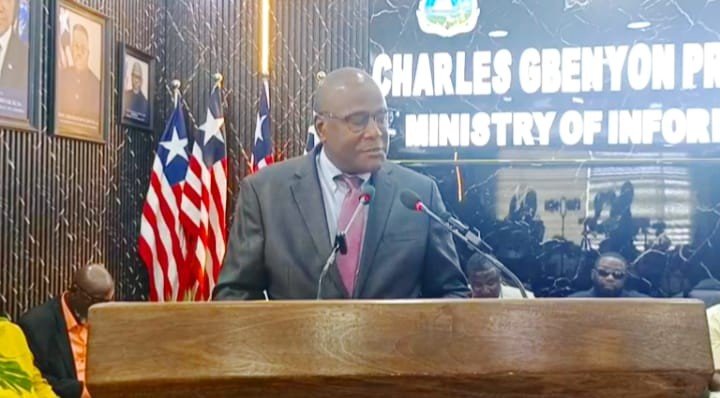
Speaking at the Ministry of Information’s regular press briefing, IAA Director General David Kemah announced that the agency will officially launch the Internal Audit Regulations and the Public Sector Internal Audit Checklist on Thursday at Monrovia City Hall.
Kemah said the new regulations are being introduced in fulfillment of the Internal Audit Agency Act, which authorizes the Director General to issue guidelines governing the conduct of internal audits within government institutions.
According to him, the regulations are intended to establish uniform standards for internal auditing across all public sector entities, ensuring consistency, professionalism, and compliance with financial management laws and regulations.
“The goal is to standardize how internal auditing is conducted throughout the public sector and strengthen financial management, reporting requirements, regulatory compliance, and service delivery,” Kemah explained.
The IAA currently has auditors assigned to 96 public sector institutions and seven counties across the country. Kemah said the agency hopes to expand its presence to the remaining counties and additional government entities, subject to budgetary support and risk assessments.
He noted that deployment decisions are based on the volume of activities within institutions, the level of financial risk involved, and the economic feasibility of assigning permanent auditors.
Where full-time auditors are not assigned, the agency utilizes mobile audit teams to conduct periodic risk assessments and evaluate internal control systems.
“Our mandate is not only to detect weaknesses but also to add value and improve efficiency in government operations,” Kemah said.
Kemah explained that the Public Sector Internal Audit Checklist was developed to address frequent misunderstandings between auditors and heads of government institutions regarding compliance requirements.
The checklist provides government officials with a clear reference guide outlining the procedures and documentation required before transactions, procurement requests, and other administrative actions are submitted for audit review.
According to him, the tool will help institutions better prepare documents, reduce processing delays, and ensure compliance with existing financial and procurement laws.
“Often, delays occur not because fraud has been committed, but because transactions are improperly processed or lack adequate supporting documentation,” he said.
The checklist will also help ensure that audit procedures are applied consistently across all government institutions, regardless of location.
Kemah stressed that the new instruments are intended to support decision-makers by helping them identify risks and comply with legal and regulatory requirements before problems arise.
He cited examples where legitimate government expenditures later become adverse audit findings because supporting documentation was incomplete or procedural requirements were overlooked.
By providing guidance upfront, he said, the agency hopes to reduce audit findings, strengthen accountability, and protect public resources.
The Director General also highlighted the effectiveness of the agency’s Compliance Scorecard, a monitoring tool introduced more than two years ago to assess institutional adherence to public financial management requirements.
According to him, the scorecard has encouraged many government entities to proactively address weaknesses identified during audits and request technical support from the agency.
Kemah reminded government institutions that, under Liberian law, the Internal Audit Agency is the sole body authorized to conduct internal audits within the public sector.
He cautioned that heads of institutions who independently recruit internal auditors are acting outside the law and should refrain from doing so.
“The law clearly establishes the Internal Audit Agency as the institution responsible for internal auditing in government,” he said.
The launch of the Internal Audit Regulations and Public Sector Internal Audit Checklist is scheduled for Thursday, June 25, at Monrovia City Hall.
The event is expected to bring together senior government officials, integrity institutions, development partners, and public sector stakeholders.
Kemah said the initiative represents a major step toward enhancing transparency, strengthening internal controls, improving public sector governance, and building public confidence in government institutions.
About The Author