Monrovia-For Gizzie Kollie, career progress at ArcelorMittal Liberia (AML) is measured not only by the kilometers of roads he has helped build across the company’s mining operations, but also by the skills he has acquired, the responsibilities he has taken on and the years of personal growth that have taken him from a contractor to a mine infrastructure supervisor.
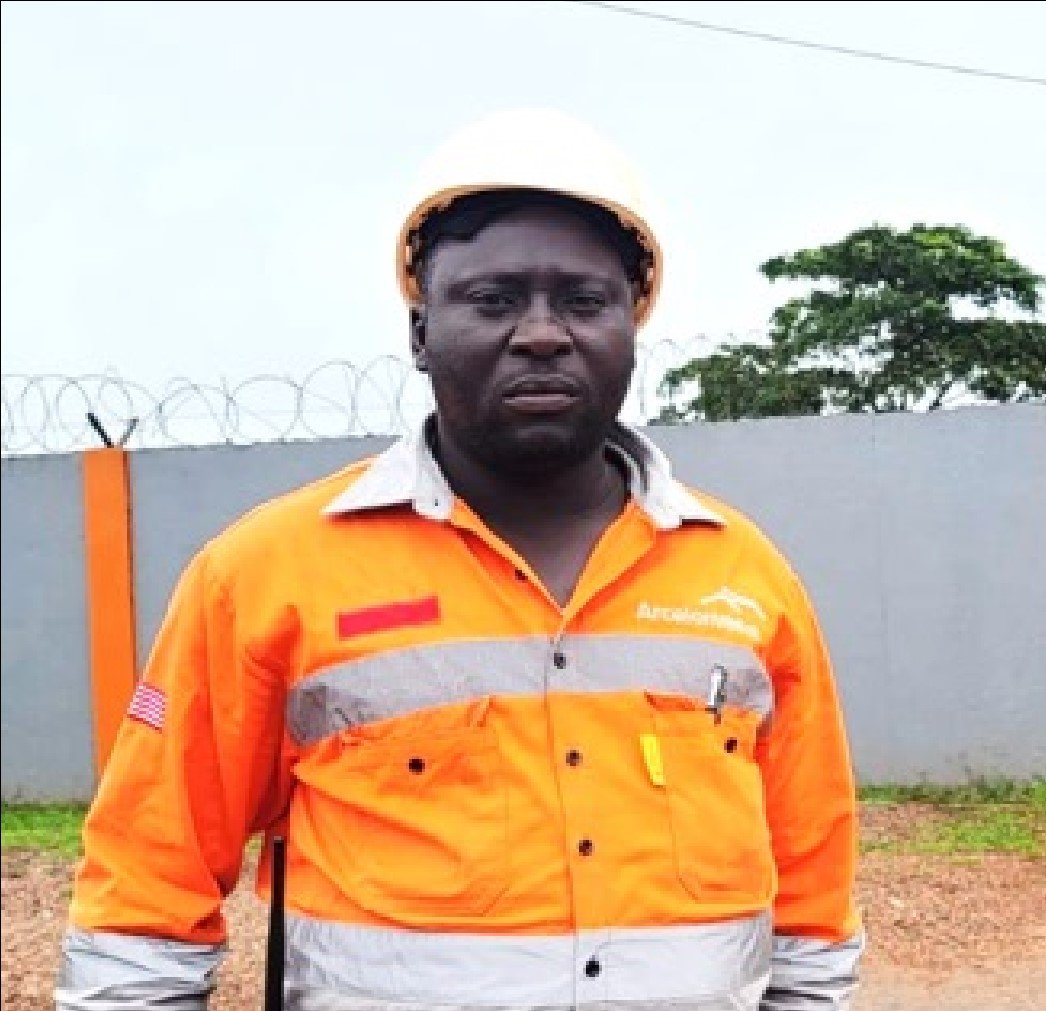
Kollie joined ArcelorMittal Liberia in 2016 as a contractor. Nearly a decade later, he has risen through the ranks and now serves as Supervisor for Mine Infrastructure, overseeing critical road construction, drainage works and other heavy civil activities in AML’s active mining areas.
His journey reflects a broader emphasis by AML on developing the skills of Liberian workers and creating opportunities for employees to take on more technical and supervisory responsibilities.
Recognizing the training and career advancement opportunities available within the company, Kollie used each opportunity on site to expand his technical abilities.
He began his career as a light vehicle driver before moving into more specialized work. He later trained and gained experience operating heavy earth moving equipment, including excavators and other machinery used in mining and infrastructure operations.
“When I came here, I was just an ordinary driver, but today with opportunities provided to me by ArcelorMittal, I am also an operator for excavators and other earthwork machines,” Kollie said.
“God first, I was nothing. ArcelorMittal made me what I am today, to become a supervisor and still growing.”
His progression was built through practical experience, training and a willingness to take on new responsibilities.
After joining the company, Kollie worked as a culvert technician under mines operations. His early assignments included work on important access routes within AML’s mining concessions, beginning at North Tokadeh and later extending to areas including Yuelliton and Gangra.
The work exposed him to different aspects of mine infrastructure and gave him an opportunity to work alongside experienced technicians, operators and supervisors.
Over the years, that practical exposure was complemented by opportunities to develop new technical skills.
For AML, investment in human resources development has been an important part of building a workforce capable of supporting increasingly complex mining and infrastructure operations in Liberia. Training and on the job learning have allowed Liberian employees to gain experience in areas ranging from equipment operation and maintenance to safety, technical trades, mine operations and supervisory responsibilities.
The approach is particularly important in an industry where many positions require specialized technical knowledge and experience.
For workers such as Kollie, the opportunity to learn while working has provided a pathway to move beyond entry level responsibilities and build careers within the mining industry.
His own experience demonstrates how practical exposure, technical training and increased responsibility can combine over time.
Kollie said his advancement did not happen overnight.
His early years at the company were marked by long hours, demanding assignments and a determination to prove himself. His work ethic sometimes attracted comments from colleagues who felt he worked too hard.
“When I came here earlier, people used to laugh at me, saying I work and don’t rest,” Kollie recalled.
“But I told them I wanted to achieve something. Today, I am a supervisor because of my hard work and dedication.”
That determination eventually translated into greater responsibilities.
Today, Kollie leads teams working on mine infrastructure projects, including the construction of a major new 20 kilometer road. His responsibilities require him to coordinate workers, monitor activities and ensure that infrastructure works are carried out safely and according to operational requirements.
The position also places him in a role where he can pass on the lessons he learned to younger Liberians entering the industrial workforce.
For Kollie, career development is not simply about securing a job. It is about developing a skill, demonstrating reliability and remaining willing to learn.
He encourages young Liberians joining AML or seeking careers in mining and other technical industries to be patient with the process.
“Be patient and willing to learn,” he said, emphasizing that professional skills are acquired over time through observation, practice and openness to guidance from experienced colleagues.
He also encourages young workers to take every assignment seriously.
“If you come, don’t be lazy,” Kollie said. “If you’re lazy, you will not get work to do. You got to work, let your bosses see you, and don’t give excuses when you’re asked to perform a piece of job. If you come to work, put your mind to it and be focused.”
His advice is rooted in his own experience.
Kollie entered AML as a contractor with limited responsibilities. Through years of work, practical experience, training and increased responsibility, he moved into technical roles and eventually into supervision.
His story also illustrates the potential impact of investment in workforce development in Liberia, particularly in industries where technical skills can create pathways for local workers to move into higher skilled positions.
As Liberia’s mining sector expands, the development of a skilled local workforce remains an important part of ensuring that Liberians can participate meaningfully across the value chain.
For Kollie, that journey is already underway.
He now sees his own career as an opportunity to encourage younger Liberians to remain focused, learn from experienced colleagues and make use of opportunities when they arise.
His message is simple: career growth takes time.
“God first,” he said. “I am still growing.”
I can also make this more like a polished AML corporate feature story, with stronger statistics and specific examples of AML’s training and Liberian workforce development investments.
About The Author