MONROVIA – Female genital schistosomiasis (FGS) is a form of schistosomiasis or Bilharzia, caused by a tiny parasite that lives part of its life in freshwater snails, typically in lakes, rivers, streams or ponds, then briefly in the water itself and then inside women’s bodies.
When women or girls come into contact with infested water, for example, during washing, bathing, or collecting water, this parasite can very quickly enter into their bodies directly through unbroken skin. More often than not several thousand parasites are waiting in the water each day to encounter human hosts and once inside the woman’s body, these tiny parasite grows into adult worms, each are about the size of a grain of rice, and are also known as schistosome blood flukes.
There can be several hundred worms inside the body and female worms release innumerable toxic eggs into the bloodstream that have to rupture out of the vessels to gain entry into the bladder or bowel so they exit the body via urine or stool into freshwater to infect snails. However, about half of these eggs fail to exit the body and become trapped within the woman’s reproductive organs, the vagina, cervix and uterus and fallopian tubes.
The egg-related damage creates much chronic discomfort and pain, vaginal discharge, irregular bleeding, itching, and sometimes infertility. The good news is that adult worms can be treated with a medicine called praziquantel but a key task if to raise awareness in women to receive treatment as they often are confused about their symptoms or are too ashamed to seek help.
2) How common is FGS in Africa, and why is it often underreported?
Female genital schistosomiasis is estimated to affect up to 56 million women and girls in sub-Saharan Africa. This makes it one of the most widespread but least recognized gynaecological conditions across the continent. It occurs mainly in areas where urogenital schistosomiasis is common. Especially in rural communities where people rely on lakes, rivers, or ponds for water.
Despite its high prevalence, FGS is often underreported because many women and health workers don’t recognize it. Its symptoms are frequently mistaken for sexually transmitted infections (STIs) or cervical cancer. There’s also a lack of diagnostic tools at local clinics, limited training among health workers, and social stigma that prevents women from seeking care. As a result, FGS remains a “silent” disease, hidden in health systems and largely missing from official disease statistics.
3) Why did you choose to investigate FGS in Liberia for your PhD Research?
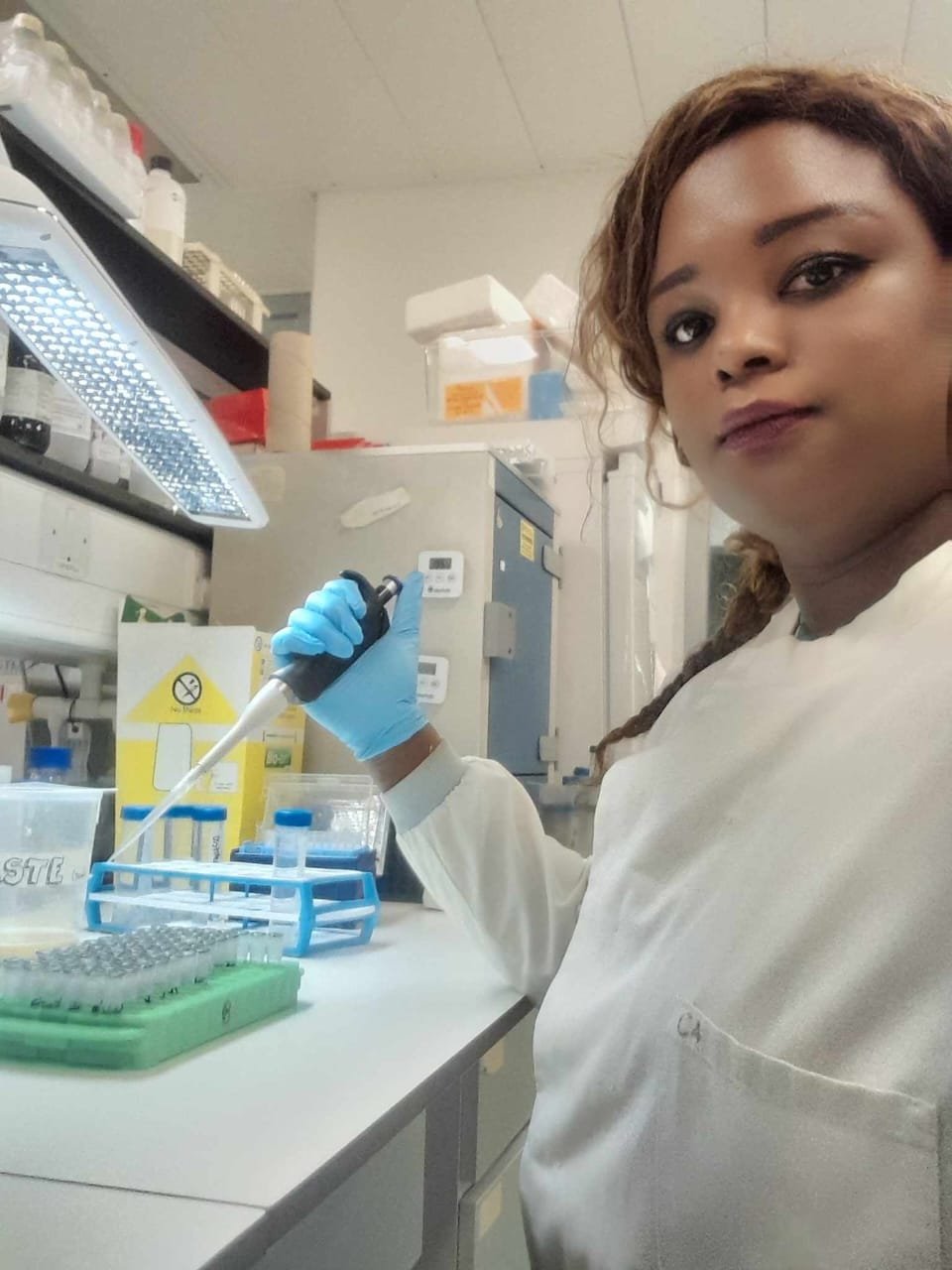
After the war, we not only had fragile or broken infrastructures in Liberia, but the war also left us with broken and fragmented health systems. Many professionals who possessed the tools to mend these systems were either killed during the war or fled for their lives. This left many gaps for us including major gaps within medical science and research which are important foundational building blocks for an effective health care system. Evidence based health care policies are key for a robust healthcare sector in any country. I am very passionate about this. When I found out about the impact of FGS across Africa, and after liaising and collaborating with our schistosomiasis coordinator at the Ministry of Health, finding out that we had very little research on this silent epidemic in Liberia, it became crystal clear to me that my research on FGS in Liberia was very necessary. Especially as a woman I felt the need to do this to benefit fellow women in Liberia and support the Ministry of Health as much as possible.
4) Who is more at risk of FGS in Liberia?
In Liberia, the women and girls most at risk of FGS are those living in rural villages and riverine communities (up Interior), where people depend on lakes, rivers, or streams for daily water use. For bathing, washing clothes, fishing, swamp farming or collecting drinking water. Girls as young as 10 can become infected, especially if they play or swim in infested water. Schistosomiasis is very common in children and can be very obvious as they urinate frank blood in their urine, so young girls as they progress onto adulthood, and have not received any treatment, are most vulnerable.
Poor access to clean water and sanitation, combined with limited health services, puts these women and girls at higher risk. Adult women may face repeated exposure over many years, increasing their risk of long-term complications like infertility or chronic pain. Young girls are particularly vulnerable because early infection can cause damage before they even reach reproductive age.
5) What symptoms should women look out for, and when should they seek medical help?
A key sign is pain when urinating and blood in urine, haematuria, but in some women it might not be obvious. Others include vaginal itching or burning, abnormal vaginal discharge, pain during sex or urination, unexplained vaginal bleeding (especially after sex), pelvic or lower abdominal pain, difficulty getting pregnant (infertility).
Many of these signs are easily mistaken for sexually transmitted infections (STIs) or even cervical cancer, which is partly why FGS often goes undiagnosed.
Women should seek medical help if they notice any of these symptoms, especially if they live in or have visited areas where schistosomiasis is common and have had frequent contact with freshwater sources like rivers, ponds, or lakes. Early diagnosis and treatment with praziquantel can prevent long-term complications.
6) How is FGS diagnosed — and are the tools or skills available at local clinics?
Diagnosing female genital schistosomiasis (FGS) is challenging because there’s no simple, rapid test available at most local clinics. Diagnosis usually relies on a combination of:
- asking about the woman’s medical history (especially water contact in high-risk areas),
- looking for symptoms like vaginal itching, discharge, bleeding, or pelvic pain, and
- doing a pelvic exam or using a special microscope called a colposcope to spot characteristic lesions on the cervix or vaginal walls. We use a speculum in most cases rather than a colposcope within our health care centres in Liberia.
Unfortunately, many rural clinics in places like Liberia do not have the equipment, trained staff, or awareness needed to recognize FGS. Health workers often confuse it with sexually transmitted infections (STIs) or cervical cancer. Although microscopic urine analysis can be conducted to detect eggs shed by the parasite, depending on the stage in the life cycle of the parasite these eggs may not be seen. Standard lab tests for schistosomiasis (which use urine or stool samples) miss the genital form of the disease. Improving local diagnostic capacity requires training health workers, improving awareness, and ensuring women have access to specialized care when needed.
7) What are the challenges faced in treating or preventing this disease?
One major challenge in treating FGS is lack of public health and disease awareness. Many women and even health workers don’t know about the disease or confuse it with sexually transmitted infections or other reproductive health problems. As a result, many women don’t receive a correct diagnosis or the medication they need.
Another challenge is limited access to treatment. The main drug, praziquantel, is available through mass drug administration programmes, but these usually focus on school-aged children and often miss adult women even though they are at high risk of FGS.
Preventing FGS is even more difficult because it depends on long-term improvements in water, sanitation, and hygiene (WASH). Many rural communities still rely on infested rivers and lakes for daily water needs, and without safe water sources, the risk of re-infection remains high even after treatment.
Finally, there’s a lack of political attention and funding for FGS specifically, as it’s often hidden under the broader umbrella of neglected tropical diseases. Without targeted programs, millions of women and girls remain invisible in health policies and programs.
8) How does FGS overlap with or get confused with other conditions, like sexually transmitted infections or cervical cancer?
FGS often presents with symptoms like vaginal itching, discharge, bleeding after sex, pain during sex, or pelvic discomfort. All of which closely resemble common sexually transmitted infections (STIs) such as chlamydia, gonorrhoea, or trichomoniasis.
In some cases, the lesions caused by FGS on the cervix can also mimic early signs of cervical cancer, leading to misdiagnosis. Because FGS is not widely recognized or screened for in many health settings, women are frequently misdiagnosed and treated repeatedly for STIs, without realizing that a parasitic infection is the true cause. This overlap not only delays the right treatment but can also increase stigma, as women may be wrongly labelled as having an STI. In some studies, FGS has also been linked to increased risk of HIV infection, making it an even more urgent women’s health issue.
9) What are the long-term consequences if FGS is left untreated?
If FGS is left untreated, it can cause serious long-term health problems. Over time, the parasite’s eggs become trapped in the tissues of the cervix, vagina, uterus, and fallopian tubes, leading to chronic inflammation, scarring, and tissue damage. This can result in:
- Infertility or difficulty getting pregnant
- Chronic pelvic pain
- Painful sex (dyspareunia)
- Ongoing vaginal bleeding or discharge
- Increased vulnerability to HIV infection, as the lesions make it easier for the virus to enter the body.
- There is also a suggestion there is a direct link with HPV infection and cervical cancers.
Beyond physical health, untreated FGS can also have serious social consequences, including relationship strain, stigma, and emotional distress. Women may be wrongly blamed for having sexually transmitted infections or seen as “infertile,” which can affect marriages, livelihoods, and mental health.
10) What role do clean water, sanitation, and health education play in preventing FGS?
Clean water, sanitation, and health education are essential in preventing FGS.
FGS is caused by a waterborne parasite found in freshwater bodies like rivers, lakes, and ponds. Without access to safe, clean water for drinking, bathing, and washing, women and girls are forced to use infested water sources, putting them at constant risk of infection.
Improved sanitation systems, such as proper toilets and waste management help stop the cycle of infection by preventing human waste (which contains parasite eggs) from contaminating water sources.
In short, tackling FGS is not just a medical issue, it’s a public health and development challenge that requires clean water, better sanitation, and strong community education.
11) What steps should governments and NGOs be taking to reduce the burden of FGS and what is being done currently in Liberia.
To reduce the burden of female genital schistosomiasis (FGS), governments and NGOs need to take coordinated, multi-level action:
Expand access to treatment — Ensure praziquantel, the drug that treats schistosomiasis, is available not just for schoolchildren but also for women and girls in affected communities, including through regular mass drug administration programs.
Strengthen health worker training — Equip frontline health workers with the skills to recognize, diagnose, and manage FGS, so it stops being misdiagnosed as sexually transmitted infections or cervical cancer.
Invest in water and sanitation infrastructure — Provide clean, safe water sources and proper sanitation systems in high-risk areas to break the cycle of parasite transmission.
Raise public awareness — Launch education campaigns to inform women, families, and communities about FGS, its symptoms, and how to seek care, while also addressing stigma.
Integrate FGS into national health policies — Include FGS in reproductive health, HIV prevention, and neglected tropical disease (NTD) strategies, ensuring it receives dedicated funding and program support.
By combining medical treatment with long-term improvements in water, sanitation, and education, governments and NGOs can make FGS visible and take meaningful steps to end this hidden women’s health crisis.
I am happy to report that the Ministry of Health Liberia is currently working on a national health policy for FGS in Liberia. I was informed that findings from my research will be used to help create this policy. We have a Health Minister, Dr Louis Kpoto, who is a woman and a brilliant gynaecologist. I am not surprised that she has done great work putting FGS forward as a priority in Liberia. I’m very excited to see where the neglected tropical disease unit and the health ministry in general go with this. I’m very proud of all those involved.
About The Author