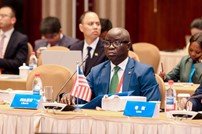
Liberia has called for a renewed and more aggressive global approach to poverty reduction, urging world leaders to shift from traditional aid dependency toward investment-driven development that delivers long-term opportunities for communities.
Agriculture Minister Dr. J. Alexander Nuetah made the appeal during the First Plenary Session of the Global Partnership for Poverty Alleviation and Development (GPPAD), a major initiative jointly launched by China, 53 countries, and nine international organizations.
Addressing the gathering at the 2026 Global Poverty Reduction and Development Forum in Beijing, Dr. Nuetah noted that although the world has recorded significant progress in reducing extreme poverty over the years, more than 600 million people still live in abject poverty.
He warned that emerging global challenges—including climate change, armed conflict, inequality, and rising debt burdens—are reversing gains, particularly in Sub-Saharan Africa and parts of South Asia.
He stressed that the global community must now rethink its approach to development.
“While progress has been made, the question before us is no longer whether we should act, but what we must do differently to lift our people out of poverty,” Dr. Nuetah stated.
The agriculture minister proposed three key shifts to accelerate global poverty reduction efforts: strengthening resilient systems instead of isolated projects, transitioning from aid dependency to productive investment, and ensuring that development interventions directly benefit the most vulnerable populations.
He further emphasized the need for increased investment in agriculture, infrastructure development, improved market access, women-led enterprises, and youth employment, describing them as essential drivers of sustainable economic transformation.
“The tools exist. The knowledge exists. What is needed now is coordination and courage,” he said. “Let us make commitments that can be measured, funded, and delivered.”
Liberia reaffirmed its commitment to agricultural transformation, food security, rural development, and private-sector-led growth as central pillars of its national strategy to reduce poverty, create jobs, and improve livelihoods.
The Beijing forum brought together global leaders, policymakers, and development partners to explore new strategies for addressing persistent poverty and strengthening international cooperation on sustainable development
About The Author