By Jamesetta D. Williams
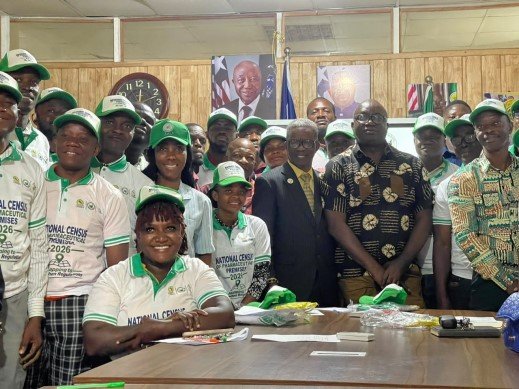
MONROVIA- The Liberia Pharmacy Board (LPB), in collaboration with the Liberia Medicines and Health Products Regulatory Authority (LMHRA) and the Pharmaceutical Society of Liberia (PSL), has officially launched the National Census of Pharmaceutical Outlets, a nationwide exercise aimed at creating a comprehensive and reliable database of pharmaceutical premises across Liberia.
The initiative, which will cover all 15 counties, is intended to strengthen pharmaceutical regulation, improve public health protection, and ensure that pharmaceutical outlets operating in the country are properly identified, documented, and regulated.
Speaking at the launch, Dr. Menmon P.Z. Dunah, Registrar General and Chief Executive Officer of the Liberia Pharmacy Board, said the census represents a major step toward improving accountability and regulation within Liberia’s pharmaceutical sector.
Dr. Dunah explained that the exercise will provide the regulatory authorities with an accurate picture of the pharmaceutical outlet landscape, while generating an updated national database covering community pharmacies, medicine stores, importers, wholesale distributors, and other establishments involved in the storage, distribution, sale, or dispensing of medicines and health products.
“This national census represents a major step toward strengthening pharmaceutical regulation, improving public health protection, and ensuring that pharmaceutical outlets operating throughout Liberia are appropriately identified, documented, and regulated,” Dr. Dunah said.
According to him, the census will be conducted in phases, with Phase One focusing on Montserrado County, while Phase Two will cover the remaining 14 counties.
The exercise will use standardized data-collection tools and digital technologies to collect and validate information on pharmaceutical outlets. The information gathered is expected to form a comprehensive national database that can be periodically updated to support an effective pharmaceutical regulatory system.
Dr. Dunah emphasized that the census is more than a data-collection exercise, describing it as a strategic investment in regulatory accountability, transparency within the pharmaceutical sector, patient safety, and the protection of public health.
He called on pharmaceutical outlet proprietors, operators, professionals, local authorities, communities, and development partners to cooperate with the trained enumeration teams during the exercise.
Meanwhile, Hon. Luke Bawoo, Managing Director of the LMHRA, stressed the importance of the census, describing it as a groundbreaking exercise for Liberia’s pharmaceutical sector.
Bawoo said the exercise is the first of its kind to conduct a complete census of pharmaceutical premises in the Republic, noting that various pharmaceutical lists have previously been maintained separately by the relevant institutions.
“We have separately a pharmaceutical list of our retail pharmacists and stores independently. The LMHRA will have its own listing of wholesalers and importers. This is the first time we will have an emerging list of premises,” Bawoo said.
He explained that the information collected through the census will ultimately be transformed into an interactive registry at the Ministry of Health, providing authorities with a centralized resource for planning and regulation.
Bawoo noted that Liberia already maintains a comprehensive listing of health facilities, including hospitals, tertiary and secondary hospitals, health centers, and clinics, covering both public and private facilities throughout the country.
However, he said a comparable comprehensive registry for pharmaceutical premises has been lacking.
“The listing or registry for pharmaceutical premises is non-existent, and we are hoping that this exercise will do just that,” he said.
Bawoo also raised concerns about the number of pharmaceutical premises that may be operating without registration, estimating that approximately 30 to 40 percent of premises could be unregistered in the country.
He said closing the registration gap could improve government planning, resource allocation, and the deployment of personnel within the pharmaceutical sector.
“If we bridge that gap, we likely will have better planning, better allocation of resources, including deployment of personnel,” Bawoo stated.
The LMHRA Managing Director further disclosed that the regulatory authority is working toward decentralizing its operations across Liberia.
He expressed hope that, with support from the Ministry of Finance, LMHRA offices could eventually be co-located with county health teams in all 15 counties, making pharmaceutical regulation more accessible at the county level.
Bawoo also said the regulatory authorities are engaging the Legislature on the enforcement of the Liberianization policy, particularly in relation to retail pharmacy activities, while encouraging the sector to prepare for the participation of young and qualified Liberian pharmacists across the country.
He stressed that the LMHRA is not working in isolation and disclosed that a draft Memorandum of Understanding exists between the regulatory authority and the Pharmaceutical Society of Liberia to strengthen collaboration between the institutions.
According to Bawoo, the draft agreement will be refined and signed to provide a stronger framework for cooperation between the organizations.
He urged the census teams not to underestimate the importance of their work, stressing that the quality of the exercise will have consequences for individual professionals, the pharmaceutical sector, and the wider Liberian population.
“Do not ever trivialize your role in this exercise,” Bawoo told participants, emphasizing that the quality of the census would benefit them individually and collectively, as well as the pharmaceutical sector.
He also referenced page 164 of the Health Sector Reform, which, he said, emphasizes the need for improved regulation and regulatory mechanisms.
Bawoo said the responsibility for advancing pharmaceutical-sector reform rests collectively with stakeholders, particularly as the country continues efforts to strengthen regulation.
“The safety of the Liberian populace is a collective responsibility for all of us,” he said.
The National Census of Pharmaceutical Outlets is being implemented jointly by the Liberia Pharmacy Board, LMHRA, and the Pharmaceutical Society of Liberia, with the institutions urging all stakeholders to provide accurate information and cooperate with the enumeration teams.
The census is expected to establish a reliable foundation for strengthening pharmaceutical regulation, improving sector transparency, supporting evidence-based planning, and ultimately protecting the health and safety of the Liberian people.
Bawoo concluded by congratulating the teams and stakeholders who have taken up the responsibility of implementing the initiative and, on behalf of the participating institutions, officially declared the National Census of Pharmaceutical Outlets launched.
About The Author