By Jamesetta D Williams
Monrovia-The Liberia Standards Authority (LISA) has intensified efforts to protect consumers by verifying fuel pumps, weighing scales and other measuring instruments while working to establish standards for key building materials sold on the Liberian market.
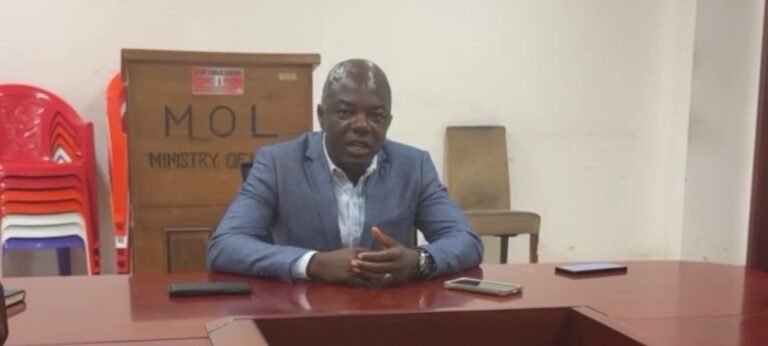
Speaking at the Ministry of Information press briefing, LISA Deputy Director-General for Technical Services, Hon. Koakum Emmanuel Myers, said the authority is focused on ensuring that consumers receive the correct quantity and quality for the money they pay.
He said the work is part of LISA’s broader responsibility to promote standards, quality, accurate measurement and consumer protection in Liberia.
According to Mr. Myers, LISA’s efforts are in line with concerns raised during President Joseph Nyuma Boakai’s launch of the Liberia Standards Authority earlier this year, particularly the need to protect consumers amid rising prices and ensure that people receive value for their money.
Mr. Myers disclosed that LISA has been conducting verification exercises at gas stations across the country.
He explained that LISA’s metrology department is responsible for ensuring fairness in measurement and trade, including checking fuel dispensers to determine whether they are accurately dispensing the quantities displayed.
He said the verification of gas pumps is conducted every six months, while teams also conduct spot checks at various gas stations.
“If a consumer pays for one gallon of gasoline, that consumer should receive one gallon, within the approved measurement tolerance,” Mr. Myers explained.
He noted that inaccurate measurements can result from mechanical problems, damaged equipment or improper adjustments. He also raised concerns about possible deliberate tampering with fuel dispensers to make additional profits at the expense of consumers.
Mr. Myers therefore urged motorists and other consumers to look for the LISA verification sticker on fuel pumps before purchasing gasoline.
He said the sticker indicates that the pump has been verified and also provides verification and expiration information.
“If you go to a gas station and do not see the LISA verification sticker on the pump, you should ask questions before purchasing fuel because the pump may not have been verified,” he said.
The LISA official disclosed that its teams are currently conducting spot checks, noting that some stations have presented challenges, including damaged equipment and concerns about compliance.
He warned that where violations are identified, appropriate enforcement measures will be taken.
Mr. Myers also disclosed that LISA is verifying weighing scales used by businesses across the country.
He said the exercise covers businesses where products such as rice, meat, gold and other commodities are sold by weight.
According to him, consumers should receive the quantity corresponding to the amount they pay for.
LISA, he said, has teams in the field verifying different types of weighing scales and will conduct follow-up spot checks to ensure businesses continue to comply with the required standards.
He encouraged consumers to look for the LISA verification mark on weighing equipment and to report suspected cases of inaccurate measurement or non-compliance.
The Deputy Director-General said LISA is also engaging the Liberia National Police and Liberia National Fire Service on the issue of roadside fuel sales.
He said the discussions are aimed at addressing both enforcement and safety concerns surrounding the sale of fuel outside established commercial filling stations.
The discussions, he said, include the location of roadside fuel sellers, fire safety, consumer protection and the general safety of communities.
Mr. Myers said the public will be informed about any measures that may be introduced following the ongoing discussions with the relevant institutions.
Meanwhile, LISA is developing standards for several major building materials being sold in Liberia.
Mr. Myers said the authority has received concerns from consumers and other stakeholders about the quality of building materials available on the local market.
To address the concerns, he said an inter-institutional mechanism has been established involving LISA, the Ministry of Commerce, Liberia Revenue Authority, relevant government institutions, the Liberia Engineering Society and the Consumers Association.
He said the initiative is intended to identify building materials entering and being sold in Liberia and establish minimum standards that should apply to those products.
The initial focus, according to Mr. Myers, includes five major areas: cement, steel, roofing materials, tiles and tyres.
He said technical working committees have been established and discussions have begun with manufacturers, distributors and importers.
The goal, he explained, is to determine what materials are currently entering the Liberian market, establish appropriate standards and develop a system that can be effectively enforced.
Mr. Myers emphasized that consumer protection and the enforcement of standards cannot be handled by LISA alone.
He said government institutions, businesses and consumers all have responsibilities in ensuring compliance with standards.
He urged businesses to verify their measuring instruments, avoid tampering with verification marks or seals, use equipment that is fit for purpose and comply with applicable standards and technical regulations.
Consumers, he said, should also play an active role by looking for LISA verification marks, paying attention to the quantities they receive, asking questions and reporting suspected violations.
“Standards are not simply technical documents,” Mr. Myers said, noting that they affect what consumers buy, what they pay, what they receive and what they trust in the Liberian marketplace.
He assured the public that LISA will continue working with government institutions, businesses and consumers to promote quality, fairness, safety and confidence in the Liberian market.
He summarized the authority’s consumer protection message by saying: “If you pay for a liter, you should receive a liter. If you pay for a kilogram, you should receive a kilogram. And when you pay for quality, you should receive quality.”
Mr. Myers also disclosed that LISA is considering measures to standardize the way certain products are measured in local markets.
He said different cups and containers are currently being used to measure products such as rice, which can result in inconsistencies.
According to him, discussions are ongoing about the possibility of introducing a national standard measuring cup that can be used consistently by both consumers and businesses.
He said the initiative forms part of broader efforts to reduce unfair practices and help protect consumers from the effects of inflation.
The LISA official said the authority will continue working with stakeholders to strengthen standards and ensure that consumers receive fair value for the products and services they purchase.
About The Author