By Jamesetta D Williams
Monrovia-The National Housing Authority (NHA) said it is mulling several steps to address Liberia’s housing shortage through new housing projects, diaspora investment initiatives and planned community development.
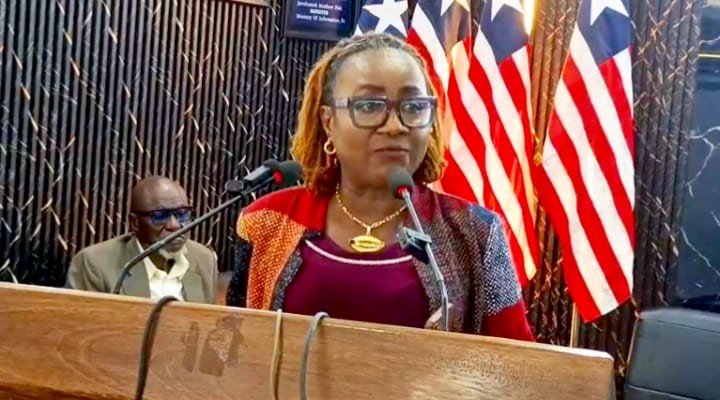
Director Florence K. Geegba told reports at the Ministry of Information Tuesday how Liberia needs approximately five hundred and twelve thousand additional housing units by 2030, citing a World Bank report.
She said about 70 percent of Liberia’s population lives in slums and poor housing conditions, making affordable housing one of the country’s major development challenges.
Geegba disclosed that the NHA has engaged four private-sector partners who have submitted housing designs to the Authority for consideration and incorporation into its housing plans.
According to her, the designs include three-bedroom houses, two-bedroom houses and two-bedroom duplexes, which have been approved by the Ministry of Public Works.
She explained that housing development requires several approval processes, including obtaining building permits from the Ministry of Public Works and the necessary land-related approval from the Ministry of Finance and Development Planning.
Geegba said the NHA is also working to make it easier for Liberians living abroad to invest in housing development in Liberia, following discussions at a recent Diaspora Conference in the United States.
She said the conference identified two major challenges facing diaspora investors: a lack of trust in land transactions and limited knowledge of the housing development process in Liberia.
To address these challenges, Geegba announced that the NHA has developed a Housing Investment Portal, which will serve as a single online access point for land verification, permit requirements, cost calculations and information on licensed professionals.
She said the platform is intended to guide investors from their initial inquiry through the completion of their housing projects.
“This digital tool will streamline the investment journey from the initial inquiry to project completion,” Geegba said.
She added that the NHA plans to develop an Estate Development Roadmap, which will provide investors with a simple, step-by-step guide covering the process from land acquisition to obtaining an occupancy permit.
The NHA Managing Director further disclosed that the Authority has negotiated and commenced the purchase of approximately 578 acres of land, including about 452 acres of private land.
She said other lands have been made available by the Government of Liberia, with some located in Bong and Grand Bassa Counties.
Geegba also mentioned land in Grand Cape Mount and River Gee Counties, although surveys have not yet been completed on some of the properties.
She said the NHA is working with the Liberia Land Authority to pre-verify land and establish a land bank of parcels that can be used for NHA-affiliated housing projects.
According to her, the initiative will help remove the burden of land verification from individual investors, particularly Liberians in the diaspora.
Meanwhile, Geegba disclosed that the NHA is preparing to construct 482 housing units, with the contract expected to be signed within the week or the following week.
She said land preparation and soil testing are currently underway, while surveys have already been completed and land clearing is expected to begin soon.
Geegba also revealed that more than 3,300 prospective homeowners have enrolled in the NHA’s off-takers program.
She said the Authority has information about the salaries and housing preferences of those enrolled and plans to provide different payment options, including cash sales, mortgages and rent-to-own arrangements.
The NHA is also considering the development of organized housing communities for Liberians, including those living in the diaspora.
Geegba said discussions have begun with the Liberia Land Authority to acquire larger areas of land, potentially about 100 acres, where housing communities can be properly planned and developed.
She said such communities could include water, electricity and sewage systems, as well as health centers, schools, markets, business facilities and supermarkets, depending on the size and needs of the community.
“If they can do it in Ghana, if they can do it in Nigeria, and if they can do it in other African countries, we can do it here in Liberia,” Geegba said.
She also disclosed that the NHA is engaging partners on housing insurance, which she described as an important requirement for investors.
According to Geegba, the Authority wants homes developed under government-funded programs and public-private partnerships to be insured in line with international standards.
Geegba further called for stronger legal powers for the NHA, noting that the Authority’s existing law dates back to 1968.
She said a new NHA Act has been validated and is awaiting submission to the Legislature for consideration and enactment.
According to her, the proposed law would give the NHA stronger regulatory and monitoring powers over housing development in Liberia.
She said the proposed legislation would also empower the NHA to play a role in regulating rent prices.
“Nobody should just charge Liberians any amount of rent,” Geegba said, stressing the need for stronger regulation of the rental sector.
She also said the proposed legislation would provide for the establishment of a National Housing Trust Fund to help protect and manage resources intended for housing development.
On international partnerships, Geegba disclosed that the NHA has signed a Memorandum of Understanding with Shelter Afrique Development Bank, establishing a framework for cooperation in affordable housing and sustainable urbanization in Liberia.
She maintained that stronger partnerships, proper planning, improved regulations and increased investment are necessary for Liberia to make significant progress in addressing its housing shortage.
Geegba said the NHA will continue providing information on housing development, investment opportunities and emerging opportunities in Liberia’s residential housing sector to help citizens and investors make informed decisions.
About The Author