TQ Harris
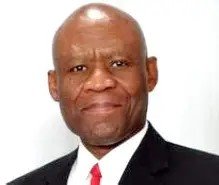
Monrovia-For a protracted period of time, Mr. Thomas Q. Harris (TQ Harris) advocated for change in national political leadership, and even attempted to become President of Liberia. All these efforts fell on infertile political soil, as the Liberian people didn’t think he was the kind of person Liberia needed. After a big flop in the race to the Executive Mansion in 1997, he went quiet for some time, not meddling in politics, not advocating and not criticizing governments past and present.
Now, in a lengthy personal statement on leadership, service, and the future of Liberia, the Liberian businessman and former presidential candidate has broken his silence to declare that he has no intention of seeking the presidency now or in the future, unless the Liberian people overwhelmingly call him.
In the statement titled “UNLESS THERE IS AN OVERWHELMING CALL FROM THE PEOPLE, I SHALL NOT BE A CANDIDATE FOR PRESIDENT,” Harris said it was necessary to eliminate doubt and dispel misconceptions about his personal motives regarding the Liberian presidency.
“Let me begin by making one thing unequivocally clear: I have no intention of seeking the presidency of Liberia, now or in the future, unless there is an overwhelming, genuine, and unmistakable call from the Liberian people for me to do so,” Harris wrote.
Harris reminded Liberians that many may not know he contested the presidency in 1997 during Liberia’s first post-war general election. However, he said his involvement in the country’s struggle began long before that election and was motivated by service, not political ambition.
Before politics, he said he provided humanitarian assistance to Liberian refugees across West Africa and to internally displaced persons within Liberia, and made significant contributions to efforts aimed at ending the civil war.
At the time, he said, politics was the furthest thing from his mind. Prior to these engagements, he had worked for several Fortune 100 companies and subsequently established and operated his own business, serving clients that included major Fortune 200 corporations.
“Seeking political office was neither my ambition nor my immediate concern,” he stated.
He narrated that as violence escalated in Liberia during the first two years of the civil war, he became determined to understand the causes of the conflict. He initially focused on helping victims, mobilizing assistance, and educating prospective donors about Liberia’s history and its longstanding relationship with the United States.
But humanitarian work had limits. Harris recounted painful experiences where camps housing displaced Liberians were attacked shortly after relief supplies were delivered, and people who had received assistance were subsequently killed.
“Such tragedies brought home the devastating limitations of humanitarian intervention in a country where insecurity continued to threaten the lives of the very people we were trying to save,” he said, adding that this compelled him to become more deeply involved in the struggle for peace, traveling throughout the United States and other countries to mobilize support to end the conflict.
Unknown to him, Harris said, people had been observing his passion, courage, and commitment to Liberia’s cause. Following the 1996 Abuja I peace conference in Nigeria, where a framework was established for holding elections in 1997, Liberians and friends of Liberia began encouraging him to run for president.
“I was surprised and overwhelmed by the suggestion. My initial response was to decline. I had not undertaken my humanitarian and peace advocacy work with the intention of becoming president,” he said.
Shortly afterward, however, fighting resumed. Following the Abuja II peace agreement, calls for his participation intensified, and he began to give serious consideration to seeking the presidency.
He described the 1997 experience as challenging, enlightening, and sobering, but said the outcome was deeply disappointing, not only to him but also to many Liberians who had hoped for a different future.
“The result cast a dark shadow over the country’s prospects and raised troubling questions about the direction in which Liberia was headed,” he noted.
Having experienced the demands of a presidential campaign firsthand, Harris said he has a profound appreciation for what it takes to seek the highest office, particularly in a post-war country.
He argued that Liberia’s persistent challenges cannot be separated from the quality of leadership it has received, the integrity of those entrusted with public office, and the decisions made by citizens who elect them.
“Leadership failures have consequences, but so do the choices of the electorate. Liberia’s transformation therefore requires more than a change of political personalities. It requires a fundamental change in the national mindset, a mental revolution that places integrity above deception, competence above empty promises, service above selfish ambition, and the national interest above personal or partisan considerations,” he wrote.
It is against this background, he said, that he states with sincerity that he is highly unlikely to campaign for the Liberian presidency unless a substantial and overwhelming number of Liberians organize themselves and make an unmistakable demand for his candidacy.
“I do not believe that the mere desire of an individual to become president is sufficient justification for seeking the office. Nor do I believe that public commentary, criticism of national affairs, or a willingness to speak candidly about the country’s problems should automatically be interpreted as a declaration of political ambition.”
“A genuine call to leadership must come from the people. It must be rooted in conviction, collective purpose, and a shared determination to pursue a better future.”
Harris clarified that his willingness to speak about Liberia’s problems is not driven by selfish ambition, nor is it an attempt to score political points.
“I speak because I love my country. I speak because I care about the Liberian people. And I speak because I believe Liberia can become a better, more prosperous, more peaceful, and happier place to live.”
“My concern for Liberia does not begin or end with an election. My commitment to the country is not conditional upon holding public office. One does not have to occupy the presidency to contribute to national development, defend the public interest, or advocate for a better future.”
He added that “Leadership requires followers. It requires public confidence, collective commitment, and a constituency willing to support a common vision. Without followers, there can be no leader. Without public trust, there can be no enduring leadership.”
He urged those who share his views to share those ideas with others, saying: “Never underestimate the power of small beginnings. A single drop of water may appear insignificant, but countless drops come together to form a mighty ocean.”
Harris said he remains convinced that leadership must emerge at the intersection of national need, public trust, and the willingness of an individual to accept responsibility for the common good.
According to him, he will not place personal ambition above the collective will of the Liberian people, adding “I will not seek the presidency merely because the opportunity exists or because others assume that my public engagement must be motivated by a desire for political office.”
Harris, he would make it U-turn only when there is an overwhelming, organized, and unmistakable call from the Liberian people, I shall not be a candidate for president.
He emphasized “If that call never comes, I will continue to love Liberia, speak for its interests, and contribute in whatever ways I can to the well-being of its people. But if the people, in their collective wisdom, determine that my experience, convictions, and commitment are needed at the highest level of national leadership, I would give that call the serious consideration it deserves.”
The former presidential contender asserted that the presidency is not about the ambitions of one individual, rather is about the aspirations of an entire nation.
“When the people are ready for the right kind of leadership, the right leader will emerge. And when that moment comes, the question will not simply be who wants to lead Liberia, but who Liberia truly needs, and whom its people are prepared to trust, support, and hold accountable.”
About The Author