
By Jamesetta D. Williams
Monrovia-The University of Liberia (UL) has announced plans to complete major renovation, modernization, and beautification projects across several of its campuses by March 31, 2027, as part of efforts to improve the university’s infrastructure and prepare for the resumption of academic activities.
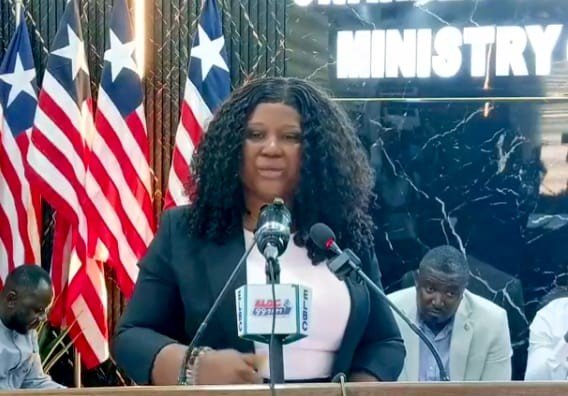
UL President Dr. Layli Maparyan made the announcement Wednesday, October 21, 2026, during a presidential press conference at the university’s Capitol Hill Campus in Monrovia.
Dr. Maparyan said the ongoing Renovation, Modernization, and Beautification (RMB) exercise represents a major investment in the country’s leading public university and is intended to bring its facilities in line with contemporary standards of higher education.
She said the initiative is being undertaken under the ARREST Agenda for Inclusive Development (AAID), with support from the national government, the National Legislature, and the Ministry of Finance and Development Planning (MFDP).
According to her, the government has allocated US$6.35 million for the projects in 2026, with additional funding expected.
The initiative also supports the government’s goal of positioning the University of Liberia among the top 300 universities in Africa.
“This exercise is an effort to get the University of Liberia to a contemporary, global standard — to make us a peer of any national university in the subregion, across the continent, and beyond,” Dr. Maparyan said.
She added that the projects are intended to restore dignity to the university’s facilities while creating a better environment for teaching, learning, research, and other academic activities.
Dr. Maparyan disclosed that three buildings at the Capitol Hill Campus are currently being renovated. They include the Graduate School, the Business College, and the Louis Arthur Grimes School of Law and its annex.
She also announced that renovation work has begun on the Academic Building at the A.M. Dogliotti College of Medicine Campus in Congo Town.
According to the UL president, the projects were prioritized following a directive from President Joseph Nyuma Boakai, Sr., who serves as Visitor and alumnus of the university.
She said President Boakai convened university officials in August and called for an acceleration of infrastructure improvement efforts.
Dr. Maparyan explained that the Capitol Hill Campus was prioritized because it serves as the public face of the university, while the medical school’s facilities are important to the training of health professionals and the well-being of Liberians.
She commended the Delta Architectural and Construction Company for responding promptly to the directive and beginning work on the prioritized projects.
The university is also preparing to undertake additional renovation projects at the Preclinical Campus in Fendall and the David A. Straz-Sinje Technical and Vocational College in Grand Cape Mount County.
Dr. Maparyan said contractors had been approved for those projects, as well as for the Louis Arthur Grimes School of Law at Capitol Hill.
She expressed optimism that further announcements and construction activities would follow before the end of October.
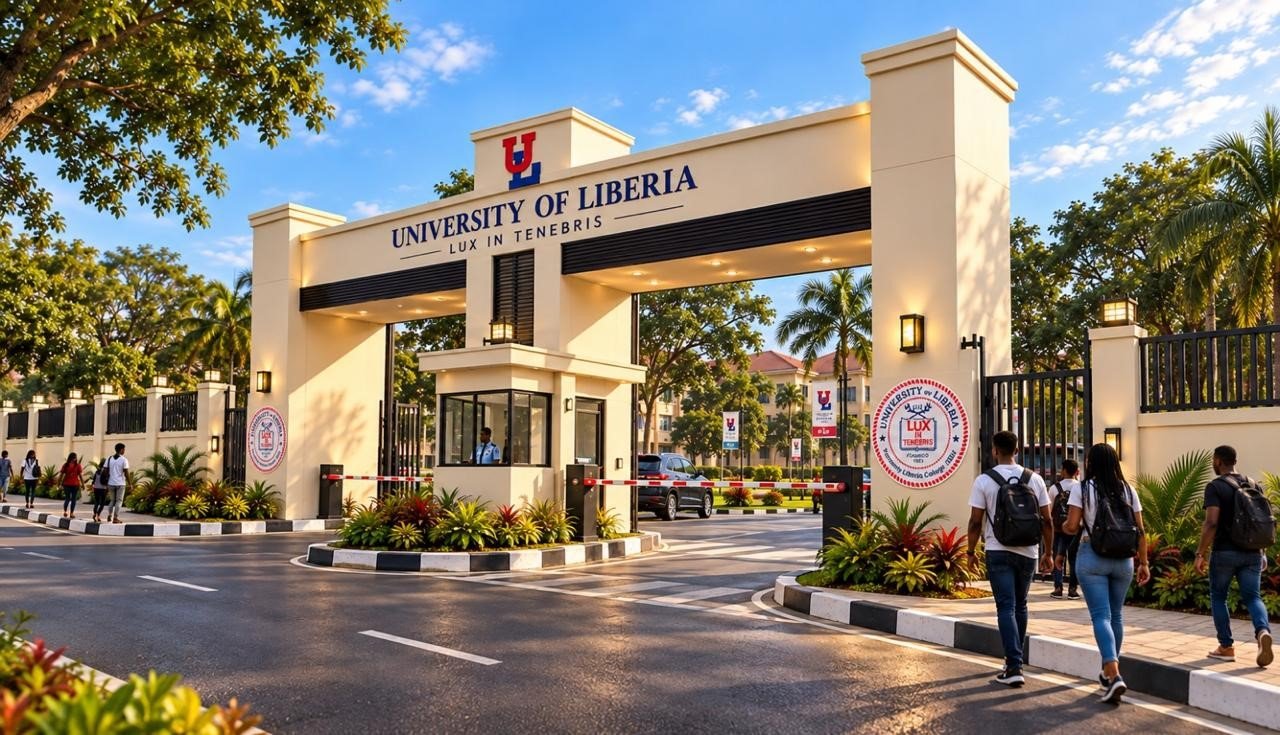
As part of the ongoing transformation, Dr. Maparyan said the main entrance of the Capitol Hill Campus is being redesigned to include a new high-security entrance gate and an improved perimeter fence with security features.
She said the changes are intended to improve campus security and give the university a more modern appearance.
The president explained that the RMB initiative covers three main areas.
Renovation involves repairing and upgrading existing buildings that remain safe and suitable for continued use. It also includes completing unfinished structures across the university’s campuses, particularly at Fendall, to increase the space available for academic and administrative activities.
Modernization involves upgrading facilities to meet current standards, including improvements to electrical systems, the introduction of modern laboratories, better access for persons with disabilities, and the incorporation of sustainable and renewable energy systems.
Beautification focuses on improving the appearance and cleanliness of the campuses through landscaping, debris removal, repairs, improved hygiene, mold removal, and climate control.
According to Dr. Maparyan, the combined approach is intended to create a safer, more attractive, and more functional learning environment for students, faculty, and staff.
She credited Liberian architect Garmondyu Zogar and his firm, Forma Nova, for developing the new designs for the university’s buildings.
She also acknowledged the Ministry of Public Works for its previous technical assessments, preparation of architectural drawings, and evaluation of renovation needs and associated costs.
Dr. Maparyan said the major renovation projects are expected to be completed by March 31, 2027.
She explained that the projects are being supervised by a technical working group comprising representatives of the Ministry of Public Works and the university’s Project Management Team.
The team is led by Engineer Mencer T. Powoe as Project Manager, with Engineer James M. Clemons serving as Deputy Project Manager.
The president also disclosed that student interns from the university’s Civil and Electrical Engineering departments are participating in the projects.
She said the involvement of male and female students is intended to provide practical experience and strengthen the country’s technical workforce, in line with the human capacity development objectives of the ARREST Agenda for Inclusive Development.
In addition to the major construction projects, the administration has undertaken smaller repairs across the university’s four campuses.
These include fixing leaking roofs, repairing bathrooms, and improving lighting, with particular attention to the Fendall Campus.
Dr. Maparyan said Vice President for Administration Sehmah R. Jallah, Director of Plant Operations Jeff Walker, and the university’s internal technical team are coordinating the smaller projects.
She explained that the repairs are necessary to improve campus conditions and address basic infrastructure problems ahead of the resumption of classes.
On the prolonged interruption of academic activities, Dr. Maparyan acknowledged that efforts to reopen the university have taken longer than expected.
She said the university administration, the Board of Trustees, and the University of Liberia Faculty and Staff Association (ULFASA) have been engaged in negotiations aimed at resolving outstanding concerns and facilitating the return of faculty, staff, and students.
According to her, the discussions have addressed several welfare-related issues, including the National Social Security and Welfare Corporation (NASSCORP), retirement benefits, salary disparities, increments, and outstanding arrears.
She said the administration has made efforts to address these matters within the limits of applicable laws.
The UL president disclosed that ULFASA had presented the administration with a new draft quadripartite memorandum of understanding (MOU) earlier in the week.
The proposed agreement involves the university administration, the University of Liberia Faculty Association (ULFA), the University of Liberia Staff Association (ULSA), and the Ministry of Finance and Development Planning.
Dr. Maparyan said the draft, which is intended to support a new collective bargaining agreement, was under review at the time of the press conference.
She did not announce a specific reopening date during her remarks.
Meanwhile, the university administration is preparing to reintroduce online education as a major component of instruction during the renovation period.
Dr. Maparyan said the decision is intended to help students continue their education while construction and infrastructure improvement works are underway.
She explained that the university plans to combine online learning with essential face-to-face classes, including the possible use of additional teaching facilities outside the university’s campuses.
According to her, discussions are ongoing to secure suitable external facilities to accommodate classes that cannot be conducted online.
The president also announced plans for a two-week online education workshop for faculty members once they return to work.
The training is being coordinated through the Office of the Provost and Vice President for Academic Affairs, led by Dr. Agnes Reeves Taylor.
She said the workshop would help faculty members prepare for the renewed use of online learning and apply lessons and best practices developed since the university first introduced the approach during the COVID-19 pandemic.
The Office of Student Affairs, headed by Vice President and Dean of Students Saydah Williamson Taylor, has also been preparing a new student orientation program.
At the same time, the university’s scheduling office is revising course schedules to accommodate online offerings and possible off-campus teaching locations.
Dr. Maparyan further disclosed that Chief Information Officer Dr. Darren Wilkins is working on measures to reduce the cost of internet access for students and expand the availability of computers on campus.
She said the initiative is intended to assist students who do not have smartphones, laptops, or other devices needed to participate in online classes from home.
“We are getting ready so that the lead time is short once we do resume,” she said.
Dr. Maparyan also praised UL students for speaking out about the prolonged interruption of academic activities and its potential effects on their education and future careers.
She said the administration had met with students on several occasions to discuss their concerns, including the consequences of remaining out of school for an extended period and changes to graduation schedules.
The president described the students’ growing involvement in advocating for the resumption of classes as an encouraging development.
She said their willingness to demand quality education and push for improvements demonstrated a commitment to their academic advancement.
For Dr. Maparyan, the students’ response has been one positive outcome of an otherwise difficult period for the university community.
In addition to the infrastructure and reopening plans, Dr. Maparyan announced that the University of Liberia had signed two memoranda of understanding with national institutions to strengthen academic cooperation and professional training.
The first agreement was signed with the Liberia National Tourism Authority on Tuesday, October 20, 2026.
The agreement is intended to promote collaboration in tourism-related research, develop tourism-focused academic curricula, and explore opportunities to establish tourism and ecotourism sites on university campuses.
According to Dr. Maparyan, the partnership is also expected to help prepare graduates for employment and entrepreneurship opportunities within Liberia’s tourism sector.
The second agreement was signed Wednesday, October 21, with the Liberia Petroleum Regulatory Authority.
Under the agreement, the authority has agreed to support the establishment of an improved Earth Sciences Laboratory within the Earth Sciences Department of the university’s College of Engineering.
The laboratory is expected to strengthen the university’s capacity for teaching and research in earth sciences.
Dr. Maparyan said the two agreements demonstrate the university’s commitment to expanding partnerships that support research, practical training, and national development.
She expressed optimism that the ongoing infrastructure projects, preparations for reopening, and new institutional partnerships would contribute to the university’s long-term development.
The University of Liberia is Liberia’s national flagship public university and plays a central role in training professionals across several fields.
The administration’s announced plans now focus on completing priority infrastructure projects, addressing outstanding faculty and staff concerns, and preparing academic and technical arrangements for the eventual resumption of classes.
About The Author