
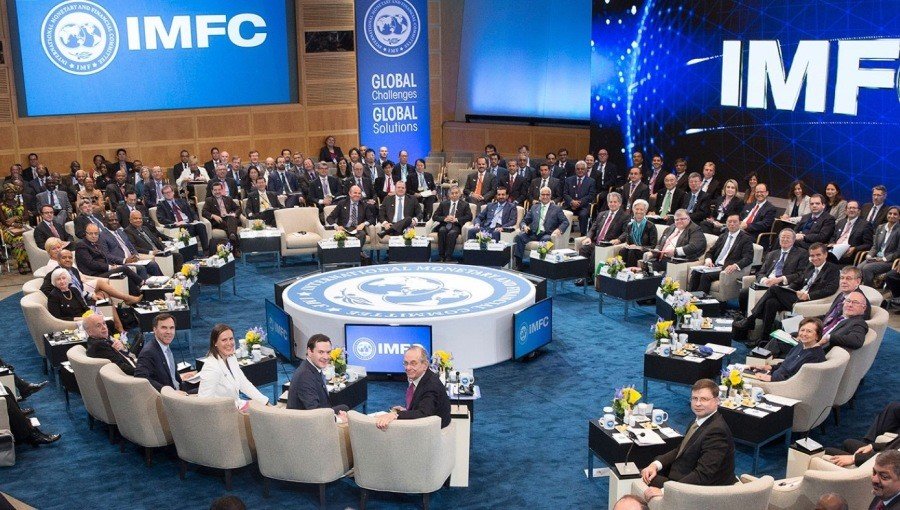
Monrovia-The International Monetary Fund (IMF) has approved more than US$50 million in financing for Liberia following the completion of reviews of the country’s economic reform programs.
The IMF Executive Board on September 28, 2026, completed the fourth review of Liberia’s 40-month Extended Credit Facility (ECF) arrangement and the first review of the Resilience and Sustainability Facility (RSF) arrangement.
The approval allows Liberia to immediately access about US$26.2 million under the ECF and US$23.96 million under the RSF, bringing the combined disbursement to approximately US$50.16 million.
The IMF said the financing will support Liberia’s efforts to maintain macroeconomic stability and debt sustainability, strengthen the financial sector, improve governance, and build resilience against climate-related shocks.
According to the Fund, the latest disbursement is part of ongoing financial arrangements with Liberia and is tied to the implementation of economic and structural reforms.
The IMF said Liberia’s economy has remained resilient despite a challenging external environment.
Real Gross Domestic Product (GDP) growth reached 5.1 percent in 2025 and is projected to increase to 5.5 percent in 2026.
The Fund attributed the projected growth largely to strong mining production, as well as activities in the construction and manufacturing sectors.
The IMF, however, warned that Liberia continues to face risks, including higher fuel prices, declining donor support, commodity price volatility and climate-related shocks.
Inflation is projected at 5.9 percent for 2026, according to the IMF’s latest economic projections.
The IMF said the Liberian authorities have maintained prudent macroeconomic policies and made progress on several reforms under the two financing arrangements.
Among the key priorities identified by the Fund is the implementation of Value Added Tax (VAT) in 2027 as part of efforts to strengthen domestic revenue mobilization.
The government is also expected to manage a one-off mining concession payment in a transparent and prudent manner.
Other priorities include completing the restructuring of banks, addressing vulnerabilities in the financial sector, strengthening governance and fiscal transparency, and advancing reforms aimed at improving Liberia’s resilience to climate-related shocks.
The IMF also encouraged the authorities to continue efforts to reduce non-performing loans and strengthen the country’s banking system.
Following the Executive Board’s decision, IMF Acting Chair and Deputy Managing Director Bo Li said the Liberian authorities had continued to implement policies that had contributed to progress under both the ECF and RSF arrangements.
Li said fiscal consolidation had continued, supported by strong revenue performance, while capital expenditure had also accelerated.
He, however, stressed the need for Liberia to improve the selection, implementation and monitoring of capital projects in order to improve the quality of public spending.
The IMF official also said successful implementation of VAT, alongside mining taxation reforms and the rationalization of tax exemptions, would help generate steady domestic revenue for priority investments.
Liberia’s current ECF arrangement was approved by the IMF Executive Board in September 2024, with total access of SDR 155 million, equivalent to about US$210 million at the time of approval.
With the latest disbursement, total disbursements under the ECF arrangement have reached SDR 96.5 million, or approximately US$131.67 million.
The IMF Board approved the RSF arrangement for Liberia in April 2026, providing total access of SDR 193.8 million, equivalent to about US$265 million.
The RSF is intended to help Liberia strengthen its resilience to climate-related shocks and address related fiscal and economic vulnerabilities.
Finance and Development Planning Minister Augustine K. Ngafuan welcomed the IMF’s latest approval, saying it reflects growing international confidence in Liberia’s ongoing economic reform program.
The approval comes as the government continues to pursue measures aimed at strengthening domestic revenue mobilization, maintaining fiscal discipline, improving financial-sector stability and supporting economic growth.
The IMF said Liberia’s program performance remained broadly satisfactory, with all end-December 2025 performance criteria met and continued progress recorded on structural and climate-related reforms.
The Fund said continued implementation of the reforms will be important to maintaining macroeconomic stability and strengthening Liberia’s ability to withstand external and climate-related economic shocks.
Meanwhile, Deputy Minister Sando Thursday said the disbursements include SDR 19.3 million, approximately US$26.2 million, under the Extended Credit Facility and SDR 17.62 million, approximately US$24 million, under the Resilience and Sustainability Facility.
He added how the IMF financing will support Liberia’s efforts to preserve macroeconomic stability and debt sustainability, strengthen financial-sector resilience, advance governance reforms and build resilience to climate-related shocks.
According to Minister Sando, the IMF reported that Liberia’s economy has remained resilient despite a challenging external environment, stressing the government remains committed to working with the IMF and other development partners to maintain economic stability and advance reforms aimed at strengthening Liberia’s economy.
About The Author